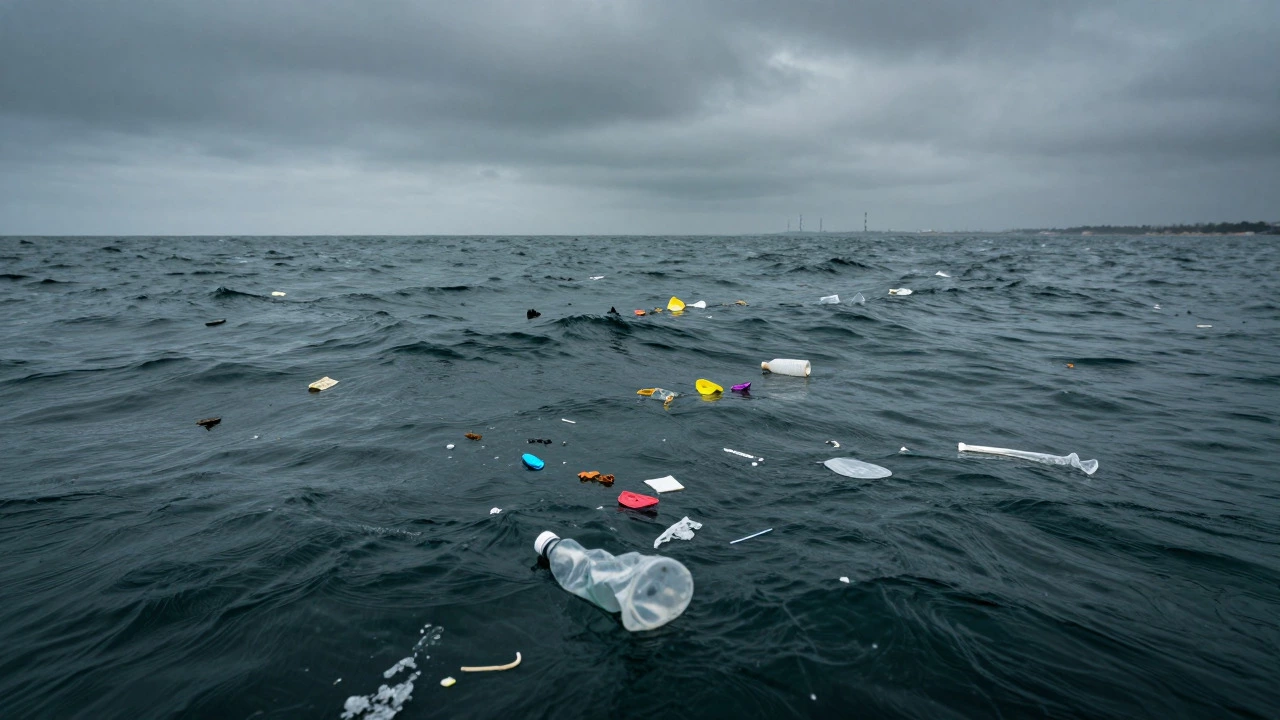
Ocean Plastic Responsibility Simulator
Instructions: Select an entity below and adjust the sliders to simulate how production volume, design choices, and infrastructure affect ocean leakage.
Plastic Producers Settings
Impact Analysis
Why this matters:
Adjust the sliders to see how different factors contribute to ocean pollution.
It is easy to blame the person tossing a candy wrapper out of a car window. It is satisfying to point fingers at the careless tourist on a beach holiday. But if you look closer at the churning waves of the Pacific or the swirling currents of the Atlantic, you will find that individual litterers are not the main problem. They are just the tip of the iceberg. The real question isn't who throws trash away; it is who keeps making the trash that ends up there in the first place.
When we ask who still dumps garbage in the ocean, we are really asking about a broken system. We are talking about a global supply chain that treats our waterways like an infinite landfill. From the factories producing single-use packaging to the municipalities struggling with outdated recycling infrastructure, the responsibility is shared by many players. Yet, one group sits at the very top of this food chain: the plastic manufacturing industry.
The Myth of Infinite Recycling
For decades, the narrative sold to consumers was simple: buy plastic, use it once, recycle it, and repeat. It sounded sustainable. It felt responsible. But here is the hard truth that few people discuss openly: less than 10% of all plastic ever produced has been recycled. The rest? It sits in landfills, burns in incinerators, or leaks into the natural environment.
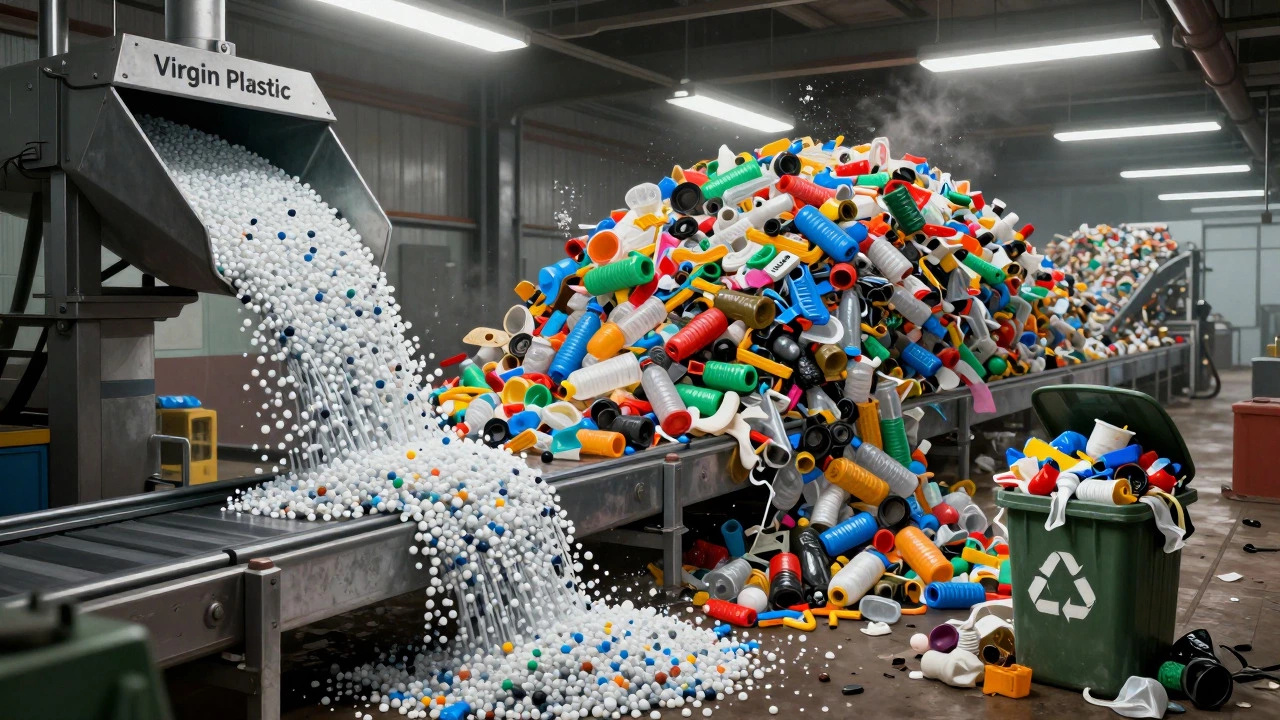
Plastic Manufacturing is the industrial process of creating products from synthetic polymers, primarily derived from fossil fuels. This sector produces over 400 million metric tons of plastic annually. While the material is durable and cheap, its end-of-life management is a disaster. Most plastic packaging is designed for convenience, not circularity. When you buy a bottle of water wrapped in plastic, shrink-wrapped in another layer of plastic, and shipped in a cardboard box taped with plastic film, you are buying a product destined for the ocean because the recycling economy simply cannot handle the volume or the complexity of these materials.
Why does this happen? Because virgin plastic is cheaper than recycled plastic. Refining oil into new plastic pellets costs less than collecting, sorting, cleaning, and reprocessing old plastic. As long as this economic reality holds true, manufacturers have little financial incentive to design products that can be easily recycled. They keep producing linear products-make, use, dispose-and the disposal part often spills over into our oceans.
The Global Waste Trade
If you live in a wealthy nation, you might think your recycling bin goes straight to a facility that turns it into new goods. For years, that wasn't entirely true. Countries like the United States, Canada, and those in Western Europe exported a massive portion of their recyclable waste to Asia, particularly China, Malaysia, and Vietnam. This practice was known as the "global waste trade."
In 2018, China implemented the "National Sword" policy, effectively banning the import of most foreign plastic waste. Overnight, the global recycling market collapsed. Tons of plastic waste that used to be shipped overseas suddenly piled up in domestic transfer stations. Local governments, overwhelmed and underfunded, had nowhere to send the trash. Some burned it. Some buried it. And a significant amount leaked into rivers and coastal areas, eventually finding its way to the sea.
This shift exposed a critical flaw: the world’s waste management infrastructure was built on the assumption that someone else would clean up the mess. Now that the door is closed, countries are forced to face their own consumption habits. But until they invest heavily in modern sorting facilities and chemical recycling technologies, the leakage continues. The garbage doesn't disappear; it just moves from a truck in California to a riverbank in Southeast Asia.
Who Is Actually Responsible?
To understand who dumps garbage in the ocean, we need to look at three distinct groups. Each plays a role, but their level of influence varies drastically.
| Entity | Role in Pollution | Level of Control |
|---|---|---|
| Plastic Producers | Design products, determine material composition, set production volumes | High (Control source) |
| Brand Owners | Choose packaging types, dictate supply chain requirements | Medium-High (Influence design) |
| Municipalities | Collect waste, operate recycling centers, manage landfills | Medium (Manage flow) |
| Consumers | Dispose of products, sort recyclables, choose brands | Low (End-user action) |
Let's break down why producers hold the highest level of control. A brand owner decides whether a shampoo bottle is made from thick, hard-to-recycle polypropylene or thin, easily recyclable PET. A manufacturer decides whether to add dyes or additives that contaminate the recycling stream. These decisions are made in boardrooms, far away from the beaches where the debris accumulates. By designing products that are difficult or impossible to recycle, they are essentially pre-sorting a portion of their output for the ocean.
Municipalities are caught in the middle. They want to recycle, but they lack the technology to separate complex multi-layered plastics. They receive mixed loads of waste that contamination rates render worthless. Without better tools and funding, leakage is inevitable. Consumers, meanwhile, are doing their best. Studies show that most people want to recycle correctly, but confusing labeling and inconsistent local rules lead to "wish-cycling"-tossing non-recyclables into the bin with hope. This contaminates the batch, causing entire loads to be rejected and sent to landfills or, worse, informal dumpsites near waterways.
The Role of Developing Nations
While Western nations export their waste problems, developing nations face a different challenge: rapid urbanization without adequate infrastructure. In countries across Africa, South America, and Southeast Asia, populations are growing faster than waste collection services can expand. Open burning and open dumping are common practices because they are cheap and require minimal labor.
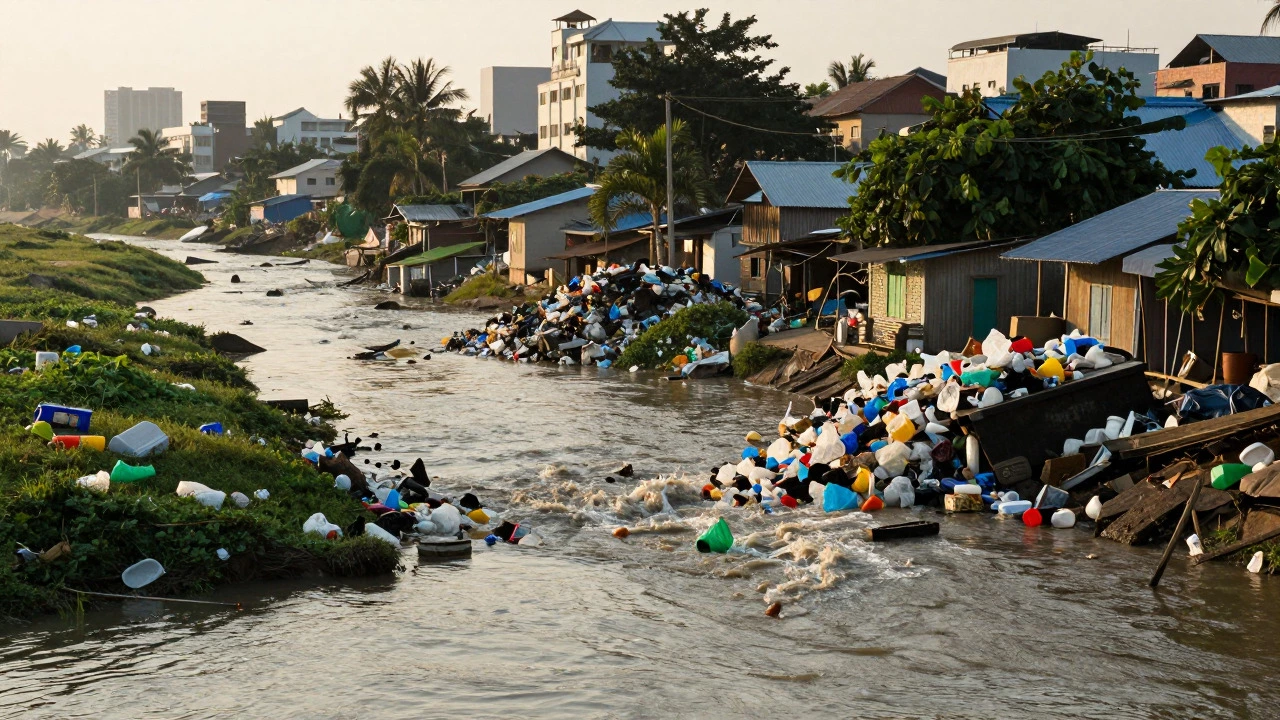
Rivers in cities like Manila, Lagos, and Mumbai act as conveyor belts, carrying uncollected waste directly into the ocean. This isn't necessarily due to negligence alone; it is a resource constraint. Building a comprehensive waste management system requires billions of dollars in investment. Until international aid and private sector partnerships step up, these regions will remain hotspots for marine debris. However, blaming these nations ignores the fact that much of the plastic flowing through their streets was produced by multinational corporations targeting emerging markets with cheap, single-use goods.
Is There a Solution?
Yes, but it requires shifting the burden from the consumer to the producer. This concept is called Extended Producer Responsibility (EPR). Under EPR laws, companies are financially and physically responsible for the entire lifecycle of their products, including take-back, recycling, and final disposal.
Several European countries have already implemented strict EPR schemes. If a company wants to sell plastic packaging in France or Germany, they must pay fees based on how recyclable their packaging is. Unrecyclable designs cost more. Recyclable designs cost less. This creates a direct financial incentive to redesign products. As of 2026, similar laws are gaining traction globally, forcing plastic manufacturers to rethink their business models.
Another key solution is reducing reliance on single-use plastics altogether. Reusable systems, refill stations, and alternative materials like compostable bioplastics (when managed correctly) offer viable paths forward. But these alternatives only work if the infrastructure supports them. You cannot just swap plastic for paper if the paper ends up in the same overflowing landfill.
What Can You Do?
As an individual, your power lies in your voice and your wallet. Stop expecting perfect recycling systems to save us. Instead, demand change from the top. Support brands that use minimal packaging or proven reusable models. Contact your local representatives and push for stronger EPR legislation in your region. Vote with your purchases.
But remember, individual action is not enough. We need systemic change. We need plastic manufacturers to stop treating the ocean as a free dumping ground. We need governments to enforce stricter regulations. And we need to accept that some plastics may never be truly recyclable, meaning they should be phased out entirely.
The next time you see a piece of plastic washing ashore, don't just pick it up. Ask who made it. Ask who profited from it. And ask why they haven't paid for its cleanup yet. The answer to "who still dumps garbage in the ocean" is not a nameless villain. It is a system that needs fixing, starting with the companies that create the problem.
Who is the biggest contributor to ocean plastic pollution?
Research identifies major multinational corporations, particularly those in the beverage, food service, and personal care industries, as the largest contributors. Companies like Coca-Cola, PepsiCo, Nestlé, and Unilever frequently appear at the top of annual rankings due to the sheer volume of single-use plastic packaging they produce and distribute globally.
Does recycling solve the ocean garbage problem?
Recycling helps, but it is not a complete solution. With less than 10% of all plastic ever produced being recycled, the majority still ends up in landfills or the environment. Recycling infrastructure is also limited and expensive. Reducing production and eliminating unnecessary single-use items is more effective than relying solely on recycling.
What is Extended Producer Responsibility (EPR)?
EPR is a policy approach where manufacturers are held physically and financially accountable for the entire lifecycle of their products, especially at the post-consumer stage. This includes collection, sorting, recycling, and final disposal. EPR incentivizes companies to design products that are easier to recycle and less harmful to the environment.
Why do developing countries have higher rates of ocean leakage?
Developing nations often lack the infrastructure for effective waste collection and management. Rapid urbanization, limited funding, and inadequate sanitation systems lead to open dumping and burning. Additionally, rivers in these regions often serve as drainage channels for uncollected waste, carrying it directly into the ocean.
How did the "National Sword" policy affect global plastic waste?
China's "National Sword" policy, enacted in 2018, banned the import of most foreign plastic waste. This disrupted the global recycling trade, causing waste to pile up in exporting countries like the US and Europe. It forced nations to develop their own recycling capabilities or face increased leakage into their local environments, including oceans.
Can bioplastics replace traditional plastics?
Bioplastics offer a potential alternative, but they are not a silver bullet. Many bioplastics require specific industrial composting conditions to break down, which are not available everywhere. If mixed with traditional plastics, they can contaminate recycling streams. Their environmental benefit depends heavily on proper end-of-life management and sustainable agricultural practices for feedstock.