US Manufacturing Economic Impact Estimator
Manufacturing Value Added
Total contribution to the national economy.
Total Community Jobs
Direct + Indirect employment effect.
You might think the United States is just a land of apps, finance, and healthcare, but the smoke stacks are still humming. There is a common myth that the US has completely "deindustrialized" and left the heavy lifting to other countries. While the percentage of the economy dedicated to making physical goods has shrunk since the mid-20th century, the actual output is often higher than people realize. If you look at the numbers, US manufacturing share of GDP is the percentage of the total gross domestic product generated by the industrial sector, including the production of raw materials and finished goods. It typically hovers around 10% to 12%, but that single number hides a massive engine that drives innovation and national security.
Quick Takeaways on the US Industrial Engine
- Manufacturing accounts for roughly 11% of the US GDP.
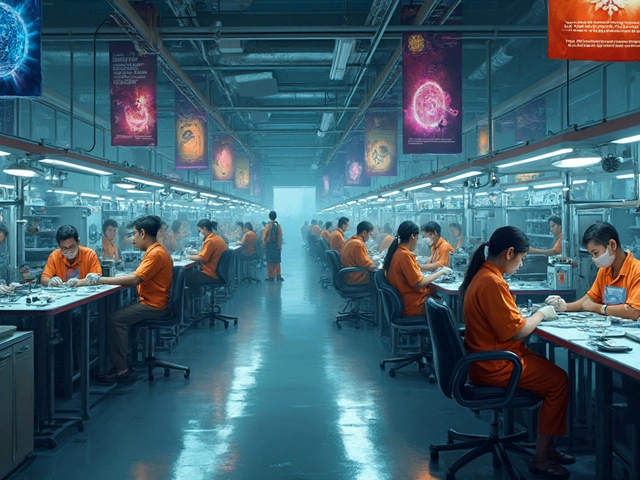
- The sector employs about 13 million people across various specialized fields.
- High-tech production and aerospace remain the strongest pillars of American output.
- Recent government initiatives are aggressively pushing for "reshoring" to bring factories back home.
Breaking Down the Numbers: GDP and Output
To get a real sense of how much manufacturing matters, we have to look at Gross Domestic Product (GDP). In the 1950s, making things was a huge chunk of the economy. Today, the US is a service-oriented economy, but that doesn't mean the factories have disappeared. Instead, they've become more efficient. We are producing more stuff with fewer people thanks to automation.
If you check the latest data from the Bureau of Economic Analysis (BEA), the value added by manufacturing is consistently a double-digit percentage of the economy. Why does this matter? Because manufacturing has a massive "multiplier effect." For every single job created in a factory, several more are created in the local community-truck drivers, accountants, and cafe owners all benefit when a plant opens up. This makes the sector far more influential than a simple 11% figure suggests.
| Metric | Estimated Value | Impact Level |
|---|---|---|
| Contribution to GDP | 10% - 12% | High (Systemic) |
| Total Employment | 12.9 Million Jobs | Moderate |
| Annual Value Added | $2.3+ Trillion | Very High |
| Export Share | ~20% of US Exports | High (Trade Balance) |
Where the Magic Happens: Key Industrial Sectors
Not all manufacturing is the same. You can't compare a textile mill to a semiconductor fab. The US has shifted its focus toward high-value, complex goods. This is where the real money is. For instance, Aerospace Manufacturing is a powerhouse. Companies like Boeing and SpaceX don't just make planes and rockets; they create an entire ecosystem of specialized parts and software.
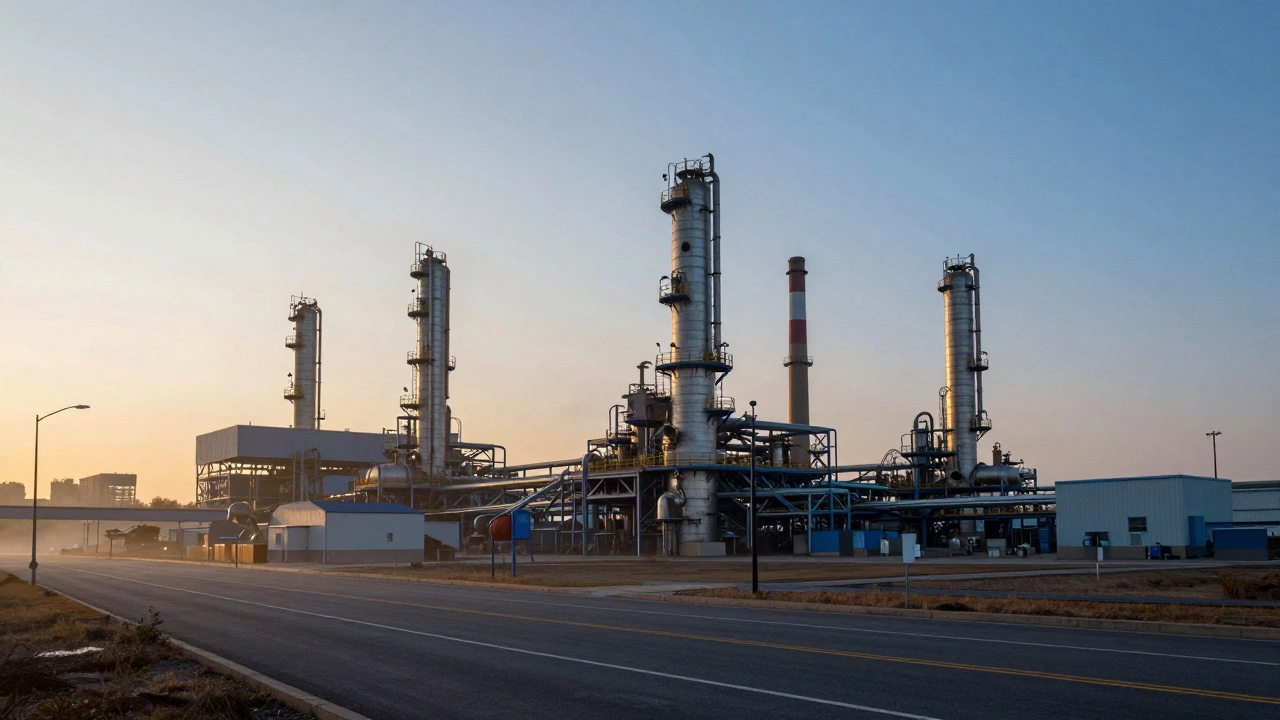
Then there is the Chemical Manufacturing sector, which is one of the largest in the country. From plastics to pharmaceuticals, this sector provides the building blocks for almost everything else. If the chemical plants stop, the rest of the economy grinds to a halt. We also see huge growth in Electronics Manufacturing, specifically in the realm of chips. For years, the US relied on Asia for semiconductors, but that's changing rapidly.
Government Schemes and the Push for Reshoring
Ever wonder why you're seeing more "Made in USA" labels lately? It's not an accident. The US government has realized that relying on global supply chains is risky, especially during a pandemic or a geopolitical clash. This has led to a wave of Industrial Policy-essentially the government stepping in to steer the economy.
The most striking example is the CHIPS and Science Act. This isn't just a small grant; it's a massive injection of billions of dollars designed to bring semiconductor fabrication back to US soil. By providing tax credits and direct funding, the government is making it financially attractive for companies to build expensive "fabs" in states like Arizona and Ohio. This is a direct attempt to increase the manufacturing share of the GDP by securing a critical technology.
Similarly, the Inflation Reduction Act (IRA) is pouring money into green energy manufacturing. We're seeing a surge in battery plants and solar panel factories. The goal is simple: don't just buy the green tech from overseas; build the machines that make the tech right here. This creates a cycle of investment that boosts local employment and reduces dependence on foreign imports.
The Automation Paradox: Fewer Workers, More Stuff
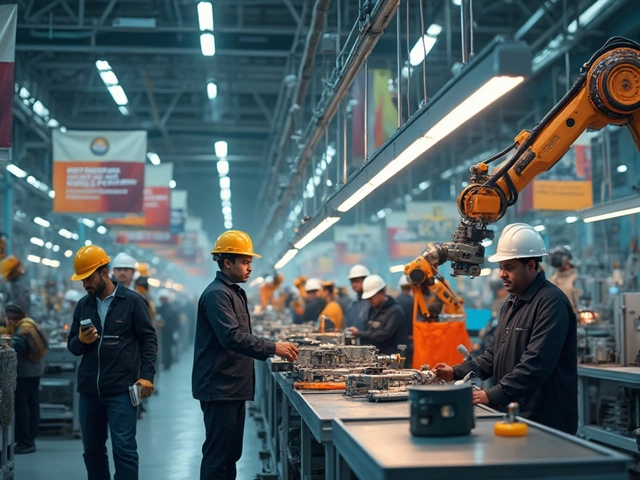
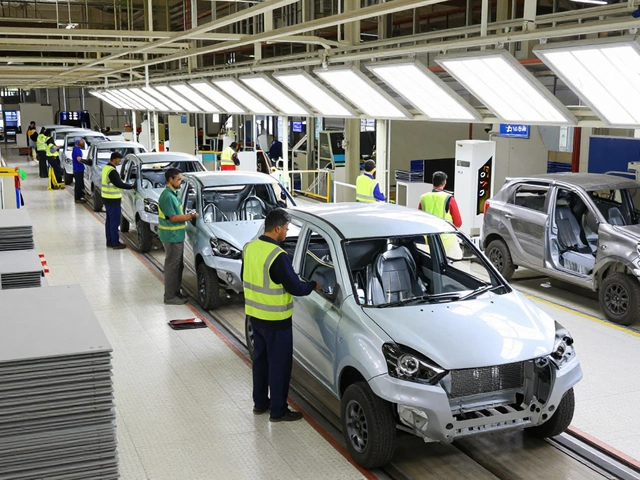
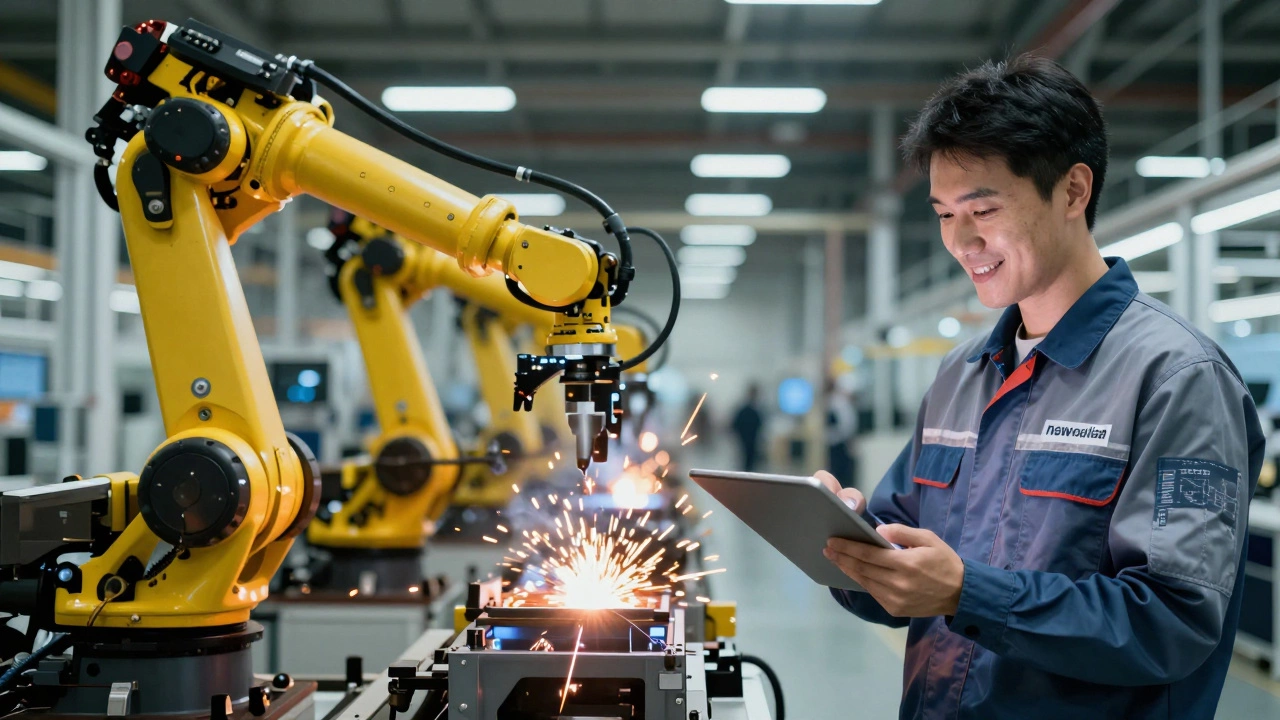
One of the weirdest things about the US economy is that while the *value* of what we make is going up, the *number of people* doing the making is often stagnant or falling. This is the automation paradox. If you walk into a modern car plant, you'll see more robotic arms than people.
This shift toward Advanced Manufacturing means that the jobs that *do* exist are very different. We don't need as many people to pull levers, but we need thousands more people who can program the robots, maintain the sensors, and analyze the data. This has changed the labor market from a blue-collar dominated space to a "new-collar" space where technical certifications are as valuable as a college degree.
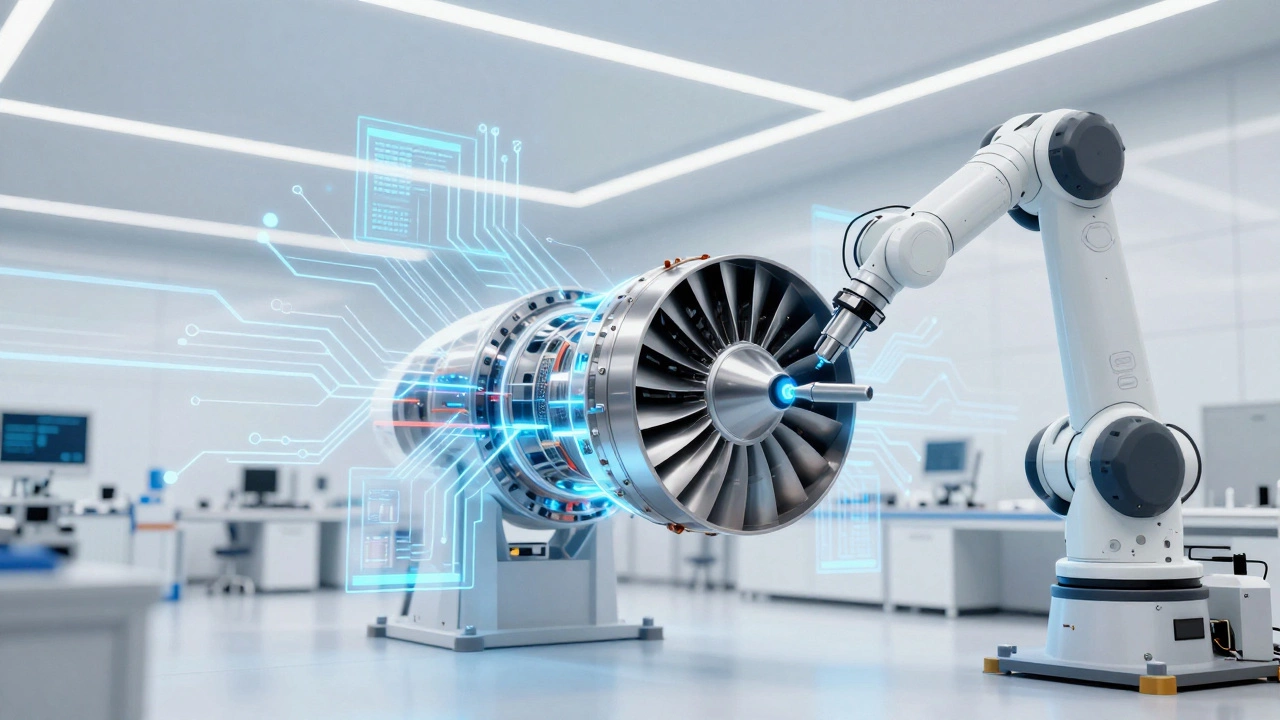
Does this mean manufacturing is dying? Quite the opposite. It means it's evolving. The efficiency gains from Industry 4.0-the integration of IoT and AI into factories-allow US firms to compete with low-wage countries by offering higher precision and faster turnaround times.
Challenges Facing the American Factory
It's not all smooth sailing. The US faces a massive skills gap. There are thousands of open positions in welding, CNC machining, and industrial electrical work, but not enough qualified people to fill them. This labor shortage acts as a ceiling on how much the manufacturing sector can grow. When a company wants to expand but can't find 50 certified technicians, the growth stops.
Energy costs also play a role. While the US has a lot of natural gas (which makes energy cheaper than in Europe), the volatility of power grids and the transition to renewable energy create uncertainty for heavy industries like Steel Manufacturing. Steel is energy-intensive, and any spike in electricity costs can make American steel less competitive on the global market.
The Future: Where is the Economy Heading?
If we look at the trend lines, the US is moving toward a "hybrid" economy. We aren't going back to 1950 where everyone worked in a mill, but we are moving away from the 2000s era of total outsourcing. The focus is now on "strategic autonomy." This means the government and private sector are prioritizing the production of things we *cannot* afford to lose access to-like medicine, chips, and defense equipment.
We will likely see the manufacturing share of the GDP stabilize or even tick upward slightly as the CHIPS Act and IRA projects come online. More importantly, the *quality* of that GDP contribution will change. We'll see less low-end consumer plastic and more high-end biotech and aerospace components. The US economy is essentially betting that high-tech precision will beat low-cost labor in the long run.
Why is the manufacturing share of GDP so low compared to the past?
It's not necessarily because we are making fewer things, but because the service sector (healthcare, finance, tech) has grown much faster. Additionally, productivity has skyrocketed. We can now produce the same amount of goods with a fraction of the workforce and time, which changes how the value is recorded in the GDP.
Do government schemes actually work to bring back factories?
Yes, but they usually target specific high-value industries rather than everything. For example, the CHIPS Act is very effective for semiconductors because the entry cost to build a factory is so high (billions of dollars) that companies need government incentives to justify the risk of building in the US instead of Asia.
What is reshoring?
Reshoring is the process of bringing manufacturing and services back to the home country from overseas. This is often driven by a desire to reduce supply chain risks, improve quality control, and take advantage of domestic automation and government incentives.
Which US states have the most manufacturing?
Traditionally, the "Rust Belt" (Ohio, Michigan, Pennsylvania) has been the heart of manufacturing. However, there is a massive shift toward the "Sun Belt" (Texas, Arizona, Georgia) due to lower taxes, cheaper land, and a growing appetite for high-tech industrial hubs.
How does automation affect manufacturing jobs?
Automation replaces repetitive, manual tasks, which leads to the loss of some traditional assembly line jobs. However, it creates a demand for higher-skilled roles in robotics maintenance, software engineering, and systems analysis, shifting the sector toward "new-collar" employment.