India Manufacturing Competitiveness Estimator
Input your specific operational data to see how India's structural challenges (high logistics, regulatory lag, import dependency) compare against efficient economies like China or Vietnam.
Enter data to generate analysis
India’s manufacturing sector is supposed to be the engine of its next economic leap. Yet, if you look closely at the data-especially in critical areas like chemical manufacturing-the engine sputters more often than it roars. You might wonder why a country with such massive demographic potential and government push like "Make in India" still struggles to break past 17-18% of GDP contribution from manufacturing. It isn’t just about one thing going wrong. It’s a tangled web of infrastructure gaps, regulatory friction, and global competition that keeps domestic factories running below capacity.
The Infrastructure Gap That Chokes Production
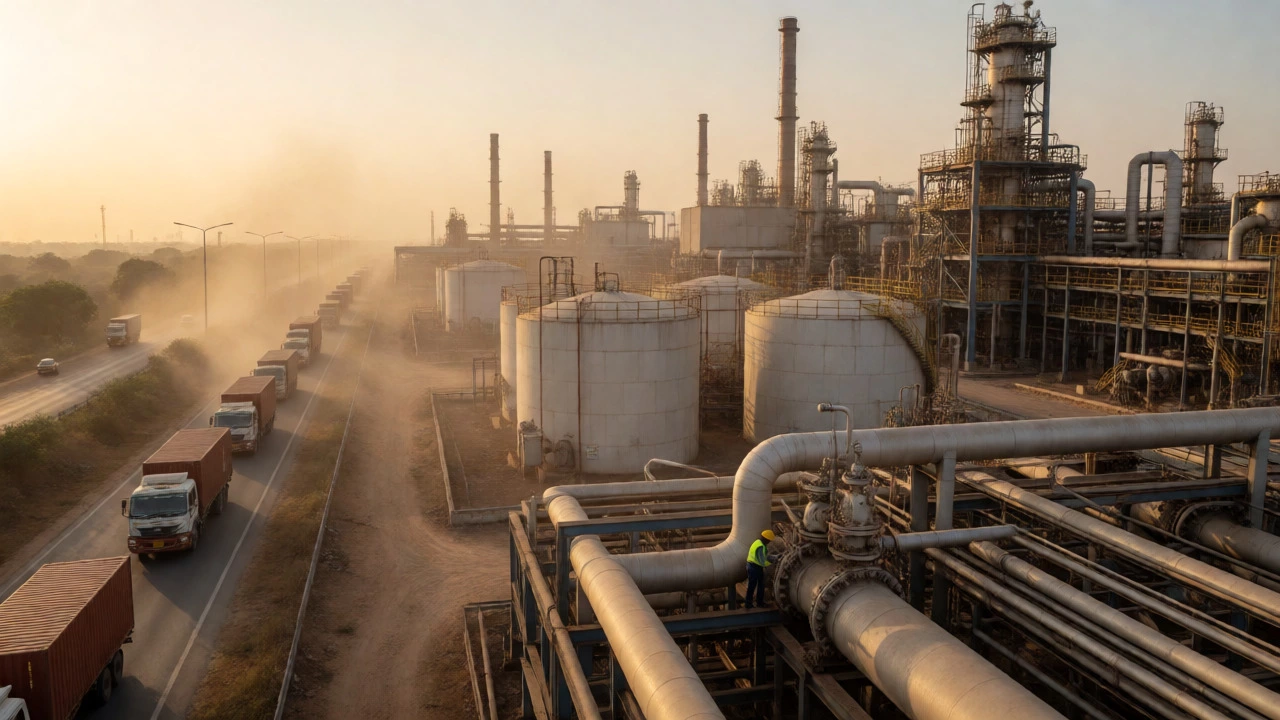
Let’s start with the physical reality on the ground. For a chemical plant in Gujarat or Tamil Nadu, logistics costs are a killer. In efficient economies, logistics cost around 8-10% of GDP. In India, despite improvements, it hovers closer to 13-14%. This means every ton of raw material moving to a factory and every finished good moving to a port carries a heavier price tag. When your competitor in Vietnam or China pays less to move goods, your margins vanish before you even sell the product.
Power reliability remains another headache. While grid connectivity has improved, consistent voltage stability for heavy industrial machinery is still hit-or-miss in many tier-2 cities. A single power fluctuation can ruin a batch of specialty chemicals, leading to waste that small and medium enterprises (SMEs) simply cannot absorb. This operational risk makes investors hesitant to scale up production lines, keeping output stagnant.
Regulatory Maze and Compliance Burden
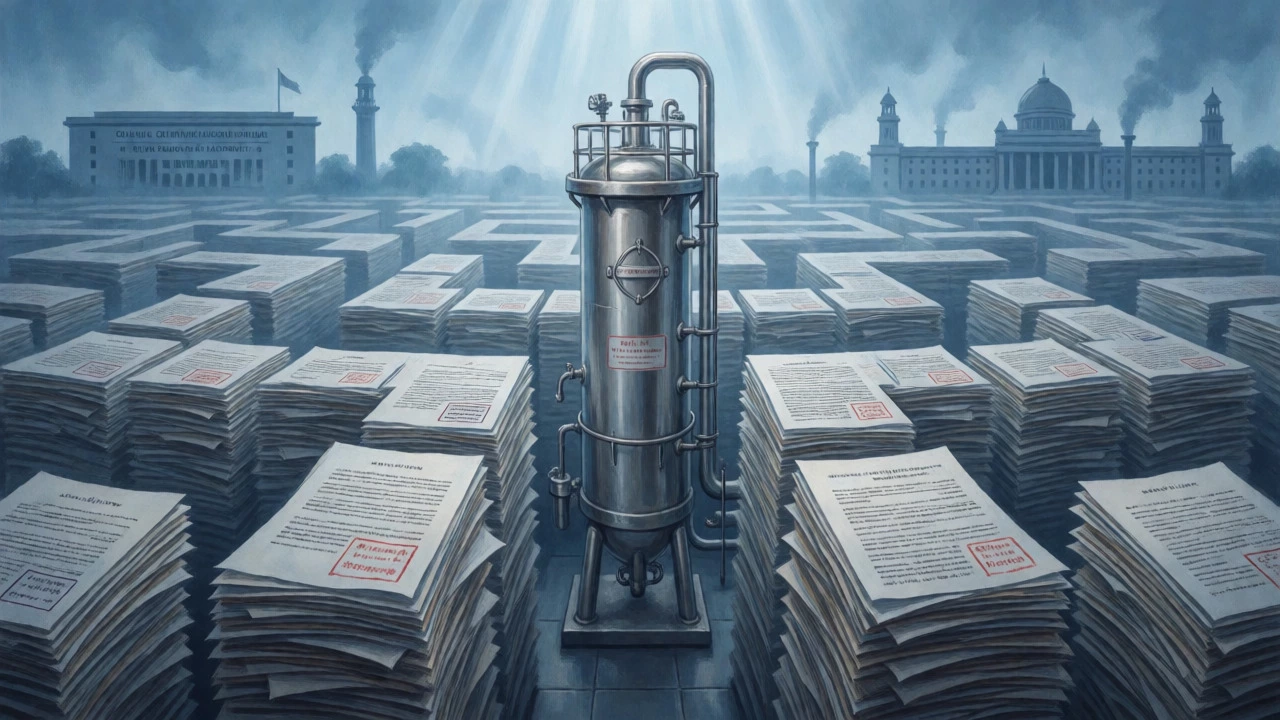
You’d think simplifying rules would be easy, but in India, regulation is layered. Central laws, state laws, and local municipal bylaws often contradict each other. For a new chemical unit, getting environmental clearances can take months, sometimes years. The Pollution Control Board processes vary wildly from state to state. What passes in Maharashtra might face hurdles in Uttar Pradesh due to different interpretations of the same central guidelines.
This unpredictability discourages long-term capital expenditure. Companies prefer to import intermediates rather than set up complex processing units domestically because the time-to-market delay is too high. If it takes two years to get permission to build a reactor, but six months to import the final product, the math favors imports. This creates a dependency cycle that stifles local manufacturing growth.
The Skilled Labor Shortage Paradox
India has plenty of engineers and graduates, but does it have enough skilled technicians who can operate advanced automated machinery? Not really. There is a significant mismatch between what universities teach and what factories need. Modern chemical plants require operators who understand digital controls, safety protocols, and quality assurance standards like ISO certifications. Most workers come from vocational backgrounds that haven’t kept pace with Industry 4.0 technologies.
Training programs exist, but they’re fragmented. The National Skill Development Corporation has made strides, yet industry-specific training remains inconsistent. Without a reliable pipeline of skilled labor, manufacturers either pay a premium for scarce talent or suffer lower productivity. Both options hurt competitiveness against countries with more standardized technical education systems.
Global Supply Chain Dependencies
Here’s a hard truth: India is still heavily dependent on imports for key raw materials. In the chemical sector, nearly 60-70% of basic intermediates come from China. When Chinese factories shut down during lockdowns or raise prices due to their own energy crises, Indian manufacturers feel the shock immediately. We lack backward integration. We don’t produce enough basic petrochemicals or specialty monomers domestically to feed downstream industries.
This dependency exposes Indian manufacturing to global volatility. Instead of building resilient domestic supply chains, we’ve optimized for short-term cost savings through imports. Now, as geopolitical tensions rise and "China Plus One" strategies gain traction, India hasn’t fully capitalized on the shift because our ecosystem isn’t ready to replace China’s depth of manufacturing capability overnight.
Access to Capital and Financing Hurdles
Growing manufacturing requires heavy upfront investment. Banks in India are notoriously cautious when lending to SMEs without substantial collateral. Interest rates, while stabilizing, remain higher than in developed economies. For a small chemical manufacturer wanting to upgrade technology to meet export standards, securing affordable debt is tough. Equity financing is an option, but diluting ownership is unattractive for family-run businesses that dominate the sector.
Moreover, working capital cycles are long. Receivables from large corporate buyers can stretch over 90 days, tying up cash that could otherwise go into expansion. This liquidity crunch prevents companies from scaling production even when demand exists. They stay small, safe, and stagnant.
Market Fragmentation and Demand Volatility
India’s market is vast but fragmented. Consumer preferences vary drastically across regions. For a manufacturer producing standard industrial chemicals, this isn’t always a problem. But for value-added products, tailoring offerings to diverse regional needs increases complexity and cost. Additionally, domestic demand often fluctuates with agricultural cycles and rural income levels, making production planning difficult.
Export markets offer stability, but meeting international compliance standards (like REACH in Europe) requires rigorous documentation and testing capabilities that many Indian labs lack. This limits access to high-value export segments, forcing manufacturers to compete in low-margin commodity markets where price wars erode profits.
| Barrier Factor | Current Status in India | Impact on Growth | Benchmark Comparison |
|---|---|---|---|
| Logistics Cost | ~13-14% of GDP | High; reduces export competitiveness | China/Vietnam: ~8-10% |
| Regulatory Clearance Time | 6-18 months average | Delays capacity addition | Singapore: Weeks |
| Raw Material Dependency | High import reliance (esp. China) | Vulnerability to supply shocks | Germany: Strong domestic base |
| Labor Skill Level | Mixed; gap in advanced tech skills | Lower productivity per worker | Japan/South Korea: High automation readiness |
What Needs to Change?
If you’re asking whether this is fixable, the answer is yes-but not with quick fixes. First, we need genuine ease of doing business at the state level, not just central promises. Harmonizing regulations across states would allow manufacturers to expand freely. Second, investing in industrial corridors with dedicated power and water supplies can reduce operational friction. Third, linking skill development directly with industry needs ensures workers are job-ready from day one.
Finally, policy must incentivize backward integration. Subsidies should reward companies that produce raw materials locally rather than just assembling imported components. Only then will Indian manufacturing stop growing slowly and start accelerating.
Why is India still importing so many chemicals?
India lacks sufficient domestic capacity for basic petrochemical intermediates and specialty monomers. Many downstream manufacturers find it cheaper and faster to import these inputs from China than to wait for local suppliers to scale up production and meet quality standards.
How do regulatory delays affect manufacturing growth?
Lengthy approval processes for environmental and land clearances delay project commissioning. This uncertainty discourages capital investment, causing companies to postpone expansion plans or opt for importing finished goods instead of setting up local production units.
Is labor cost a major factor in slow manufacturing growth?
While labor costs are relatively low, the issue is productivity and skill gaps. Lack of trained technicians for modern automated systems leads to inefficiencies, meaning the theoretical advantage of cheap labor is often offset by higher waste and downtime.
Can government schemes like PLI help chemical manufacturing?
Yes, the Production Linked Incentive (PLI) scheme aims to boost domestic manufacturing by offering financial incentives based on incremental sales. However, its success depends on addressing underlying infrastructure and regulatory bottlenecks that currently hinder rapid scaling.
Why is logistics expensive in India?
High logistics costs stem from multiple factors including road congestion, inefficient rail freight handling, last-mile delivery challenges, and fragmented trucking networks. These inefficiencies add significant overhead to the cost of goods sold.