Global Steel Source Finder
Select your primary project priority below to see which countries offer the best balance of quality, cost, and capability.
Recommended Sources
Priority MatchQuick Comparison
| Country | Primary Strength | Relative Cost | Consistency |
|---|
You walk into a hardware store, pick up a coil of rebar or a sheet of stainless steel, and wonder: where did this actually come from? It’s not just about which country makes the most tons. China produces over half the world's steel, but that doesn't mean every beam rolling off their lines is top-tier for your high-stress engineering project. The question what country has the best steel isn't simple because "best" depends entirely on what you need it to do.
If you're building a skyscraper in Dubai, you need different properties than if you're making surgical instruments in Tokyo. This guide breaks down the global landscape, looking at who leads in volume, who wins on purity, and who offers the best balance of cost and performance. We’ll look at the heavy hitters like China and Japan, the traditional powerhouses like Germany, and the rising stars in India and Vietnam.
Defining "Best": Volume vs. Purity vs. Cost
Before we rank countries, we have to agree on the metrics. In the industry, we generally judge steel on three axes:
- Volume & Consistency: Can they supply millions of tons without changing the chemical composition mid-batch?
- Technical Grade: How pure is the iron? How low are the impurities like sulfur and phosphorus? This matters for aerospace and medical tools.
- Cost Efficiency: Is the price justified by the performance? Sometimes "good enough" is the best business decision.
Most people confuse these. They see a headline saying "China is #1" and assume Chinese steel is the highest quality. That’s wrong. China is #1 in quantity. When it comes to specialized, ultra-high-purity alloys, smaller producers often beat the giants.
The Volume King: China’s Dominance
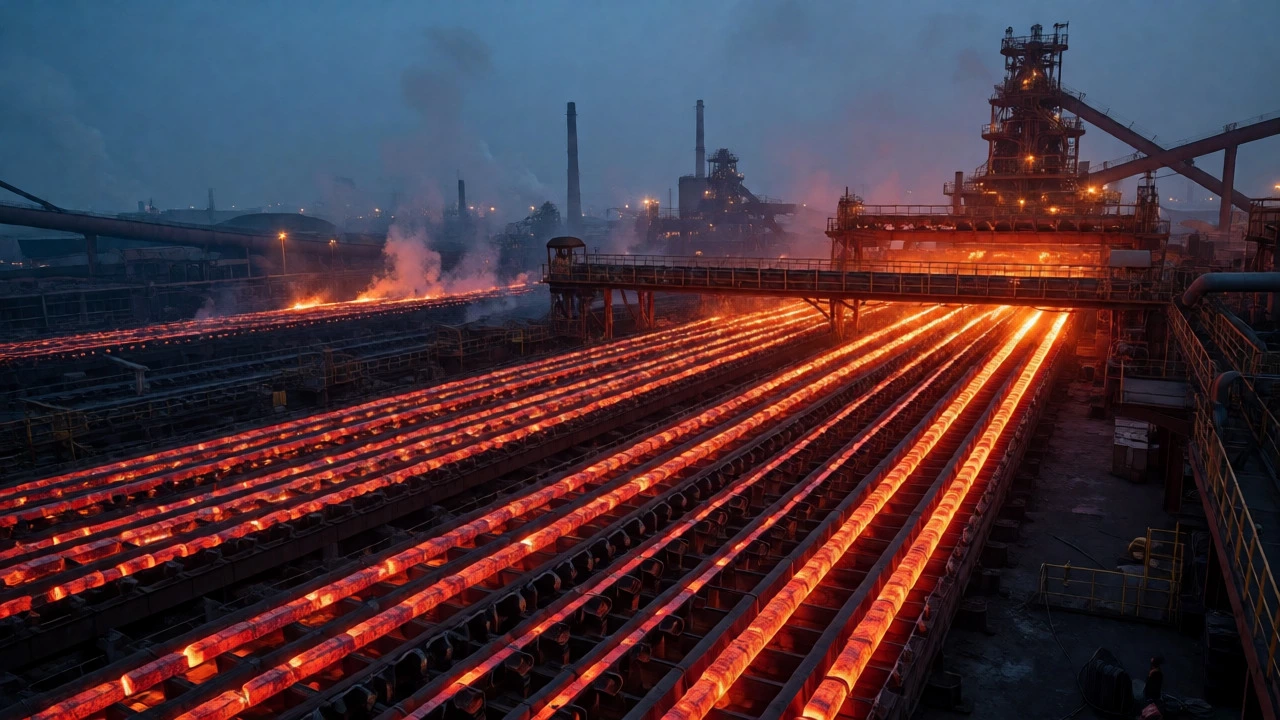
China is the undisputed leader in raw output. As of 2024-2025 data, China produces roughly 54% of the world's crude steel. To put that in perspective, the next nine largest producers combined don’t match China’s single-country output.
Why does this matter to you? If you’re buying standard structural steel-like I-beams for a warehouse or rebar for a concrete foundation-Chinese mills offer unbeatable economies of scale. The infrastructure is massive, and the logistics chains are refined. However, quality control can vary wildly between state-owned giants like Baowu Steel and smaller private mills. For critical applications, buyers often pay a premium for certified batches from top-tier Chinese plants, knowing that lower-tier exports might lack the rigorous testing found in Western markets.
The Precision Masters: Japan and South Korea
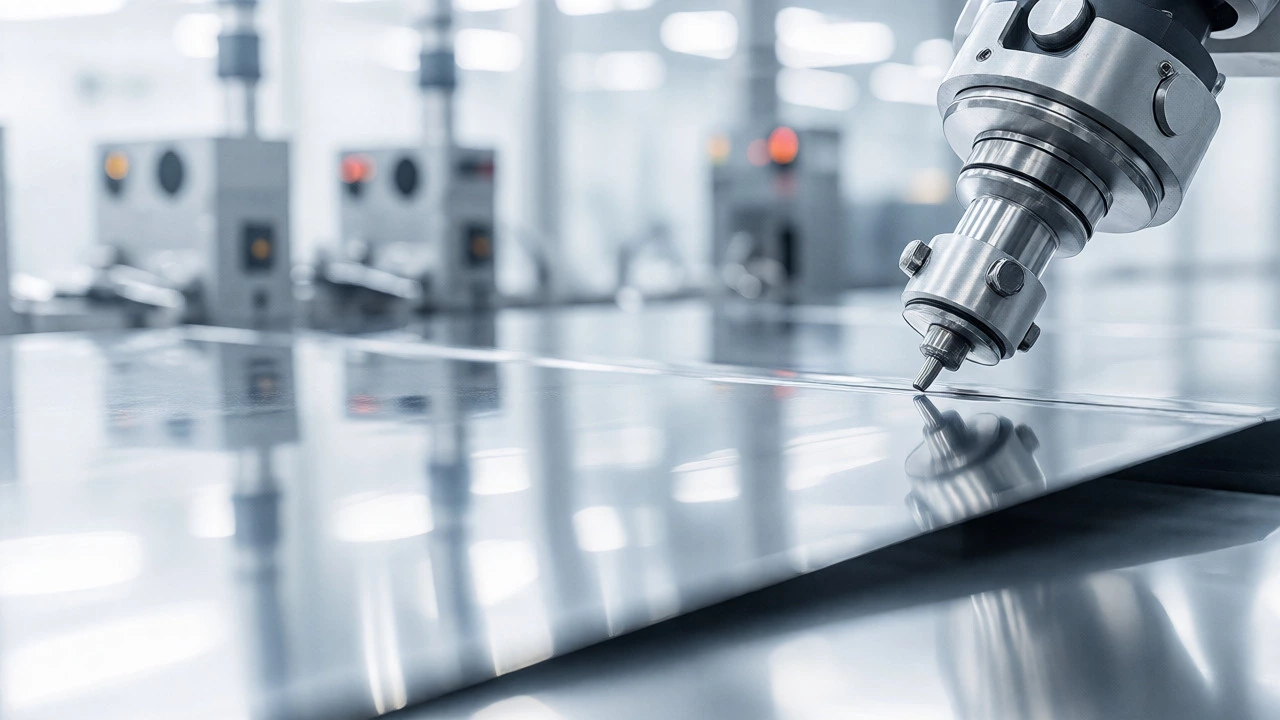
If China is the factory floor, Japan and South Korea are the laboratories. These two nations punch far above their weight in terms of technical excellence. Japanese steelmakers, such as Nippon Steel and JFE Steel, are renowned for their consistency. Their ability to produce thin-gauge automotive steel with perfect uniformity is unmatched.
South Korea, led by POSCO, has carved out a niche in high-end electrical steels used in transformers and motors. Why choose them? Reliability. If you are an engineer designing a turbine blade that cannot fail, you aren't gambling on the cheapest bid. You want the steel that has been tested under extreme conditions thousands of times. Japanese and Korean mills invest heavily in R&D and automation, resulting in fewer defects per ton compared to many competitors.
The European Standard: Germany and Sweden
Europe plays a different game. Here, the focus is on sustainability and specialized alloys. Germany, home to ThyssenKrupp, excels in tool steels and high-performance alloys needed for machinery. German steel often carries a higher price tag, but it comes with certifications that satisfy strict EU regulations regarding environmental impact and labor standards.
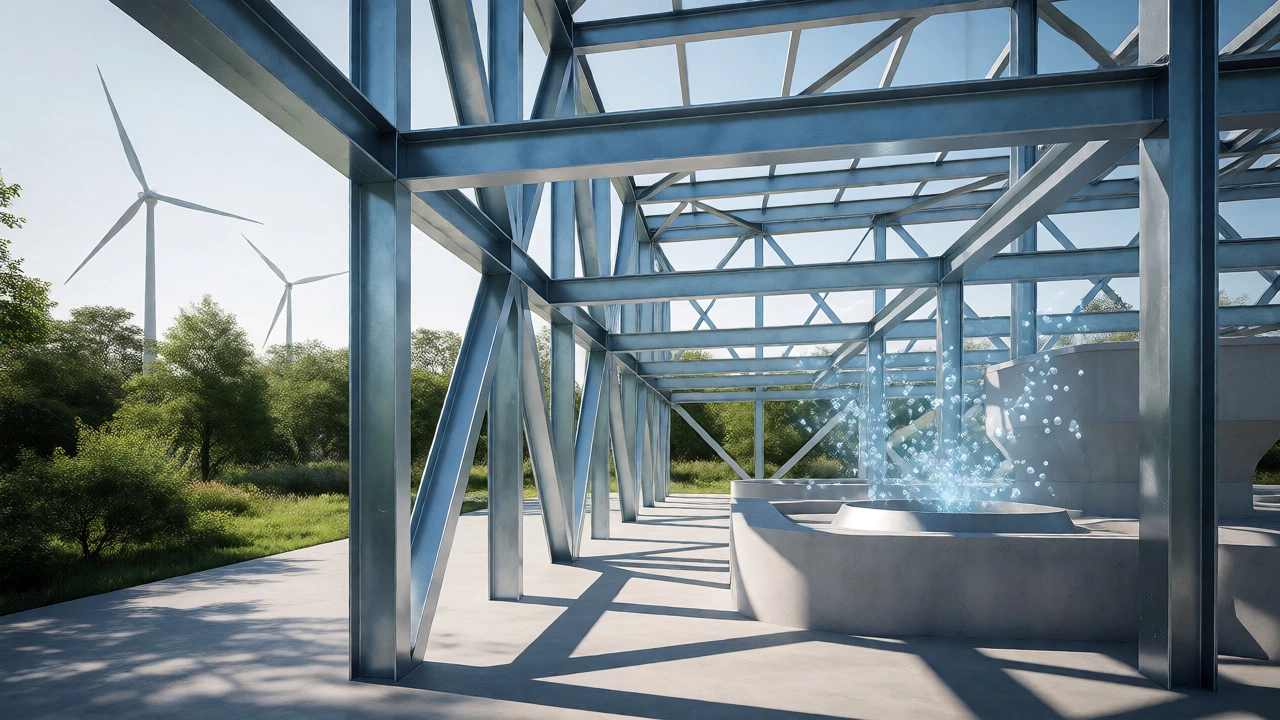
Then there is Sweden. While its total output is small, SSAB (part of the wider Nordic group) is a pioneer in fossil-free steel. Using hydrogen instead of coal in the reduction process, Swedish steel is becoming the go-to choice for brands wanting to market "green" products. If your brand story relies on sustainability, Swedish or broader Scandinavian steel is currently the gold standard.
The Rising Contenders: India and Vietnam
Don't sleep on India. With companies like Tata Steel and JSW, India is rapidly improving its quality standards while keeping costs competitive. Indian steel is increasingly common in construction across Asia and Africa. It offers a sweet spot: better pricing than Europe, with quality that meets international ISO standards more consistently than some older emerging markets.
Vietnam is also climbing the ranks, particularly in flat steel products. As global supply chains diversify away from single-source dependency, Vietnamese mills are attracting investment. They are still behind Japan in precision, but for general-purpose manufacturing, they are becoming a viable alternative to Chinese imports.
Comparing the Heavyweights
To help you decide, here is a breakdown of how these major players stack up against each other based on typical use cases.
| Country | Primary Strength | Best For | Relative Cost | Quality Consistency |
|---|---|---|---|---|
| China | Volume & Scale | Construction, Infrastructure, Bulk Commodities | Low to Medium | Variable (High in top tier) |
| Japan | Precision & Technology | Automotive, Aerospace, High-Tech Machinery | High | Extremely High |
| South Korea | Specialized Alloys | Electrical Steel, Shipbuilding, Pipelines | Medium-High | Very High |
| Germany | Engineering Standards | Industrial Tools, Automotive Parts, Luxury Goods | High | Very High |
| India | Growth & Value | General Construction, Appliances, Export Markets | Low-Medium | Improving |
| USA | Diversity & Innovation | Defense, Energy Sector, Domestic Projects | Medium-High | High |
How to Choose the Right Source for Your Project
So, who has the best steel? It depends on your job-to-be-done. Let’s run through three common scenarios.
Scenario 1: The Budget-Conscious Builder You are constructing a large commercial complex. You need tons of rebar and structural beams. Speed and price are your priorities. You should look at China or India. Just ensure you specify ASTM or EN standards in your contract. Don't buy generic; buy to spec. If the mill provides third-party certification, you mitigate the risk of inconsistent quality.
Scenario 2: The High-Precision Engineer You are manufacturing parts for electric vehicles or medical devices. Tolerance errors of a fraction of a millimeter can ruin a product. You need material that behaves predictably under stress. Look to Japan or South Korea. The extra cost is insurance against failure. Japanese steel, in particular, has a reputation for surface finish quality that reduces the need for secondary processing.
Scenario 3: The Sustainability-Focused Brand You are launching a consumer product line and want to appeal to eco-conscious buyers. You need steel that lowers your carbon footprint. Sweden and parts of Germany are leading here with green steel initiatives. Yes, it costs more. But marketing a "hydrogen-reduced steel" chair allows you to charge a premium that covers the material cost.
The Role of Scrap and Recycling
A hidden factor in "quality" is the source material. Most modern steel is made from scrap metal recycled in Electric Arc Furnaces (EAF). Countries with advanced recycling infrastructure, like the US and parts of Europe, often produce cleaner steel because their scrap streams are well-sorted. In contrast, regions with less formal waste management may have higher contamination rates in their scrap, requiring more energy-intensive refining to achieve the same grade. This is why a ton of steel from one region might be chemically superior to another, even if the final alloy looks identical on paper.
Future Trends: Who Will Lead Next?
The landscape is shifting. Decarbonization is forcing a rethink. Traditional blast furnaces are expensive to clean up. New technologies, like direct reduced iron (DRI) using natural gas or hydrogen, are being adopted faster in regions with cheap renewable energy. Expect Scandinavia and potentially Middle Eastern producers leveraging solar power to gain ground in the "premium green steel" market. Meanwhile, India is investing billions to upgrade its capacity, aiming to become a net exporter of higher-quality grades within the decade.
There is no single winner. "Best" is a moving target defined by your specific constraints. If you value lowest price, look East to China or India. If you value reliability and precision, look to Japan and Korea. If you value sustainability and heritage engineering, look to Europe. Understanding these distinctions saves you money and headaches down the line.
Which country produces the most steel in the world?
China is the largest producer, accounting for approximately 54% of global crude steel output. It produces more than the next several countries combined, including India, Japan, and the United States.
Is Chinese steel good quality?
It varies significantly. Top-tier Chinese mills like Baowu produce world-class steel comparable to any global competitor. However, smaller private mills may have inconsistent quality control. Always request mill test certificates and third-party inspections when importing from China.
Why is Japanese steel considered so good?
Japanese manufacturers prioritize consistency, purity, and advanced metallurgy. They excel in producing high-grade automotive and electrical steels with minimal defects. Their long-term relationships with automakers drive continuous improvement in quality control processes.
What is "Green Steel" and who makes it?
Green steel is produced using low-carbon methods, such as hydrogen-based direct reduction instead of coal coke. Sweden (SSAB), Germany (ThyssenKrupp), and some Canadian and Australian projects are leaders in this space, aiming to decarbonize the industry.
Does the origin of steel affect its price?
Yes, significantly. Factors include local energy costs, labor laws, environmental regulations, and trade tariffs. Generally, Asian markets offer lower prices due to scale and lower input costs, while European and North American steel commands a premium due to stricter environmental and labor standards.