Small Scale Industry Classification Calculator
Enter Your Business Metrics
Values should be entered in Indian Rupees (₹)
Eligible Benefits & Programs
Important Considerations
Note: This calculator provides estimates based on standard MSME classification criteria. Actual classification may vary based on specific state regulations, sector-specific rules, and recent policy updates. Consult with a qualified business advisor for official determination.
You’ve heard the term thrown around in policy debates, loan applications, and local news stories. But what actually defines a small scale industry? Is it just about having fewer employees? Or does it come down to how much money you invest in machinery? The answer isn’t as simple as counting heads or checking bank balances.
In 2026, the definition has shifted significantly from the rigid thresholds of the past. Governments worldwide, particularly in emerging economies like India, are moving away from fixed employee counts toward revenue-based classifications. This change reflects a reality where automation allows tiny teams to generate massive output. If you’re looking to start a venture or classify your existing business, understanding these new boundaries is critical for accessing loans, subsidies, and tax benefits.
| Aspect | Detail |
|---|---|
| Core Definition | A manufacturing or service unit with limited investment in plant/machinery and moderate turnover. |
| Modern Criteria (India Example) | Manufacturing: Investment < ₹10 Cr; Turnover < ₹50 Cr. Service: Investment < ₹5 Cr; Turnover < ₹25 Cr. |
| Primary Benefit | Access to government schemes, easier compliance, and dedicated credit lines. |
| Common Misconception | That "small" means "low technology." Modern small industries often use advanced automation. |
The Evolving Definition of Small Scale Industry
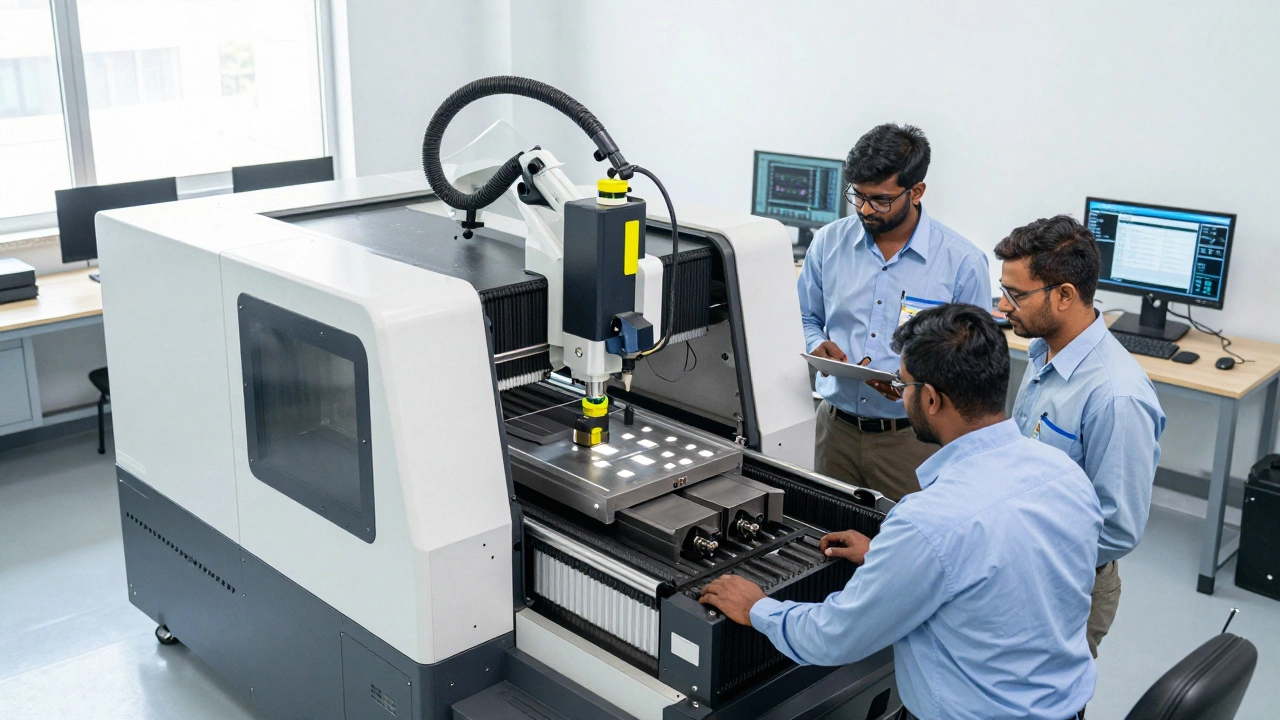
Historically, a small scale industry was defined by headcount. If you had fewer than 100 workers, you were "small." Today, that metric is largely obsolete. Why? Because robotics and software have decoupled labor from production volume. A team of five engineers running automated CNC machines can produce more parts than a factory with fifty manual laborers did in 1990.
The modern definition focuses on two main pillars: investment in plant and machinery and annual turnover. These metrics provide a clearer picture of the economic footprint of the business. For instance, in India, the Micro, Small and Medium Enterprises Development (MSMED) Act classifies businesses based on these financial thresholds rather than just workforce size.
This shift acknowledges that a "small" business can still be technologically sophisticated. It also protects smaller players from being swallowed up by larger conglomerates in regulatory frameworks. When we talk about small scale manufacturing now, we are talking about agility, niche specialization, and localized production capabilities rather than sheer scale.
Classification Criteria: Micro, Small, and Medium
To understand where your business fits, you need to look at the specific brackets. While regulations vary by country, the structure is similar globally. Let’s use the Indian MSME classification as a primary example, as it is one of the most widely referenced models for developing economies.
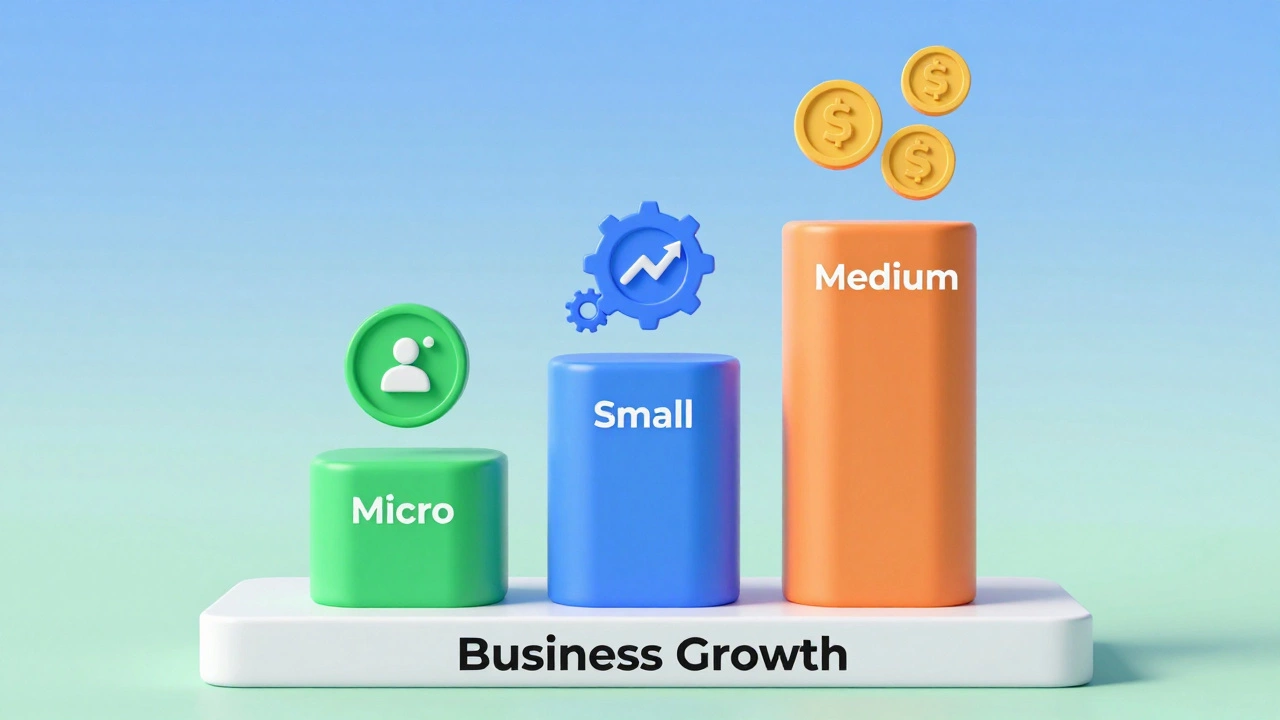
- Micro Enterprise: Investment in plant and machinery or equipment is up to ₹1 crore, and annual turnover is up to ₹5 crore.
- Small Enterprise: Investment is up to ₹10 crore, and annual turnover is up to ₹50 crore.
- Medium Enterprise: Investment is up to ₹50 crore, and annual turnover is up to ₹250 crore.
Note that these figures apply to both manufacturing and services, though service sectors sometimes have slightly lower caps depending on the specific sub-sector. The key takeaway is that "small scale" sits comfortably between the micro-level startup and the medium-sized corporation. It is the sweet spot for entrepreneurs who have moved beyond the garage phase but aren’t ready for corporate bureaucracy.
If your investment exceeds ₹10 crore, you generally graduate out of the "small" category into "medium," which changes your eligibility for certain subsidies. Therefore, accurate bookkeeping isn’t just about taxes; it’s about maintaining your status for benefits.
Why Does Classification Matter?
You might wonder why the label matters if you’re just selling products. The truth is, the tag opens doors that are otherwise locked. Being classified as a small scale industry grants access to specific government initiatives designed to boost local economies.
First, there’s the issue of credit. Banks often hesitate to lend to unproven entities. However, many financial institutions have dedicated desks for MSME loans. These loans often come with lower interest rates, longer repayment tenures, and less stringent collateral requirements compared to standard commercial loans. In some regions, governments guarantee a portion of these loans, reducing risk for lenders.
Second, procurement policies favor small businesses. Many government agencies mandate that a certain percentage of their purchases must go to small scale enterprises. This is known as public procurement reservation. If you’re making furniture, electronics components, or even food products, this can be a stable source of revenue.
Third, there are tax holidays and exemptions. Small industries often enjoy reduced tax rates during their initial years of operation. Additionally, compliance burdens are lighter. You don’t need a full-time legal team to navigate labor laws or environmental regulations if you fall under the small scale umbrella.
Sectors Dominated by Small Scale Industries
Small scale industries are not confined to one type of product. They form the backbone of several major sectors. Here are a few areas where they thrive:
- Textiles and Garments: From boutique clothing brands to specialized fabric weaving, this sector relies heavily on small units that can quickly adapt to fashion trends.
- Food Processing: Local bakeries, dairy cooperatives, and spice grinding units are classic examples. They benefit from short supply chains and fresh distribution networks.
- Electronics Assembly: With the rise of IoT devices, small workshops are assembling sensors, smart home gadgets, and custom PCBs. This requires precision rather than mass volume.
- Furniture and Woodwork: Custom cabinetry and artisanal wood products are dominated by small scale manufacturers who offer personalization that large factories cannot match.
- Chemicals and Dyes: Specialized chemical blending for niche industrial applications is often handled by small plants that focus on high-margin, low-volume products.
The common thread here is specialization. Large corporations excel at economies of scale-making millions of identical units cheaply. Small scale industries excel at economies of scope-making a variety of customized or specialized products efficiently.
Challenges Facing Small Scale Manufacturers
It’s not all subsidies and tax breaks. Running a small scale industry comes with distinct hurdles. One of the biggest is access to raw materials. Large competitors often sign long-term contracts with suppliers, locking in lower prices. As a small player, you might pay premium rates for smaller batches, squeezing your margins.
Technology adoption is another double-edged sword. While automation helps, the upfront cost of modern machinery can be prohibitive. A small textile unit might struggle to afford a digital printing press that costs millions, forcing them to rely on older, slower methods. This creates a productivity gap between small and large players.
Furthermore, market reach is limited. Without a massive marketing budget, breaking into national or global markets is tough. Many small scale industries remain stuck in local loops, unable to scale their distribution. E-commerce platforms have helped mitigate this, but logistics costs for small shipments remain high.

How to Start a Small Scale Industry in 2026
If you’re planning to launch, start with a lean approach. Don’t over-invest in machinery immediately. Instead, focus on validating your product-market fit. Here is a practical roadmap:
- Conduct Market Research: Identify a niche where large players are ignoring customer needs. Look for gaps in customization or speed.
- Create a Business Plan: Detail your projected turnover and investment. This document will be crucial for registration and loan applications.
- Register Your Entity: Obtain the necessary licenses. In many countries, registering as an MSME is free and done online. Get your Udyam Registration (in India) or equivalent certificate.
- Secure Funding: Approach banks with MSME-specific loan schemes. Consider government grants for innovation or green manufacturing.
- Set Up Production: Start with essential machinery. Use leasing options for expensive equipment to keep initial investment low.
- Build Supply Chains: Connect with local suppliers to reduce logistics costs. Join industry clusters to share resources like testing labs or warehouses.
Remember, the goal is to stay agile. Keep your overheads low and your response time fast. That is the competitive advantage of the small scale model.
The Future of Small Scale Manufacturing
Looking ahead, the line between small and large will continue to blur due to technology. Cloud computing, AI-driven design tools, and shared manufacturing platforms (like industrial Airbnb) are lowering barriers to entry. A small workshop can now access design capabilities that were once reserved for giants.
Sustainability is also becoming a key driver. Consumers prefer locally made, eco-friendly products. Small scale industries are better positioned to adopt circular economy practices-recycling waste, using renewable energy, and minimizing carbon footprints-because they are closer to their customers and can pivot quickly.
As global supply chains face disruptions, there is a renewed interest in reshoring production. This trend favors small scale industries that can set up near end-users, reducing dependency on international logistics. The future belongs to those who can combine local agility with global connectivity.
What is the difference between a small scale industry and a cottage industry?
A cottage industry is typically home-based, uses minimal machinery, and relies heavily on manual labor. A small scale industry operates from a dedicated facility, uses mechanized equipment, and has a formal organizational structure. Cottage industries are a subset of micro-enterprises, while small scale industries are more structured and scalable.
Can a small scale industry export its products?
Yes, absolutely. Many government schemes specifically support exports from small scale industries through subsidies on shipping, insurance, and participation in international trade fairs. Exporting can help small businesses overcome domestic market limitations.
Is it mandatory to register as a small scale industry?
Registration is not always mandatory for operation, but it is highly recommended. Without registration, you cannot avail government benefits, priority sector lending, or participate in public tenders reserved for small enterprises. In many jurisdictions, self-declaration is sufficient for registration.
What happens if my turnover exceeds the small scale limit?
If your investment or turnover crosses the threshold, you automatically move to the next category (e.g., from Small to Medium). You lose eligibility for small-specific benefits but gain access to medium-enterprise schemes. You should update your registration details to reflect this change.
Do small scale industries get tax benefits?
Yes, many countries offer tax holidays, reduced corporate tax rates, or exemptions on goods and services tax (GST) for small scale industries up to a certain turnover limit. These incentives are designed to encourage entrepreneurship and job creation.