Plastic Production Calculator
How Much Plastic Do You Use?
Estimate your annual plastic consumption based on common packaging items you use daily.
Over 400 million tons of plastic are made every year. That’s more than the total weight of all humans on Earth. But not all industries make the same amount. One sector dominates-by a huge margin. It’s not cars. Not electronics. Not even clothing. The biggest producer of plastic is the packaging industry.
Packaging Is the Plastic Giant
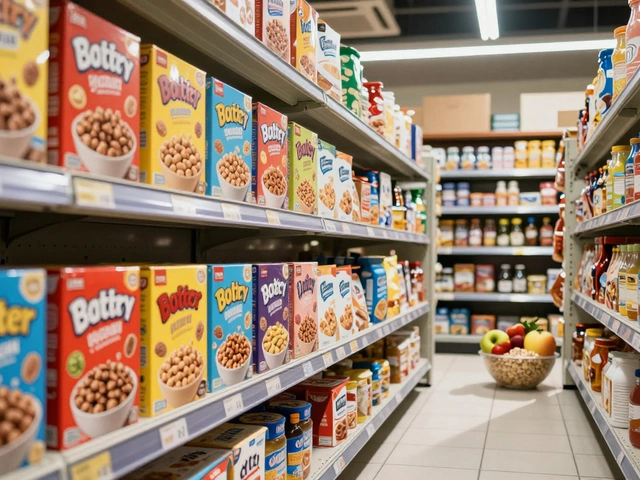
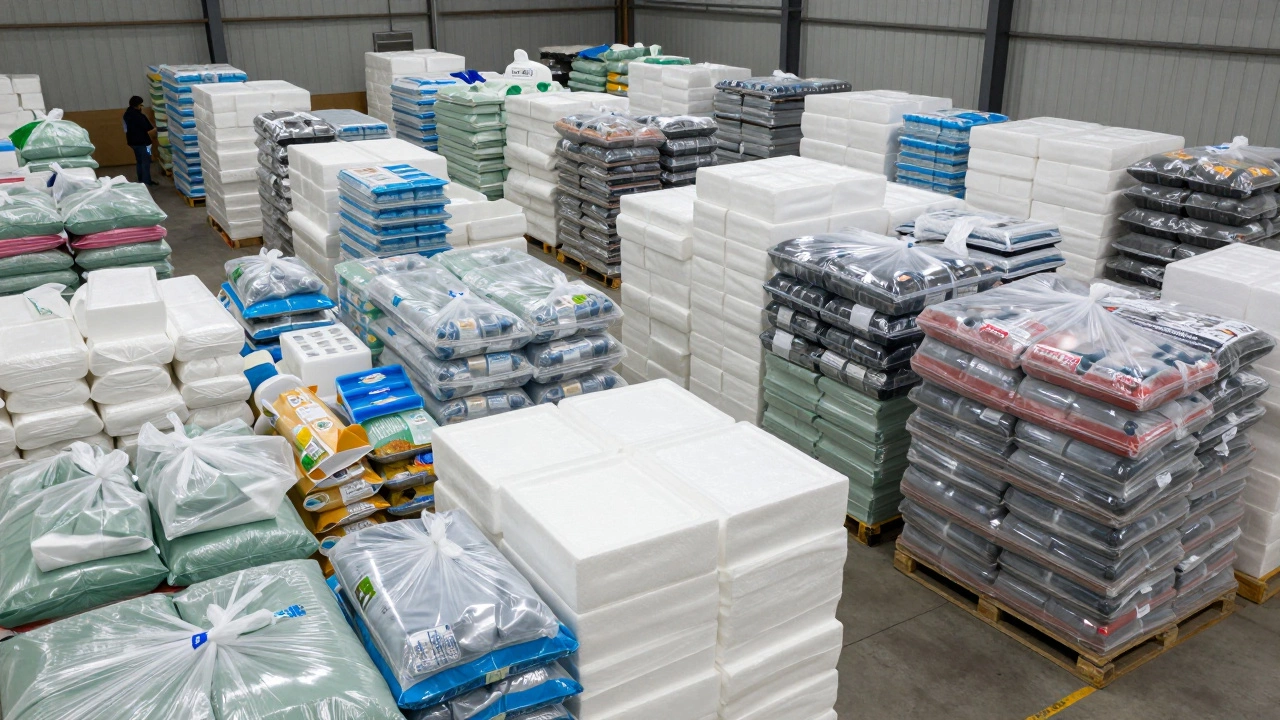
More than 36% of all plastic ever made goes into packaging. That’s over 145 million tons annually. Think about every plastic bag, food wrapper, bottle, bubble wrap, clamshell container, and shipping pouch you’ve used in the last month. Now multiply that by billions of people and thousands of companies. That’s the scale.
Single-use packaging is the main driver. Grocery stores, online retailers, fast food chains, and e-commerce giants rely on it because it’s cheap, lightweight, and seals products from contamination. A single Amazon box might contain five different plastic layers: a polyethylene bag, a foam insert, a plastic tape seal, a shrink-wrapped product, and a plastic label. All of it is designed to be thrown away after one use.
Food packaging alone accounts for nearly half of all plastic packaging. Think yogurt cups, salad bags, snack pouches, coffee capsules, and microwave meal trays. These items are often made from mixed plastics that can’t be recycled together. Even when they’re labeled ‘recyclable,’ most end up in landfills or oceans because sorting them is too expensive or technically impossible.
Why Packaging Dominates
Plastic replaced glass, metal, and paper in packaging for good reasons. It’s cheaper to produce. It’s lighter, so shipping costs drop. It keeps food fresh longer, reducing spoilage. For companies, the math is simple: plastic cuts costs and boosts shelf life. For consumers, it’s convenient.
But the real reason packaging leads in plastic use isn’t innovation-it’s volume. The global food and beverage market moves trillions of units every year. Every unit needs protection. Plastic delivers it at scale. No other industry comes close in sheer tonnage.
Compare that to automotive, which uses about 12% of global plastic-mostly for dashboards, bumpers, and interior parts. Or electronics, which uses around 8% for casings and wiring insulation. Even textiles, which rely on synthetic fibers like polyester (a plastic), only account for about 15%. Packaging still crushes them all.
Who Makes the Plastic for Packaging?
The plastic itself comes from a handful of giant chemical manufacturers. Companies like Dow, ExxonMobil, SABIC, and BASF produce the raw polymers-polyethylene, polypropylene, PET, PVC-that are then turned into packaging by converters. These converters are often smaller factories that heat, mold, and print the plastic into final forms: bottles, films, containers.
These converters don’t just serve one market. They supply supermarkets, pharmaceutical firms, cosmetics brands, and online retailers. But packaging is their biggest customer. In the U.S., over 70% of plastic resin sales go to packaging applications. In Europe, it’s 65%. In Asia, where e-commerce is exploding, that number is rising fast.
China alone produces more plastic packaging than the entire European Union. India and Southeast Asia are catching up quickly. The growth isn’t slowing. The World Bank estimates global plastic packaging demand will rise another 40% by 2030.
It’s Not Just the Plastic-It’s the System
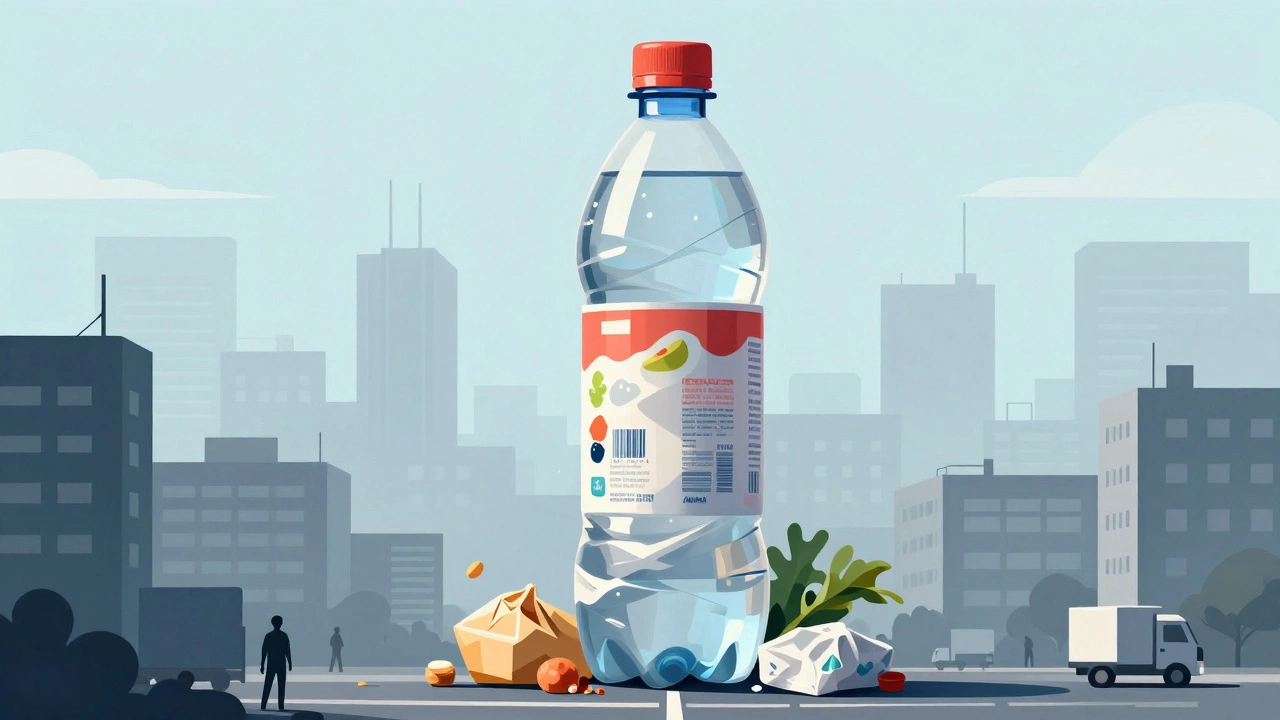
Blaming consumers for plastic waste misses the point. The system was built to make disposable packaging cheap and easy. Designers don’t prioritize reuse. Recyclers don’t get paid enough to sort complex layers. Governments don’t enforce extended producer responsibility strongly enough.
Take the coffee capsule market. In 2023, Nestlé sold over 40 billion Nespresso capsules. Each one is a tiny mix of aluminum and plastic. Only 1 in 5 gets recycled. Why? Because the design makes separation hard, and recycling infrastructure doesn’t exist for that niche. The same goes for multi-layer snack bags. They’re impossible to recycle with current tech. Yet they’re everywhere.
Companies know this. But changing the design means higher costs, slower production, and potential customer backlash. Why fix what’s profitable?
What’s Being Done?
Some progress is happening. The EU banned single-use plastics like straws, cutlery, and plates in 2021. Canada followed in 2022. Several U.S. states now require minimum recycled content in bottles. Brands like Coca-Cola and PepsiCo have pledged to use 50% recycled plastic by 2030. But actual progress is slow.
Some startups are experimenting with compostable packaging made from seaweed, cornstarch, or mushroom roots. But these materials are still expensive and don’t perform as well in wet or hot conditions. They’re not ready to replace plastic at scale.
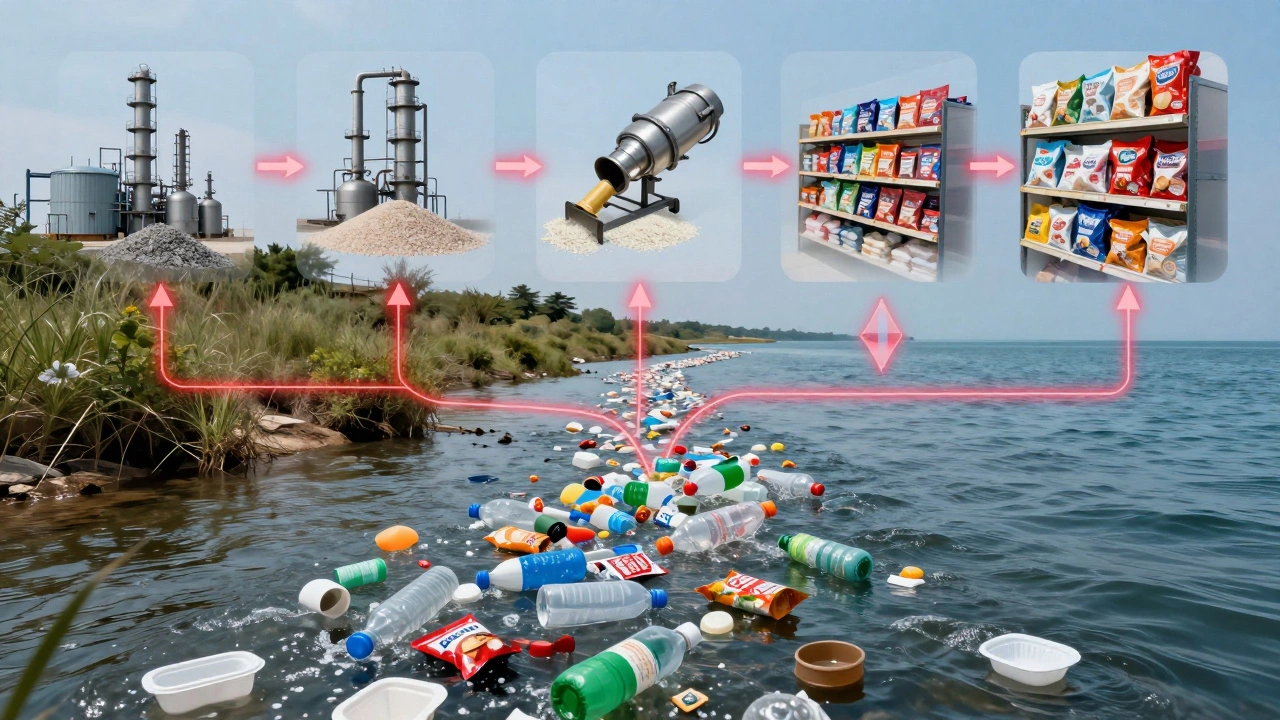
Meanwhile, recycling rates for packaging remain dismal. In the U.S., only 5% of plastic packaging gets recycled. In the EU, it’s 30%. In most developing countries, it’s under 10%. The rest? Burned, buried, or dumped.
The Bigger Picture
Plastic isn’t the enemy. It’s a tool. But when 36% of all plastic is used for something that lasts minutes and lasts centuries, something’s wrong.
True change won’t come from banning bags or recycling more. It’ll come from redesigning how products are delivered. Refill stations. Reusable containers. Deposit-return systems. Digital tracking of packaging. These models exist-but they’re still niche.
The packaging industry won’t change unless the economics change. If governments start charging real fees for single-use plastic, or if retailers start rewarding reusable packaging with lower shelf fees, the market will shift. Until then, plastic production will keep rising-and so will the waste.
What You Can Do
You can’t fix the system alone. But you can vote with your wallet. Buy in bulk. Choose products in glass or metal. Support brands that use refill systems. Avoid impulse buys wrapped in plastic. Don’t assume something labeled ‘eco-friendly’ is actually better-check the details.
And ask: Why does this need so much plastic? The more you question it, the more pressure builds on companies to change.