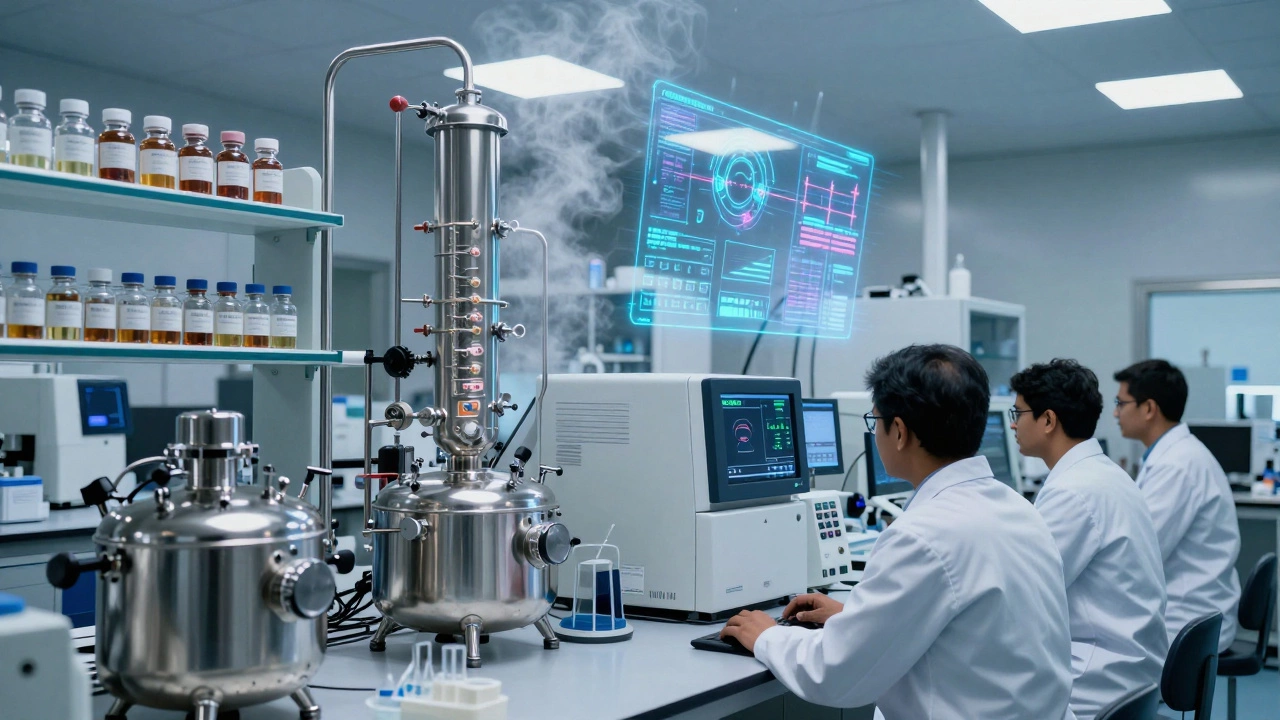
Manufacturing Profit Margin Calculator
Based on industry averages from 2026 analysis. Actual margins may vary based on scale, regulation, and innovation.
If you're asking which manufacturing business makes the most money, you're not just curious-you're probably thinking about where to put your time, money, and effort. The answer isn't a single factory or a magic product. It’s about margins, scale, regulation, and how much you can charge versus how much it costs to make. In 2026, the clear winner isn’t what you might expect. It’s not cars, not phones, not even plastic bottles. It’s pharmaceutical manufacturing.
Why Pharmaceuticals Lead the Pack
Pharmaceutical companies don’t just make pills. They create intellectual property that can’t be copied overnight. A single drug patent can last 20 years, and during that time, the company controls the market. The cost to produce a bottle of 60 tablets might be under $0.50. But the price? $150. Or $500. Or $2,000. That’s not inflation-that’s science, regulation, and exclusivity working together.
The global pharmaceutical market hit $1.5 trillion in 2025. Profit margins? On average, 20% to 30%. Some blockbuster drugs like Humira or Ozempic hit margins above 70%. That’s higher than Apple, higher than Tesla, higher than most tech companies. Why? Because once you get FDA or EMA approval, you have a legal monopoly. Competitors can’t just copy the formula. They have to run their own expensive trials, which takes 10 years and $2 billion.
Even generic drug makers-those who make copies after patents expire-still make solid profits. Their margins hover around 15% to 25%, because they skip the R&D cost. They just need to prove bioequivalence. That’s why India and China dominate generic production. They’ve turned manufacturing into a high-volume, low-cost machine with razor-thin overhead.
How It Compares to Other High-Profit Industries
Let’s put this in perspective. Electronics manufacturing? You think smartphones are profitable. They’re not. Apple makes money on design and branding, but the actual assembly? Foxconn makes pennies per phone. Labor, components, shipping, quality control-it eats up the margins. Most electronics manufacturers run at 5% to 8% net profit.
Chemical manufacturing? Big players like Dow or BASF make decent money-10% to 15% margins. But they’re tied to oil prices, environmental regulations, and global supply chains. One pipeline shutdown or new EPA rule can wipe out quarterly gains.
Food processing? High volume, low margin. A bag of chips costs 12 cents to make. Sells for $3. That sounds great-until you factor in marketing, distribution, shelf space fees, and spoilage. Most food manufacturers net 5% to 10%. And they’re competing with grocery store brands that undercut them by 30%.
Automobile manufacturing? Even luxury brands like BMW or Mercedes only average 8% to 12% profit. The cost of factories, robotics, recalls, and emissions compliance is massive. And electric vehicles? They’re still losing money per unit for most makers. Battery costs alone eat up 40% of the total price.
Plastic manufacturing? Margins are shrinking. With bans in the EU and California, demand is dropping. Plus, recycled plastic is cheaper than virgin material now. Most players are barely breaking even.
What Makes Pharmaceuticals Different?
Three things: regulation, exclusivity, and demand.
First, regulation. The FDA doesn’t just approve drugs-it demands proof of safety and effectiveness. That’s a barrier to entry. Only deep-pocketed companies can afford the trials. That keeps competition low.
Second, exclusivity. Patents are legal shields. No one else can make the drug until the patent runs out. Even then, generics take time to enter the market. That gives the original maker years of monopoly pricing.
Third, demand. People don’t choose whether to take insulin or chemotherapy. They need it. Even in recessions, pharmaceutical sales stay steady. Healthcare spending doesn’t drop like car sales or fashion trends. It’s a necessity, not a luxury.
And now, with aging populations worldwide-especially in the U.S., Japan, and Germany-the demand for chronic disease drugs is climbing. Type 2 diabetes, heart failure, arthritis, Alzheimer’s-these aren’t going away. They’re growing. That’s why companies are pouring billions into biologics and gene therapies. The next wave of high-margin drugs isn’t pills-it’s injections and one-time treatments that cost $1 million per patient.
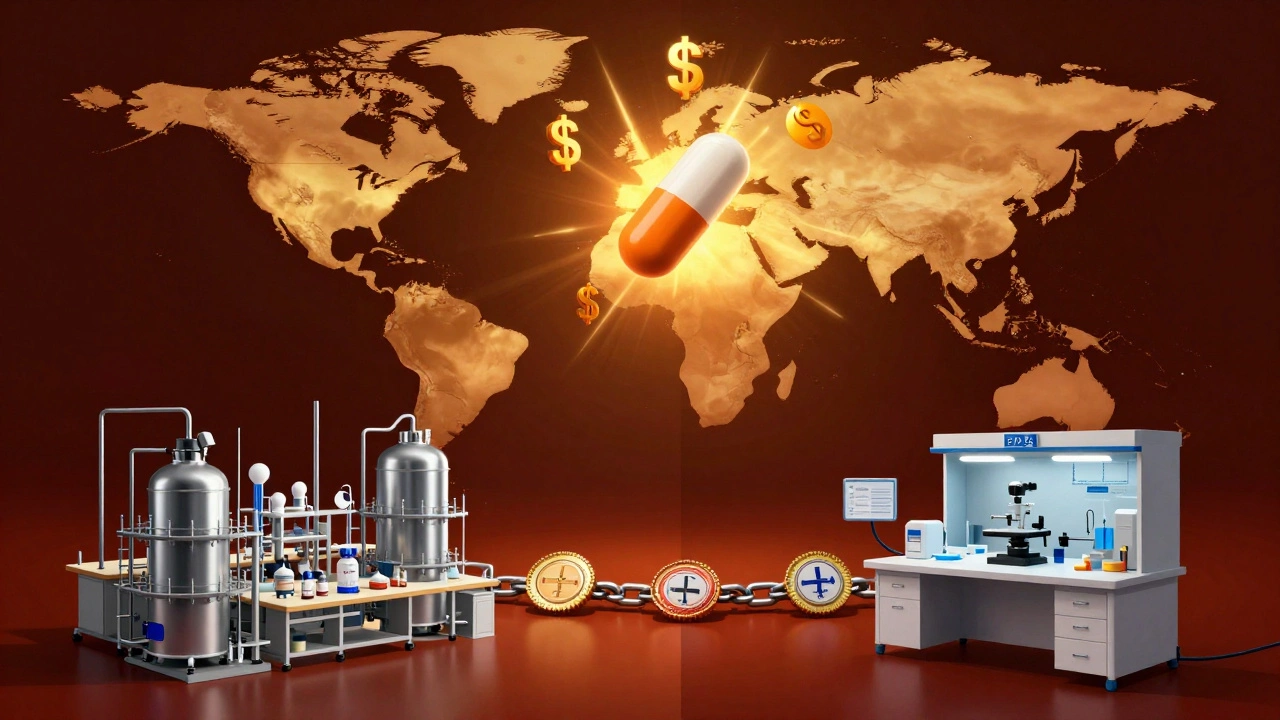
Is Pharmaceutical Manufacturing Right for You?
Here’s the catch: you can’t start a pharmaceutical company in your garage. Even small-scale drug manufacturing requires:
- ISO-certified clean rooms
- Licensed chemists and pharmacists
- Regulatory filings with FDA, EMA, or equivalent
- Quality control labs with HPLC and mass spectrometers
- Millions in upfront capital
That’s why most small players don’t make drugs-they make ingredients. Active Pharmaceutical Ingredients (APIs). That’s where real opportunity lies for entrepreneurs.
India’s API market is worth $28 billion and growing. China makes over 70% of the world’s APIs. But new regulations in the U.S. and EU are pushing for local sourcing. The Inflation Reduction Act of 2022 included $2 billion for domestic API production. That’s a green light for startups with the right technical team.
If you have access to a chemical lab, experienced chemists, and a way to navigate regulatory paperwork, producing APIs for generic drugs is the most profitable niche in manufacturing today. Margins? 25% to 40%. And you don’t need to run clinical trials. You just need to match the purity and structure of the original compound.
Other High-Margin Manufacturing Options
Pharma isn’t the only game in town. Here are three other high-margin manufacturing areas that are growing fast in 2026:
- Medical devices: Think insulin pumps, wearable glucose monitors, or smart inhalers. Margins: 30% to 50%. Low volume, high value. Regulatory hurdles are high, but once approved, you’re locked in.
- Specialty chemicals: Not bulk chemicals-think pigments for cosmetics, flame retardants for EV batteries, or biodegradable polymers for packaging. Margins: 20% to 35%. Niche markets, less competition.
- Custom battery packs: For drones, medical devices, or electric tools. Lithium-ion cells are cheap. Assembling them into custom shapes with smart BMS (battery management systems) adds huge value. Margins: 25% to 40%. Demand is exploding with the rise of robotics and portable tech.
These aren’t mass-market products. They’re tailored. That’s the pattern: the more specialized, the higher the margin. The more you can say, “Only we can make this,” the more you can charge.
What to Avoid
Stay away from:
- Consumer electronics assembly
- Basic plastic injection molding
- Standard furniture production
- Commodity textiles
These are low-margin, high-volume, and hyper-competitive. You’re competing against factories in Bangladesh, Vietnam, and Mexico that pay $2 an hour. Unless you have automation, IP, or branding, you’ll lose.
Bottom Line
Pharmaceutical manufacturing, especially API production for generics, has the highest profit margins in 2026. But it’s not for everyone. It needs expertise, capital, and patience. If you don’t have those, look at medical devices or specialty chemicals. They’re easier to enter, still profitable, and growing fast.
Profit isn’t about what you make. It’s about what you control. If you control the formula, the approval, and the demand-you control the price. That’s the real manufacturing advantage.
Is pharmaceutical manufacturing profitable for small businesses?
Yes-but not by making finished drugs. Small businesses can profit by producing Active Pharmaceutical Ingredients (APIs) for generic medications. This avoids the cost of clinical trials and FDA approval for the final product. Margins can reach 25% to 40% if you meet quality standards and secure contracts with larger distributors.
Why don’t more companies enter pharmaceutical manufacturing?
The barriers are high: regulatory approval takes 5-10 years, costs $100 million to $2 billion, and requires specialized labs and trained scientists. Only companies with deep funding and long-term vision can survive the process. Most startups avoid it because the risk is too high without guaranteed returns.
Are there alternatives to pharma with similar profit margins?
Yes. Medical device manufacturing-like wearable health monitors or custom implant components-offers 30% to 50% margins. Specialty chemicals for niche markets (e.g., EV battery additives or cosmetic pigments) also hit 20% to 35%. These fields require technical expertise but have lower regulatory hurdles than full drug production.
How do generic drug makers make money if the drugs are cheap?
They make money through volume and low overhead. Once a patent expires, dozens of companies can produce the same drug. The cheapest producer wins. But since production costs are under $0.50 per bottle and they sell thousands of bottles daily, even a 15% margin adds up fast. India and China dominate this space because of low labor and production costs.
Can automation improve profit in manufacturing?
Absolutely. In any manufacturing business, labor is the biggest variable cost. Automating mixing, packaging, or quality checks can cut labor costs by 40% to 60%. For high-margin industries like pharma or medical devices, automation boosts profit even more by reducing errors and speeding up compliance audits.
If you’re serious about high-profit manufacturing, don’t chase volume. Chase control. Control over your product, your market, and your pricing. That’s where the real margins live.