Manufacturer Status Checker
Not sure if you qualify for manufacturing incentives? Answer these 5 questions to get an instant preliminary assessment of your status based on federal criteria like "Substantial Transformation."
Preliminary Assessment
Key Criteria Check
Recommended Action
You think you’re a manufacturer. You buy raw materials, you tweak them, and you sell the result. But when you try to apply for a specific federal definition based tax break or grant, the government says no. Why? Because legally, what you do might not count as "manufacturing." It’s frustrating, right? The line between assembly, processing, and true manufacturing is blurrier than most business owners expect.
Getting this wrong costs money. You could miss out on millions in incentives, or worse, face penalties for misclassifying your operations. Whether you are looking at US federal standards or aligning with global benchmarks often cited in UK industrial policy, the core logic remains similar: transformation is key. This guide cuts through the legal jargon to show you exactly how regulators decide if you qualify as a manufacturer.
The Core Legal Test: Transformation vs. Assembly
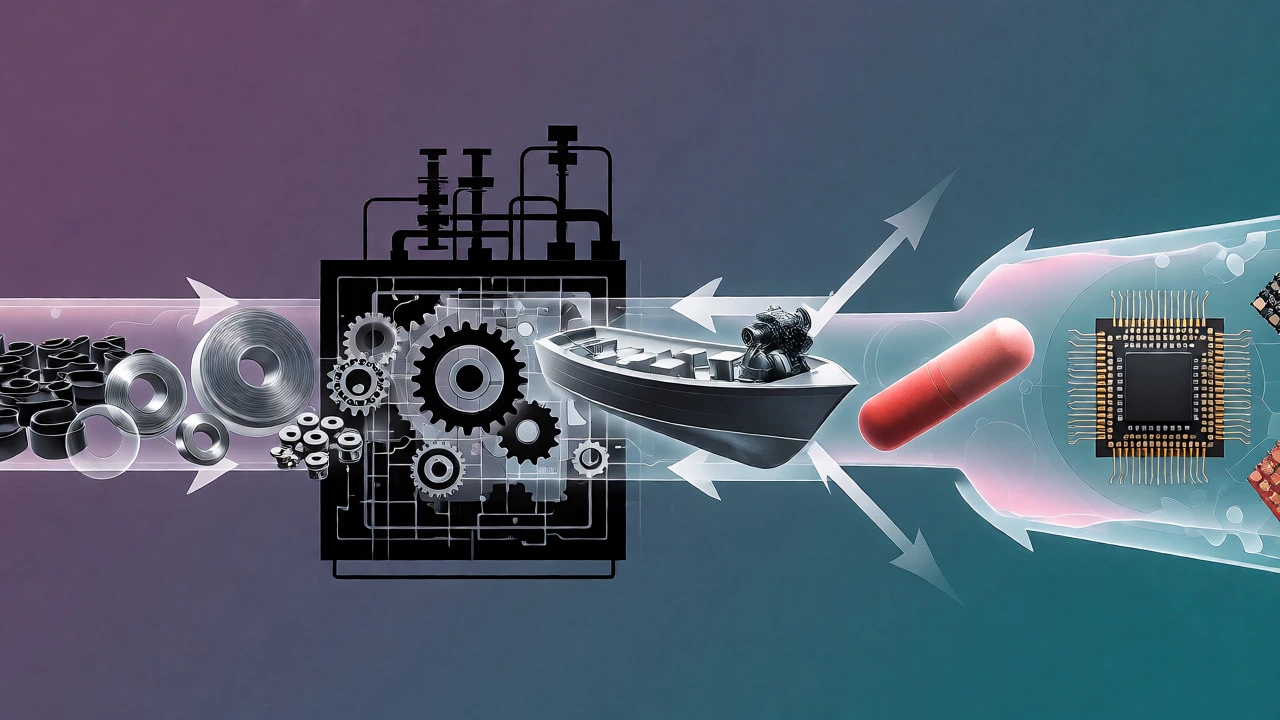
At its heart, the federal definition of a manufacturer hinges on one concept: substantial transformation. You aren't just putting parts together; you are creating something new with a different name, character, or use. If you take steel and bend it into a bracket, that’s fabrication. If you take steel, plastic, and electronics and combine them to create a functioning medical device, that’s manufacturing.
Regulators look for a change in identity. Does the final product have a distinct utility compared to its components? For example, mixing ingredients to make salad dressing is food processing. But synthesizing a new chemical compound from base elements is manufacturing. The distinction often determines which tax codes apply to you.
| Activity Type | Process Description | Federal Status |
|---|---|---|
| True Manufacturing | Substantial transformation of raw materials into new goods with different names, characters, or uses. | Qualifies for manufacturing incentives |
| Assembly | Combining pre-manufactured parts without changing their fundamental nature (e.g., screwing legs onto a table). | Often classified as retail or service |
| Processing | Changing form but not necessarily creating a new product identity (e.g., cutting lumber). | Context-dependent; may require further refinement |
Why the Distinction Matters for Government Schemes
Most government schemes, whether in the US or the UK, target manufacturing specifically because it creates high-value jobs and local supply chains. A warehouse that repacks boxes isn’t creating the same economic ripple effect as a factory that molds plastic casings. When you apply for grants like the Advanced Manufacturing Production Credit (45X) in the US or similar industrial strategy funds elsewhere, auditors will check your NAICS code (North American Industry Classification System) or SIC code.
If your primary activity is coded under Wholesale Trade rather than Manufacturing, you likely won’t qualify. The federal government uses these codes to track economic health. Mislabeling yourself can trigger audits. For instance, if you import finished goods and only label them locally, you are a distributor, not a manufacturer. The value added must be significant enough to justify the classification.

Key Criteria Used by Federal Agencies
Agencies like the IRS and the Department of Commerce don’t guess. They use specific tests. Here is what they actually look for:
- Change in Name: The output must have a different commercial name than the input. Steel becomes a car door.
- Change in Character: The physical properties must change. Liquid chemicals become solid tablets.
- Change in Use: The end-user uses the product differently than the component. Rubber tires are used for traction, not just as rubber material.
- Capital Investment: Did you invest in machinery capable of transformation? Buying a CNC machine suggests manufacturing intent. Buying a pallet jack suggests distribution.
Consider a company that buys engines, installs them into boats, and sells the boats. Are they a boat manufacturer or an assembler? In many federal contexts, if the engine installation requires significant engineering, wiring, and customization, it leans toward manufacturing. If it’s just bolting a standard crate engine into a hull, it’s closer to assembly. This nuance decides your eligibility for R&D tax credits.
Common Pitfalls That Disqualify Businesses
Many small businesses assume that any work done in a workshop counts as manufacturing. It doesn’t. Here are three common traps:
- Contract Manufacturing Confusion: If you hire another company to make your product, you are the brand owner, not the manufacturer. The federal definition usually applies to the entity performing the physical transformation, though brand owners can sometimes claim rights depending on the specific scheme.
- Maintenance and Repair: Fixing a machine is not manufacturing. Even if you fabricate a replacement part during the repair, the primary service is maintenance. Unless you mass-produce those parts for sale, you aren’t a manufacturer.
- Software Integration: Installing software onto hardware you didn’t build often doesn’t count. However, if you design custom firmware that fundamentally changes how the hardware operates, you might argue for a manufacturing or hybrid status. This is a gray area requiring careful documentation.
Documentation is your best defense. Keep detailed records of your production processes. Photos of raw materials entering your facility and finished goods leaving help prove the transformation occurred on-site.
International Context: US vs. UK Perspectives
While the term "federal" implies the United States, understanding the global context helps if you export. In the UK, HM Revenue & Customs (HMRC) looks at similar principles for capital allowances. The concept of "industrial building" for tax relief relies heavily on the manufacturing process occurring within the structure.
In the EU, the Common Customs Tariff uses the "last substantial transformation" rule to determine origin. If you assemble Chinese components in Germany, does it become German-made? Only if the assembly adds significant value and complexity. This mirrors the US federal approach. Consistency across borders matters if you rely on international trade agreements or export incentives.
How to Verify Your Status
Don’t wait for an audit to find out you’re misclassified. Take these steps now:
- Audit Your NAICS Code: Look up your current code. Codes starting with 31-33 are Manufacturing. Codes starting with 42 are Wholesale. If you’re in 42 but doing 33 work, consult a tax professional about switching.
- Map Your Value Chain: Calculate the percentage of value you add. If you add less than 10-15% through labor and overhead, you might be seen as a reseller.
- Review Equipment Assets: List your fixed assets. Do you own lathes, presses, and ovens? Or just shelves and computers? Asset type signals business intent.
If you are unsure, request a private letter ruling from the IRS (in the US) or seek guidance from a specialized tax attorney. It costs money upfront but saves headaches later. Remember, definitions evolve. Stay updated on legislative changes, especially regarding green energy manufacturing incentives which are expanding rapidly in 2026.
Does assembling kits count as manufacturing?
It depends on the complexity. Simple assembly of pre-cut, pre-drilled parts often does not meet the federal threshold for "substantial transformation." However, if the assembly involves intricate engineering, testing, and configuration that results in a new functional product, it may qualify. Each case is evaluated individually based on the degree of change.
Can I claim manufacturing tax credits if I outsource production?
Generally, no. Tax credits like the Domestic Production Activities Deduction (historically) or current advanced manufacturing credits typically apply to the entity performing the actual manufacturing process. As a brand owner who outsources, you are usually considered a seller or licensor, not the manufacturer, unless specific contract terms transfer risk and title in a way that satisfies agency rules.
What is the difference between processing and manufacturing?
Processing usually involves altering the form of a material without creating a new product identity (e.g., milling grain into flour). Manufacturing involves creating a new article with a different name, character, or use (e.g., baking flour into bread). While both involve physical changes, manufacturing carries higher regulatory and tax implications due to the creation of new goods.
Do software companies count as manufacturers?
Traditionally, no. Software development is classified under Information Technology services. However, if you embed proprietary software into hardware you design and produce, you may qualify as a manufacturer of electronic devices. Pure SaaS (Software as a Service) providers rarely meet the federal definition of a manufacturer.
How does the NAICS code affect my manufacturer status?
The North American Industry Classification System (NAICS) assigns codes based on primary business activity. Codes 31-33 denote manufacturing. If your revenue primarily comes from selling goods you made, you should fall under these codes. Being coded incorrectly (e.g., under Retail or Wholesale) can disqualify you from specific federal grants and tax benefits designed for the manufacturing sector.