Food Forming Technique Selector
Result
TechniqueExplanation goes here.
Examples:
Have you ever wondered why a chocolate bar snaps cleanly while a piece of bread tears softly? Or why a potato chip holds its perfect ripple shape all the way from the factory to your snack bowl? The answer lies in a fundamental step often overlooked by consumers but critical for manufacturers: forming.
In the world of food processing is the transformation of raw agricultural products into edible goods through various mechanical, thermal, or chemical methods, forming is the stage where ingredients take their final physical shape. It’s not just about aesthetics; it dictates how food cooks, how it tastes, how long it lasts on the shelf, and even how much air or moisture it contains.
The Core Concept of Food Forming
At its simplest, forming is the application of force to food materials to change their shape without significantly altering their chemical composition. Think of it as sculpting, but with dough, batter, meat, or puree instead of clay. This process bridges the gap between mixing ingredients and the final cooking or packaging stages.
Why does this matter? Because shape affects function. A flattened cookie bakes faster than a thick mound of dough. A uniform sausage link ensures even cooking. A precisely shaped pasta piece absorbs sauce differently than an irregular one. In industrial settings, consistent forming is essential for automation, ensuring that every unit fits into packaging machines and meets quality control standards.
Major Techniques in Food Forming
Manufacturers don’t use a single method for every product. The technique depends entirely on the material’s properties-its viscosity, elasticity, and moisture content. Here are the most common approaches:
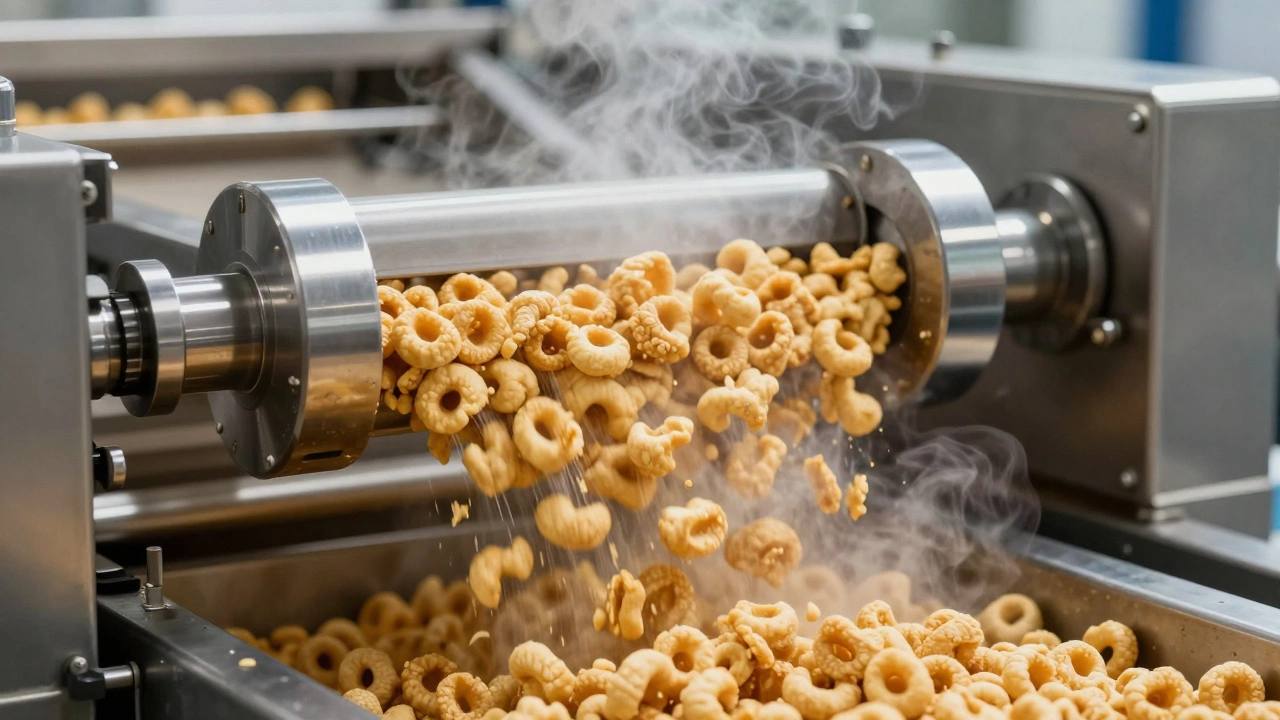
- Extrusion: This is arguably the most versatile forming method. Imagine pushing toothpaste out of a tube, but on an industrial scale. Extrusion cooking is a continuous thermo-mechanical process where food ingredients are forced through a die under high pressure and temperature. It’s used for breakfast cereals, pasta, pet food, and textured vegetable proteins (TVP). The combination of shear and heat gelatinizes starches and denatures proteins, creating unique textures that wouldn’t exist otherwise.
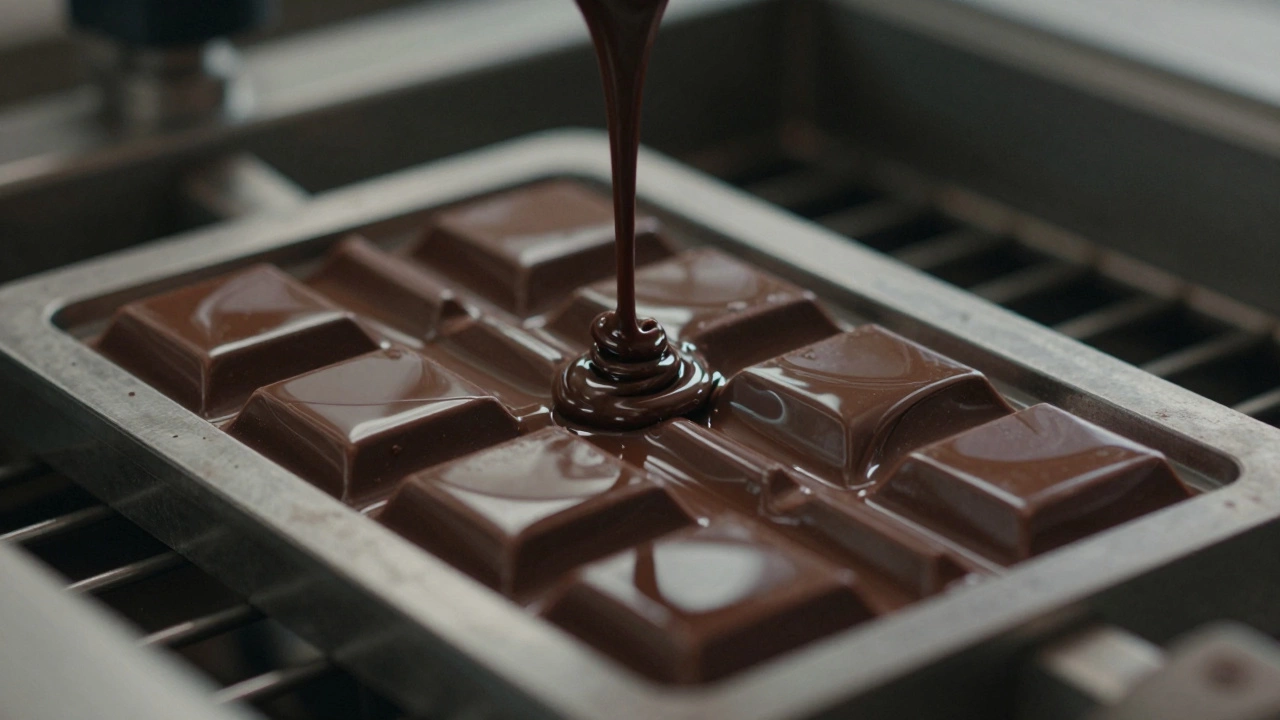
- Molding: Used for semi-solid or viscous products. Chocolate bars, cheese blocks, and some confectionery items are poured into molds where they cool and set. The mold defines the external geometry, while the internal structure develops during cooling.
- Dough Sheeting and Cutting: Common in bakery production. Dough is passed through rollers to achieve a specific thickness (sheeting) and then cut into shapes using rotary cutters or wire cutters. This is how bagels, cookies, and flatbreads get their form.
- Emulsification and Stuffer Forming: Critical for meat products like sausages and hot dogs. Ground meat, fat, and spices are emulsified into a paste and then stuffed into casings. The pressure and nozzle design determine the diameter and smoothness of the final product.
- Air Classification and Flaking: For lighter products like corn flakes or certain snacks, wet mixtures are steamed and then passed through large rolls to flatten them into thin sheets before cutting.
Extrusion: The Workhorse of Modern Forming
If you look at a supermarket shelf, extrusion is likely behind half the packaged goods. Its popularity stems from its ability to handle complex formulations. Unlike simple molding, extrusion can incorporate heating, mixing, and shaping in one continuous step.
There are two main types: twin-screw and single-screw extruders. Twin-screw extruders are more common in modern facilities because they offer better mixing and self-cleaning capabilities. As the screws rotate, they push the material forward while generating friction heat. This heat, combined with external barrel heaters, cooks the product. The final shape is determined by the die is a metal plate with a specific opening through which the extruded material passes to take its final cross-sectional shape at the end of the barrel.
For example, to make puffed rice cereal, the high-pressure environment inside the extruder keeps water in a liquid state despite high temperatures. When the mixture exits the die, the pressure drops instantly, causing the water to flash into steam. This expands the product, creating that airy, crunchy texture we love.
Molding and Cooling Dynamics
Molding seems straightforward, but it involves precise thermodynamics. Take chocolate tempering, for instance. If you simply pour melted chocolate into a mold, it will set dull and soft. Proper forming requires controlling the crystallization of cocoa butter. Manufacturers use tempering machines are devices that control the cooling and heating cycles of chocolate to stabilize cocoa butter crystals to ensure the chocolate snaps crisply and has a glossy finish.
Similarly, in cheese making, curds are pressed into molds to remove whey and achieve density. The pressure applied and the time spent in the mold affect the final texture, ranging from soft fresh cheeses to hard aged varieties.
Dough Handling and Bakery Forming
Bakery products present unique challenges because dough is viscoelastic-it flows like a liquid but also springs back like a solid. If you cut dough too quickly, it shrinks. If you handle it too roughly, you develop gluten networks that make the final product tough rather than tender.
Modern bakeries use automated depositors that pump batter into trays with pinpoint accuracy. For laminated doughs like croissants, forming involves careful folding and rolling to create distinct layers of fat and dough. Each fold multiplies the layers, resulting in the flaky texture after baking. Precision here is non-negotiable; uneven layers mean inconsistent rise and poor mouthfeel.
Meat and Seafood Forming
In the meat industry, forming is often linked to safety and yield. Emulsified meats like bologna or frankfurters require high-intensity mixing to bind fat and protein. If the forming process isn’t tight, air pockets can remain, leading to uneven cooking and potential bacterial growth. Vacuum stuffing systems are standard to eliminate these voids.
For seafood, surimi (fish paste) forming creates imitation crab sticks and fish balls. The paste is extruded into tubes, cooked, and then sliced. The texture must mimic real muscle fibers, requiring precise control over the extrusion speed and cooling rate.
| Technique | Best For | Key Mechanism | Common Products |
|---|---|---|---|
| Extrusion | Dry or semi-dry mixes | Pressure + Heat + Shear | Cereals, Pasta, TVP, Snacks |
| Molding | Liquids/Semi-solids | Cooling/Crystallization | Chocolate, Cheese, Confectionery |
| Dough Sheeting | Elastic doughs | Mechanical Compression | Cookies, Bagels, Flatbreads |
| Stuffing | Emulsions/Pastes | Pneumatic/Hydraulic Pressure | Sausages, Hot Dogs, Surimi |
Challenges in Industrial Forming
Getting the shape right is only half the battle. Maintaining consistency at high speeds is the real challenge. Equipment wear is a major issue. Dies erode over time, changing the dimensions of the product. Regular calibration is required to prevent deviations that could cause packaging jams or consumer complaints.
Another hurdle is ingredient variability. Natural ingredients like fruits, vegetables, and grains vary in moisture and fiber content depending on the harvest. An extruder tuned for low-moisture wheat might jam if fed high-moisture barley. Smart sensors and automated feedback loops help adjust screw speed and temperature in real-time to compensate for these variations.
Cleanability is also critical. Food residues can harbor bacteria. Forming equipment must be designed for easy disassembly and cleaning (CIP - Clean-in-Place systems). Complex dies with narrow channels are particularly difficult to clean, requiring specialized protocols to ensure food safety.
The Future of Food Forming
As consumer preferences shift toward plant-based diets and sustainable foods, forming technology is evolving. New materials, such as algae-based proteins or insect flour, have different rheological properties than traditional wheat or soy. They may be stickier, less elastic, or more prone to breaking. Engineers are developing new die geometries and processing conditions to handle these novel ingredients.
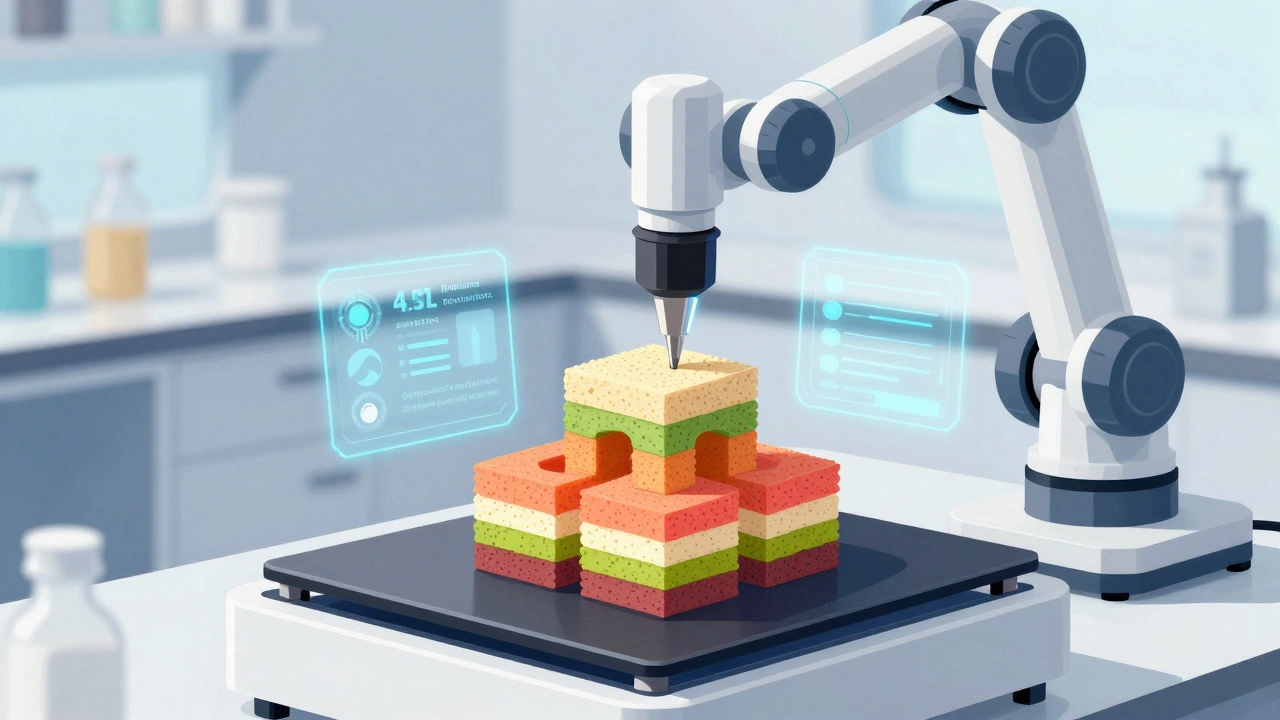
3D food printing is emerging as a niche but growing area. It allows for highly customized shapes and nutrient delivery. Imagine a printed meal where each bite contains a precise ratio of protein, vitamins, and flavor compounds. While still expensive, this technology offers unprecedented control over forming, moving beyond mass production to personalized nutrition.
Conclusion: More Than Just Shape
Forming is far more than a cosmetic step in food processing. It is a critical engineering discipline that influences texture, shelf life, nutritional retention, and consumer satisfaction. Whether you’re enjoying a crispy cereal, a smooth chocolate bar, or a juicy sausage, the forming process played a pivotal role in delivering that experience. Understanding these methods helps manufacturers innovate and consumers appreciate the complexity behind everyday foods.
What is the difference between extrusion and molding in food processing?
Extrusion forces material through a die under high pressure and heat, often cooking and texturizing the product simultaneously (e.g., pasta, cereals). Molding involves pouring or placing semi-solid or liquid ingredients into a fixed cavity where they cool or set to take the shape (e.g., chocolate bars, cheese blocks). Extrusion is dynamic and continuous; molding is static and batch-oriented.
Why is forming important for food texture?
Forming aligns molecular structures, such as gluten in dough or proteins in meat. It controls porosity, which affects how food absorbs liquids or releases aromas. For example, extrusion creates porous structures in snacks that enhance crispiness, while compression in dough sheeting develops elasticity for chewy breads.
Can forming processes affect the nutritional value of food?
Yes. High-temperature forming methods like extrusion can degrade heat-sensitive vitamins (like Vitamin C) but can also increase the bioavailability of certain nutrients by breaking down cell walls. Conversely, gentle molding processes preserve more original nutrients since they involve minimal heat and mechanical stress.
What are the main challenges in automating food forming?
The main challenges include handling variable ingredient properties (moisture, viscosity), preventing product breakage or deformation at high speeds, maintaining hygiene and cleanability of complex machinery, and ensuring consistent energy distribution across large production lines.
How does 3D food printing differ from traditional forming?
Traditional forming uses fixed dies or molds to create uniform shapes for mass production. 3D food printing deposits material layer-by-layer based on digital designs, allowing for complex, customized geometries and heterogeneous compositions within a single product. It is slower and currently more expensive but offers greater flexibility and personalization.