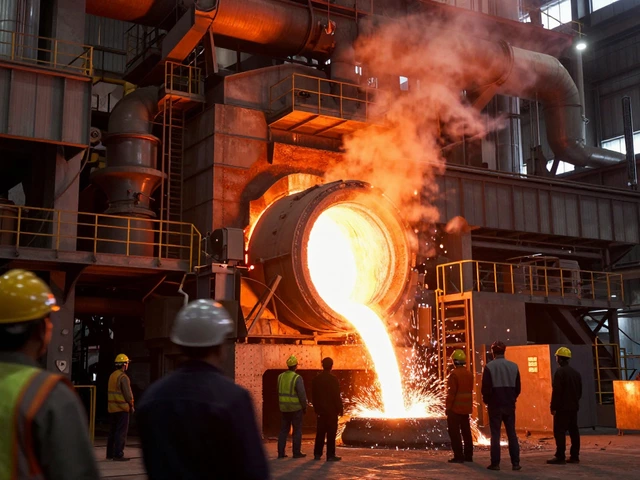
Manufacturing Method Selector
Determine the optimal manufacturing approach for your product based on volume, variety, and budget.
You’ve got a product idea. Maybe it’s a custom piece of furniture, a new line of skincare, or a specialized industrial component. But before you can sell it, you have to make it. The question isn’t just *how* to build it, but *which method* makes sense for your volume, budget, and timeline. Getting this wrong can drain your cash flow fast.
In the world of manufacturing, which is the process of converting raw materials into finished goods on a large scale, there are three dominant approaches that define how almost every physical product reaches your hands. These aren't just academic terms; they are strategic choices that dictate your factory layout, your hiring needs, and even your government grant eligibility under schemes like India's PLI or local UK innovation funds.
The three major manufacturing methods are mass production, batch production, and job shop manufacturing. Each has a distinct rhythm, cost structure, and ideal use case. Let’s break down exactly how they work, where they fail, and how to pick the right one for your business in 2026.
Mass Production: The Engine of Scale
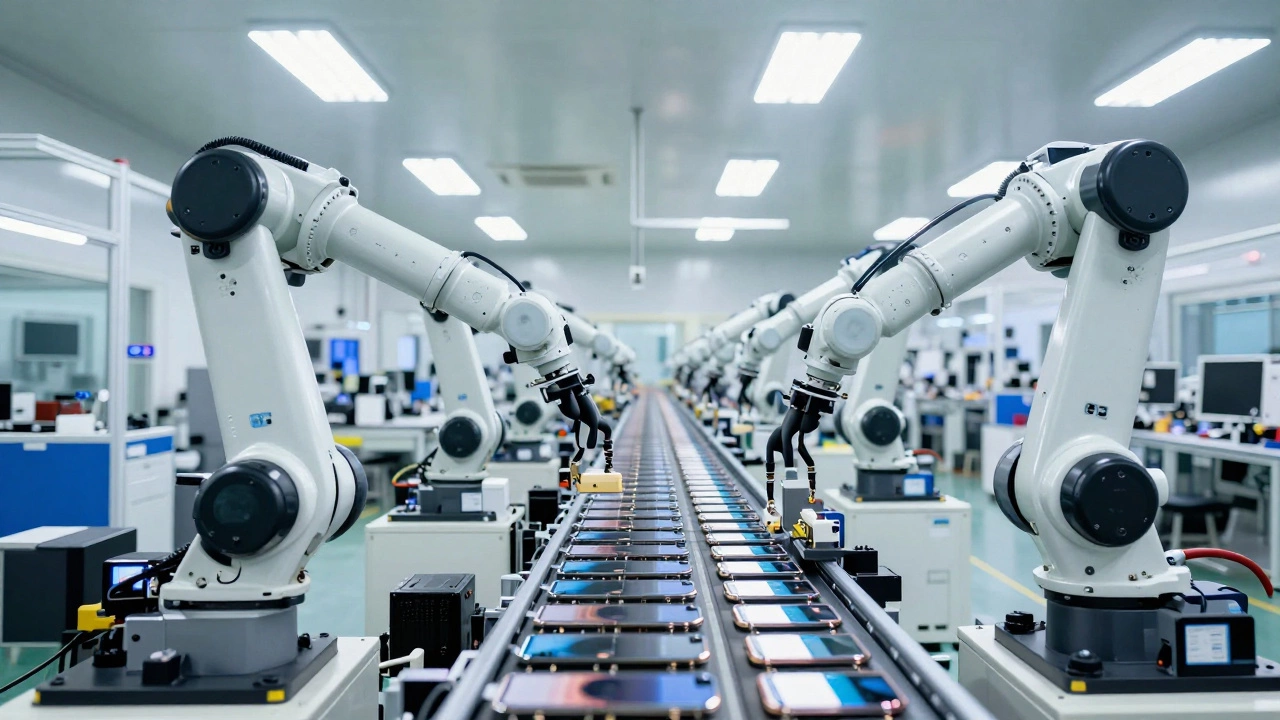
When you think of manufacturing, you probably picture assembly lines. That’s mass production, also known as flow production. This method involves creating large quantities of standardized products with minimal variation. Think Toyota cars, iPhone components, or bottled water. The goal here is simple: produce as much as possible, as cheaply as possible.
How does it work? You set up dedicated machinery and labor stations that perform specific, repetitive tasks. The product moves continuously from one station to the next. Because the process never changes, workers become incredibly efficient at their single task, and machines run at peak capacity without constant retooling.
- Economies of Scale: The unit cost drops significantly as volume rises. Buying raw materials in bulk and running machines 24/7 spreads fixed costs over millions of units.
- Standardization: Every widget is identical. This reduces quality control issues because there’s no guesswork-either it fits the spec, or it doesn’t.
- Speed: Once the line is humming, output is rapid and predictable.
But there’s a catch. Mass production is rigid. If consumer tastes shift tomorrow, you can’t easily pivot. Changing the product design requires shutting down the line, retooling expensive machinery, and retraining staff. This leads to high initial capital expenditure (CapEx). You need heavy investment in automation, robotics, and facility infrastructure before you sell a single unit.
For example, a car manufacturer might spend billions setting up a plant. They only break even after selling hundreds of thousands of vehicles. If demand dips, those idle factories bleed money. This method works best for commodities or high-demand consumer electronics where consistency is key and customization is irrelevant.
Batch Production: The Middle Ground
Sometimes, making millions of identical items is too risky, but making one-off custom pieces is too slow. Enter batch production. This method sits between mass production and job shops. You produce a limited quantity of a product (a "batch"), then switch the equipment to produce a different product.
This is the standard approach in industries like pharmaceutical manufacturing, food processing, and clothing. Imagine a bakery making 500 loaves of sourdough, cleaning the ovens, then baking 300 baguettes. Or a paint factory producing 1,000 gallons of "Sky Blue," washing the tanks, and then producing 1,000 gallons of "Forest Green."
Why choose batch production?
- Flexibility: You can respond to seasonal trends or market shifts by changing batches. If blue jeans are out and khakis are in, you adjust the next batch.
- Lower Risk: You don’t need to commit to millions of units upfront. If a new flavor of soda flops, you only lose the cost of that one batch, not an entire year’s inventory.
- Quality Control: You can inspect each batch before releasing it. If a batch fails, you discard only that group, not the whole production run.
The downside? Changeover time. Switching from Product A to Product B takes effort. You have to clean machines, recalibrate settings, and potentially reorder materials. This downtime kills efficiency. In 2026, smart factories use IoT sensors and AI to predict optimal batch sizes and minimize changeover times, but it’s still a logistical puzzle.
Batch production is ideal for businesses with moderate volumes and multiple product variants. It balances cost-efficiency with enough variety to keep customers interested.
Job Shop Manufacturing: Customization King
Not everything can be made in batches. Some products are unique by definition. This is where job shop manufacturing comes in. Here, low-volume, high-variety production is the norm. Each item is treated as a separate "job."
Think of a machine shop cutting custom gears for a vintage tractor, a tailor making a bespoke suit, or a aerospace firm building a prototype satellite part. The workflow isn’t linear. Instead, jobs move through the factory based on the sequence of operations required. One part might go to milling, then welding, then painting. Another might skip welding entirely.
Key characteristics of job shops include:
- High Skill Labor: Workers aren’t cogs in a machine. They are craftsmen who read blueprints, operate complex CNC machines, and solve problems on the fly.
- General-Purpose Equipment: Instead of dedicated assembly lines, you have versatile tools like lathes, mills, and 3D printers that can handle many types of tasks.
- High Unit Cost: Because you’re not benefiting from economies of scale, each unit costs more to make. You charge a premium for customization.
The flexibility is unmatched. You can take orders for completely different products simultaneously. However, scheduling is a nightmare. Without careful planning, bottlenecks form when multiple jobs need the same machine at the same time. Software like ERP (Enterprise Resource Planning) systems is essential here to track job progress and resource allocation.
Job shops thrive in niche markets where uniqueness sells. They are less about volume and more about value-added craftsmanship and precision.
Comparing the Three Methods
| Feature | Mass Production | Batch Production | Job Shop |
|---|---|---|---|
| Volume | Very High | Medium | Low |
| Variety | Low (Standardized) | Medium | High (Custom) |
| Cost Per Unit | Lowest | Moderate | Highest |
| Equipment | Specialized, Automated | Semi-Automated | General-Purpose, Flexible |
| Labor Skill | Low to Medium | Medium | High |
| Changeover Time | Very Long | Moderate | Short (per job) |
How Government Schemes Influence Your Choice
Your manufacturing method isn’t just a technical decision; it’s a financial one. Many governments offer incentives to boost domestic industry, but these government schemes often favor specific types of production.
For instance, programs like the UK’s Advanced Manufacturing Supply Chain Initiative (AMSCI) or India’s Production Linked Incentive (PLI) scheme typically target high-volume, export-oriented sectors. They reward companies that invest in automation and scale up mass production capabilities. If you’re trying to qualify for these grants, you’ll need to demonstrate significant CapEx in automated lines and a clear path to large-scale output.
On the other hand, small business grants and innovation funds often support job shops and batch producers. These programs recognize the role of SMEs (Small and Medium Enterprises) in fostering innovation and providing customized solutions. They may offer tax credits for R&D, subsidies for purchasing flexible CNC machinery, or training grants for skilled labor.
If you’re starting out, check your local economic development agency. Understanding which method aligns with available funding can save you thousands-or even millions-in setup costs.
Choosing the Right Method for Your Business
So, which one should you pick? It depends on three factors:
- Demand Forecast: Do you expect steady, high volume? Go mass. Do you have fluctuating demand with multiple SKUs? Try batch. Are you serving niche clients with unique specs? Choose job shop.
- Capital Availability: Mass production requires deep pockets. Job shops can start smaller with general-purpose tools.
- Product Lifecycle: Is your product likely to stay the same for years? Mass production works. Will it evolve rapidly? Batch or job shop offers agility.
Many modern manufacturers hybridize. They might use mass production for core components and job shop techniques for final assembly or customization. This "mass customization" approach leverages the strengths of both worlds.
In 2026, with advancements in additive manufacturing (3D printing) and AI-driven supply chains, the lines are blurring. You can now produce small batches with near-mass-production efficiency. But understanding the fundamentals remains crucial. Knowing whether you’re playing a volume game or a value game will shape every decision you make-from hiring to hardware.
What is the most common manufacturing method?
Mass production is the most common method globally, especially for consumer goods, automobiles, and electronics. Its ability to drive down costs through economies of scale makes it the default choice for high-volume industries.
Is batch production better than mass production?
It depends on your needs. Batch production is better if you need flexibility and variety, such as in food or pharmaceuticals. Mass production is better if you need the lowest possible cost per unit and high volume, like in automotive or basic electronics.
What are examples of job shop manufacturing?
Examples include custom metal fabrication shops, bespoke tailoring, prototype development labs, and specialized aerospace component makers. Any business that creates unique, one-off items for specific client requirements operates as a job shop.
How do government schemes affect manufacturing choices?
Government schemes often incentivize specific methods. Large-scale grants may favor mass production automation, while SME-focused funds may support the flexible tooling and skilled labor needed for job shops or batch production. Aligning your method with available incentives can reduce startup costs.
Can a company use multiple manufacturing methods?
Yes, many companies use a hybrid approach. For example, a furniture maker might mass-produce standard table legs but use job shop techniques to customize tabletops based on customer orders. This allows them to balance efficiency with personalization.