Food Processing Operations Explorer
Select an Operation:
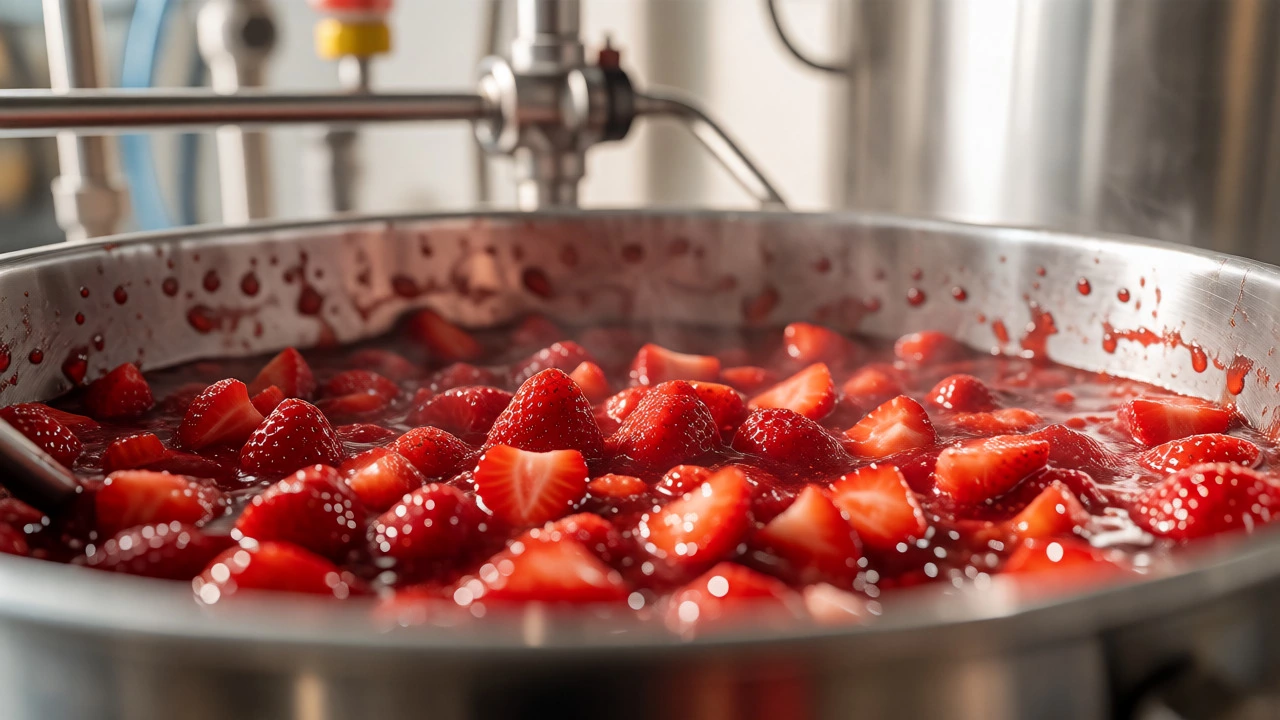
You pick up a jar of strawberry jam from the supermarket shelf. It’s sweet, spreadable, and safe to eat months after the berries were picked. But how did a perishable fruit become a stable product sitting in your pantry? The answer lies in food processing operations. These are the specific physical or chemical changes applied to raw ingredients to transform them into finished goods.
If you’re looking at starting a small manufacturing business or just curious about how your dinner gets made, understanding these operations is crucial. You don’t need a PhD in chemistry to grasp them. Think of it like cooking on an industrial scale. Just as you chop, heat, mix, and store food in your kitchen, factories use standardized steps called unit operations to handle thousands of pounds of material efficiently.
Why Unit Operations Matter
In engineering, we break down complex processes into smaller, manageable chunks. In food science, this concept is known as unit operations. Each operation performs a single task: heating, cooling, mixing, or separating. By mastering these individual steps, manufacturers can combine them to create almost any food product imaginable.
Consider milk. To turn it into cheese, you might pasteurize it (heat), add enzymes (chemical reaction), cut the curd (mechanical separation), press it (compression), and age it (controlled environment). Each of those is a distinct operation. If you skip one or mess up the parameters, you don’t get cheddar; you get spoiled milk or rubbery blocks.
Thermal Processing: Heat for Safety and Quality
Heat is the most common tool in the industry. We use it for two main reasons: to kill harmful bacteria and to change the texture or flavor of the food. This falls under thermal processing.
Pasteurization is what keeps your milk safe. It involves heating liquid foods to a specific temperature for a set time-say, 72°C for 15 seconds-to kill pathogens without destroying the nutritional value or taste. It’s not sterilization; pasteurized milk still needs refrigeration because some heat-resistant spores survive.
Sterilization goes further. Think canned beans or UHT (Ultra-High Temperature) milk. Here, you heat the product enough to destroy all microorganisms, including spores. This allows the product to sit on a shelf for years. The trade-off? High heat can degrade vitamins and alter flavors, which is why canned vegetables often taste different than fresh ones.
| Operation | Temperature Range | Primary Goal | Shelf Life Impact |
|---|---|---|---|
| Pasteurization | 60-85°C | Kill pathogens | Days to weeks (requires cold chain) |
| Blanching | 80-100°C (short duration) | Inactivate enzymes | Extends frozen storage quality |
| Sterilization | >100°C | Kill all microbes/spores | Months to years (ambient storage) |
Moisture Control: Drying and Dehydration
Bacteria love water. Remove the water, and they stop growing. That’s the core principle behind drying and dehydration. When you dry fruit, you reduce its water activity ($a_w$), making it inhospitable for microbial growth.
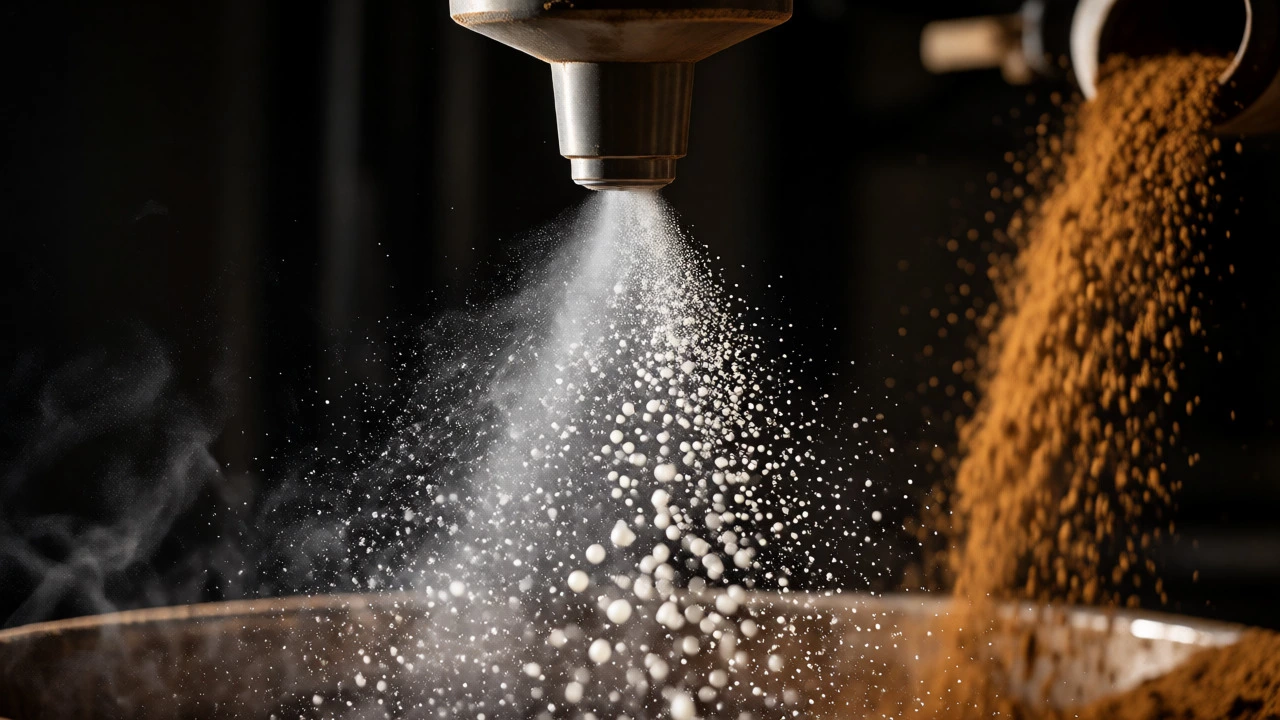
Sun drying is the oldest method, but it’s slow and inconsistent. Modern factories use spray dryers, freeze dryers, or drum dryers. Spray drying turns liquids like milk or coffee extract into powders by atomizing them into hot air. The result is instant coffee powder that dissolves instantly. Freeze drying, used for premium fruits or space food, freezes the product first, then removes ice via sublimation. This preserves structure and nutrients better than heat-based methods, though it costs significantly more.
Mechanical Separation and Size Reduction
Before you can process food, you often have to clean it or change its shape. Mechanical operations handle this without necessarily changing the chemical composition.
Filtration separates solids from liquids. Think of apple juice production. After pressing apples, you filter out pulp and sediment to get clear juice. Centrifugation uses spinning force to separate components based on density, such as separating cream from whole milk.
Size reduction includes grinding, milling, and cutting. Wheat becomes flour through milling. Nuts become butter through grinding. Smaller particles increase surface area, which speeds up subsequent reactions like drying or extraction. However, over-grinding can lead to overheating, which might burn delicate oils in nuts or spices.
Preservation Beyond Heat: Chemical and Biological Methods
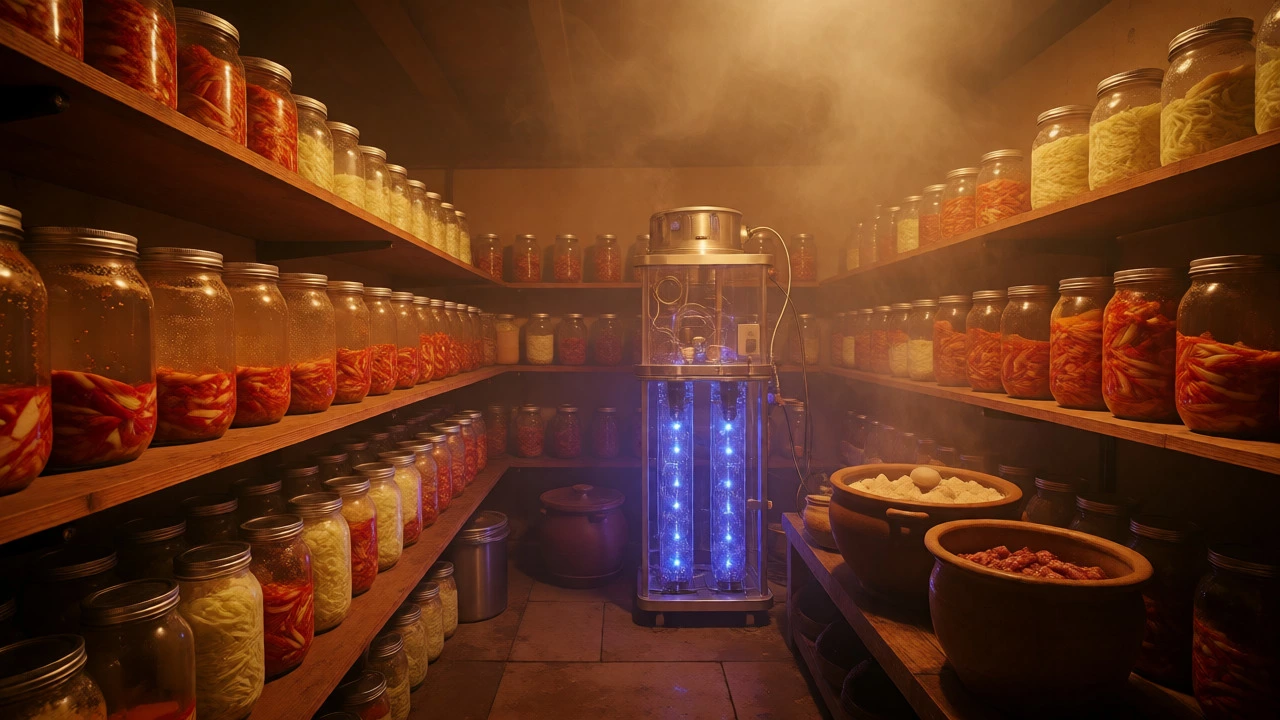
Not everything survives high heat. Yogurt, sauerkraut, and beer rely on biological processes. Fermentation uses microorganisms like yeast or bacteria to convert sugars into alcohol, acids, or gases. This not only preserves the food but also adds complex flavors and probiotics.
Then there’s salting and smoking. Salt draws moisture out of meat via osmosis, creating a hostile environment for bacteria. Smoking adds antimicrobial compounds from wood smoke while dehydrating the surface. These traditional methods are seeing a resurgence in artisanal food markets because consumers prefer "clean label" products with fewer synthetic additives.
Packaging: The Final Operation
Many people forget packaging is part of processing. It protects the product from oxygen, light, and physical damage. Modified Atmosphere Packaging (MAP) replaces the air inside a bag with nitrogen or carbon dioxide to slow down spoilage. Vacuum sealing removes air entirely, extending the life of meats and cheeses.
Choosing the right packaging depends on the previous operations. If you dried herbs, you need a moisture barrier. If you fermented kimchi, you need a container that can withstand gas buildup from continued fermentation.
How to Choose the Right Operations for Your Product
If you’re planning a startup, don’t try to reinvent the wheel. Start with the end goal. Do you want a shelf-stable snack? Focus on drying and frying. Do you want a fresh-tasting juice? Look into High-Pressure Processing (HPP), which uses pressure instead of heat to kill bacteria, preserving fresh flavors.
- Identify the enemy: Is it bacteria? Enzymes? Oxidation? Choose the operation that targets it.
- Check the matrix: How does the ingredient react to heat or acid? Avocado browns quickly; lemon juice stays stable.
- Evaluate cost: Freeze drying yields premium quality but requires expensive equipment. Sun drying is cheap but weather-dependent.
FAQs About Food Processing Operations
What is the difference between food processing and food preservation?
Food processing is the broader term covering all transformations of raw ingredients into food products, including chopping, mixing, and cooking. Food preservation is a subset of processing specifically aimed at preventing spoilage and extending shelf life. All preservation involves processing, but not all processing is strictly for preservation (e.g., slicing bread).
Is ultra-high temperature (UHT) processing bad for nutrition?
UHT processing does cause some loss of heat-sensitive vitamins like Vitamin C and B12. However, minerals and macronutrients remain largely intact. For many consumers, the convenience and safety of UHT milk outweigh the minor nutritional trade-offs compared to raw milk risks.
Can I perform these operations at home?
Yes, many basic operations are scalable. Home dehydrators mimic industrial drying. Pressure cookers approximate retort sterilization. Fermentation jars replicate industrial bioreactors. However, precise control over temperature and time is harder at home, leading to less consistent results.
What is water activity and why does it matter?
Water activity ($a_w$) measures the amount of free water available for microbial growth, not just total water content. Most bacteria require $a_w > 0.91$, while molds can grow at $a_w > 0.80$. Reducing $a_w$ below 0.60 generally stops all microbial growth, which is why jams and dried fruits last so long.
Are additives considered a processing operation?
Adding substances like preservatives, emulsifiers, or colorants is a formulation step rather than a physical unit operation. However, the act of mixing them uniformly into the product is a mechanical operation (mixing/blending). So, while the additive itself isn't an operation, incorporating it is.