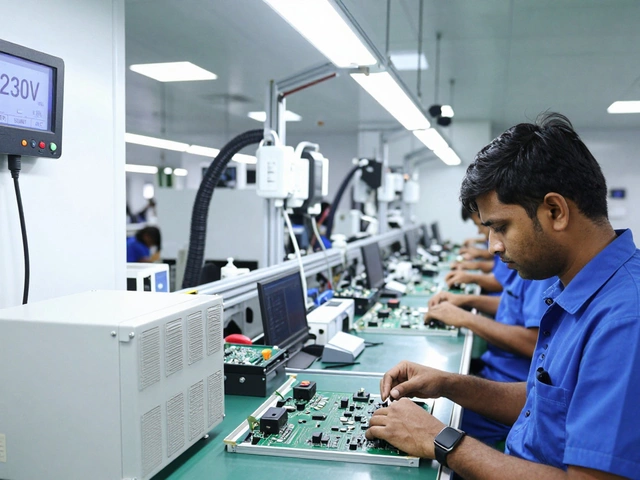
Is India 110V or 220V? Understanding India’s Standard Voltage for Electronics Manufacturing
Mar 6 2026
When you think of materials that can soak up water like a sponge—but way better—you’re thinking of superabsorbent polymers, synthetic materials engineered to absorb and retain large amounts of liquid relative to their own mass. Also known as SAP, these aren’t magic—they’re chemistry, carefully designed to turn water into gel without leaking. They’re not just in diapers. They’re in soil for drought-resistant farms, in wound dressings that pull fluid away from injuries, and even in artificial snow for movie sets. What makes them special isn’t just how much they hold, but how they hold it: without dripping, without collapsing, without needing to be wrung out.
These polymers are made from chains of molecules—usually polyacrylates—that expand when they touch water. The structure traps liquid inside tiny pockets, locking it in place. That’s why a single gram can soak up 300 times its weight in water. In manufacturing, this isn’t a side feature—it’s the whole point. Companies use SAP to reduce weight in products, cut down on shipping costs, and replace older, bulkier absorbents like cotton or cellulose. In agriculture, SAP helps farmers use less water by holding moisture near plant roots. In construction, it’s being tested in concrete to control curing and prevent cracking. And yes, even in brick manufacturing, some producers are experimenting with SAP to manage moisture during drying, reducing cracks and waste.
What you won’t find in most factories is a big vat of SAP being poured into machines. It’s usually added as a fine powder, mixed into other materials, or coated onto surfaces. The real skill isn’t in using SAP—it’s in knowing when and how much to use. Too little, and it doesn’t help. Too much, and it gums up the process. That’s why small manufacturers who understand SAP often outperform big ones—they tweak formulas based on real results, not just standard specs.
If you’ve ever held a dry diaper that turned into a soft, swollen pad, you’ve seen SAP in action. But behind that simple moment is a whole world of material science, supply chains, and manufacturing innovation. The posts below dive into how small factories, chemical producers, and product designers are using SAP and similar materials to solve real problems—with low budgets, high creativity, and zero fluff.
Apr

This article dives into the role of SAP, or Superabsorbent Polymers, in the world of food processing. It explores how these polymers help improve the safety and efficiency of food handling and packaging. The piece touches on the environmental impact, safety benefits, and tips for professionals using SAP. Whether you're curious about the tech behind your snacks or work in the industry, let's look at why SAP matters.
Mar 6 2026

May 20 2025

Jun 30 2025

Oct 19 2025
Feb 27 2026