What Is Small Scale Manufacturing? Definition, Examples, and How It Works
Nov 8 2025
When someone asks for a manufacturing pitch, a clear, convincing case for why a manufacturing business will succeed. Also known as manufacturing business case, it isn't about glossy brochures or big numbers—it's about proving you understand the real costs, the real customers, and the real risks. Most people think a pitch is about passion. It’s not. It’s about proof.
A strong manufacturing pitch ties directly to small scale manufacturing. Why? Because big factories don’t need pitches—they have investors. Small makers do. They need to show they can make something better, faster, or cheaper than the big guys. That’s why the best pitches focus on local manufacturing—keeping supply chains short, reducing shipping costs, and building trust with nearby builders, contractors, and retailers. India’s brick industry, for example, thrives because local producers know exactly what their region needs: heat-resistant bricks for the south, dense blocks for the north. They don’t guess. They build to demand.
And here’s the truth most startups miss: a manufacturing startup doesn’t win by inventing something new. It wins by doing something old, better. Think handmade soap, custom pet tags, roasted nuts, or even simple bricks. The profit isn’t in the product—it’s in the control. Control over materials. Control over quality. Control over delivery. That’s what turns a small batch into a sustainable business. The biggest mistake? Skipping market validation. If no one’s buying before you buy the machine, you’re not a manufacturer—you’re a collector of debt.
What separates the winners from the noise? They don’t talk about scale. They talk about margins. They know that a profitable manufacturing product doesn’t need to be fancy—it needs to be repeatable. A $500 investment in a mold and a press can make more profit than a $50,000 automated line if the product fits the local market. That’s why the most successful makers in India don’t chase global trends. They solve local problems: bricks that don’t crack in monsoons, food packaging that keeps snacks fresh without plastic, or low-cost parts for rural machinery.
So what does a winning manufacturing pitch look like? It starts with a single sentence: ‘We make X for Y, and here’s why they’ll pay for it.’ No fluff. No jargon. Just the facts: what you make, who buys it, and why they can’t get it elsewhere. The rest? That’s just backup. The numbers. The process. The proof.
Below, you’ll find real examples of how small makers in India—and around the world—built profitable businesses without venture capital. No magic. No hype. Just smart, focused manufacturing that works.
Oct

Learn the exact steps to pitch your idea to a manufacturer, from market validation and prototype creation to cost analysis, NDA, and successful follow‑up.
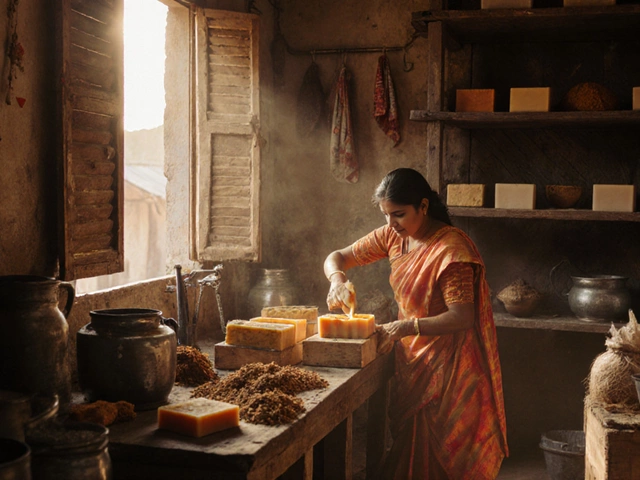
Nov 8 2025
Nov 8 2025

Jun 16 2025

Sep 8 2025
Oct 17 2025