US Manufacturing Boom: Is It Really Happening Right Now?
Apr 28 2025
When you hear 5 M's of manufacturing, the five foundational elements that drive every production system: man, machine, material, method, and money. Also known as the five pillars of production, these aren’t just buzzwords—they’re the actual levers that determine whether a factory runs smoothly or collapses under its own weight. This isn’t theory from a textbook. It’s what keeps small workshops in Surat making textiles, what lets a $1,000 soap maker in Rajasthan turn raw oils into profit, and why Indian pharma plants keep FDA audits happy. If you’re running a small production unit—or even thinking about starting one—you’re already working with these five things. The question is, are you managing them well?
The first M is man, the skilled labor that operates, fixes, and improves the system. No robot replaces a worker who knows when a brick mold is slightly off or when a sewing machine needs a tweak. In India’s small-scale manufacturing, it’s often the owner’s uncle, the local welder, or the night shift supervisor who keeps things alive. The second M, machine, the tools and equipment used to transform materials, doesn’t mean expensive CNC machines. It’s the hand-pressed brick mold, the used sewing machine, the small extruder making plastic tags. The third M, material, the raw inputs that become the final product, is where cost control lives. In brick making, it’s the right mix of clay and sand. In food processing, it’s the quality of spices or nuts. Get this wrong, and even the best machine won’t save you.
The fourth M, method, the process or workflow that turns inputs into outputs, is where small businesses outshine giants. Big factories follow rigid SOPs. Small ones adapt. They change the sequence when a supplier delays, or skip a step if the client doesn’t need it. That’s why local manufacturers survive supply chain chaos—they don’t wait for a corporate memo. And the fifth M, money, the financial resources that keep the system running, isn’t just about capital. It’s about cash flow, waste reduction, and reinvesting every rupee wisely. A $1,000 startup doesn’t need venture funding—it needs smart spending on the right material, the right tool, and the right person.
These five M’s aren’t just for big plants. They’re the invisible framework behind every product you touch—from the bricks in your neighbor’s house to the snacks on your shelf. The posts below show how real businesses use these five elements to build profitable, sustainable operations. You’ll see how Indian textile makers control material costs, how micro-manufacturers optimize their method, and why money isn’t the problem—it’s how you use it. No fluff. No jargon. Just the practical truth behind what actually makes manufacturing work.
Sep
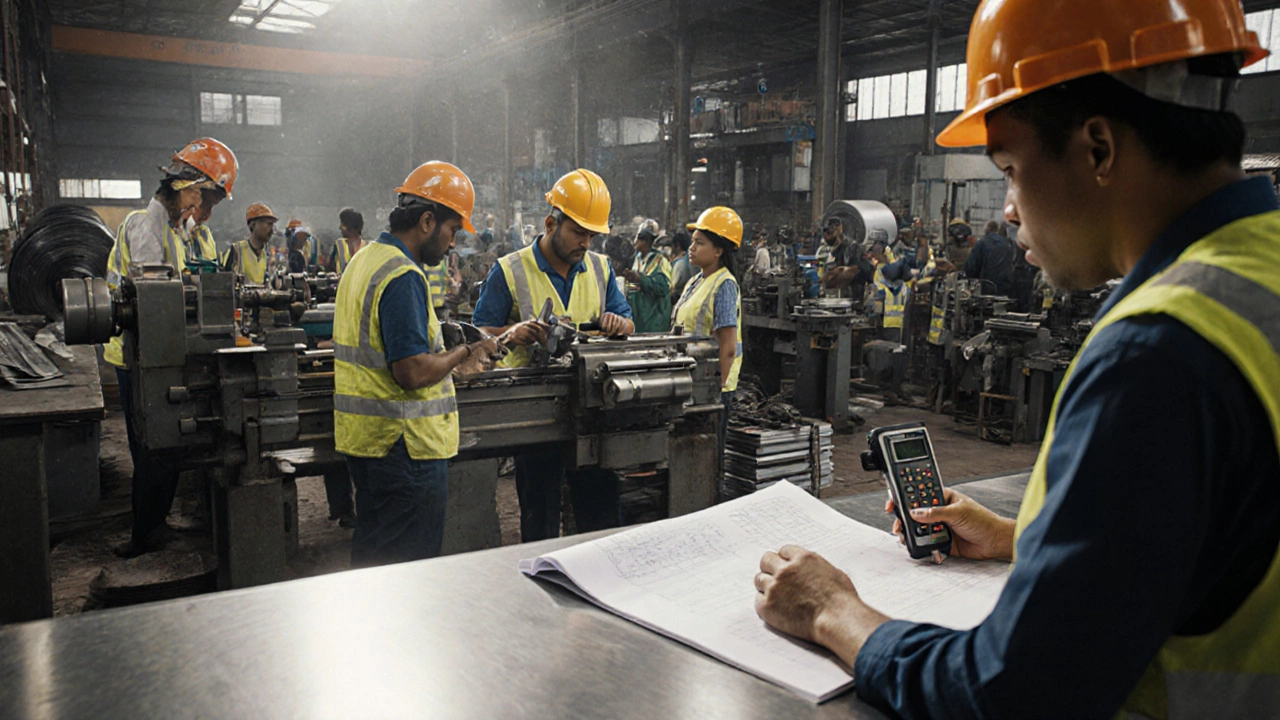
Learn the 5 M's of manufacturing-Man, Machine, Material, Method, and Measurement-plus how to apply them, avoid pitfalls, and boost plant efficiency.
Apr 28 2025

Apr 23 2025
Apr 21 2025

Dec 1 2025

Feb 3 2025