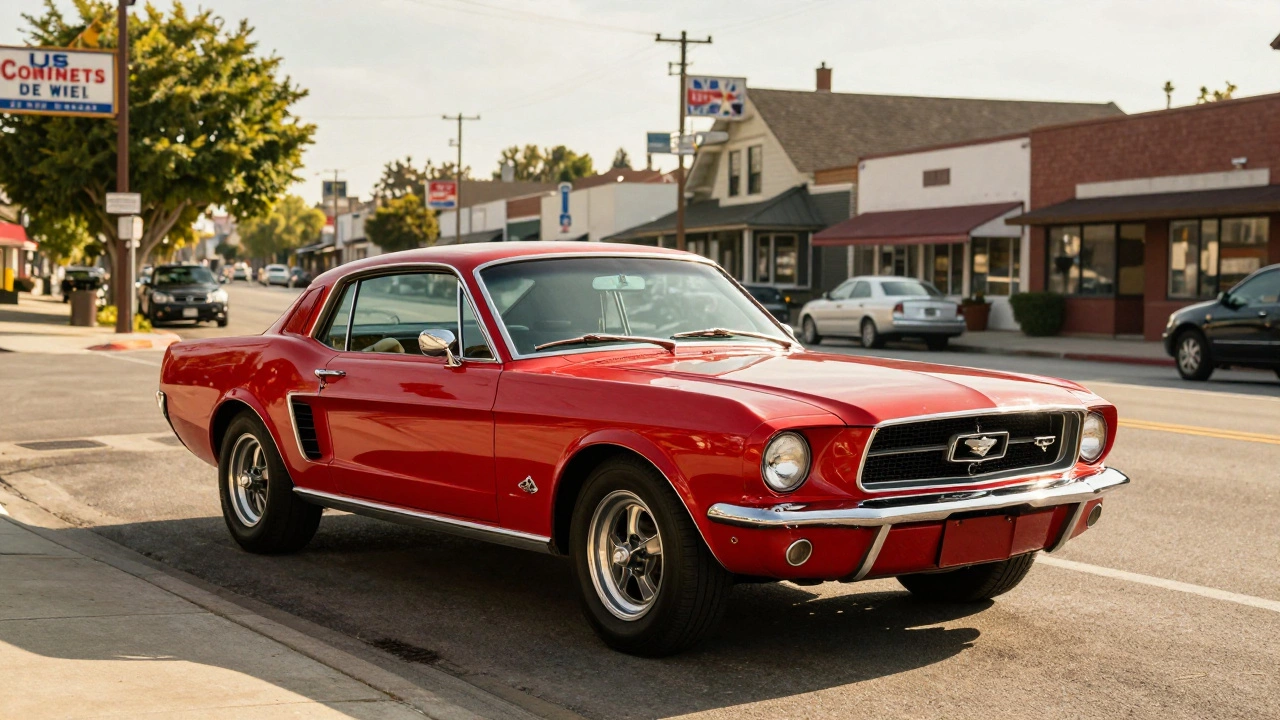
USA to India Car Import Cost Estimator
Estimated Total Cost
Key Takeaways for Importers
- Customs Duty: Expect to pay between 60% and 125% of the car's value in taxes.
- Age Limit: Only cars meeting specific age and emission standards are allowed.
- Right-Hand Drive: You must convert US left-hand drive (LHD) cars to right-hand drive (RHD) to register them.
- Paperwork: You'll need a clear title, Bill of Lading, and a valid passport/visa.
The Legal Hurdles: Who Can Actually Do This?
You can't just ship a car as a random package. The Directorate General of Foreign Trade is the primary agency in India that regulates the import and export of goods. According to DGFT guidelines, importing a vehicle is generally permitted under two main scenarios: you are an Indian citizen returning from abroad (Transfer of Residence) or you are a foreign national living in India.
If you're importing under Transfer of Residence (TR), you get some concessions, but the rules are stiff. You usually have to have lived abroad for at least two years. If you're just a fan of American muscle cars living in India and want to buy one from a dealer in Texas, you're looking at a "commercial import," which is where the costs skyrocket. You'll need an Import Export Code (IEC) if you plan to do this as a business, though individuals can import a single vehicle for personal use with a different set of forms.
The Financial Shock: Calculating Customs Duty
This is where most dreams of a US import die. India has some of the highest import tariffs in the world to protect the local Automobile Manufacturing sector. The customs duty on imported cars is calculated based on the CIF value (Cost, Insurance, and Freight).
For most cars, the basic customs duty is around 10%, but then you add the Social Welfare Surcharge and the Integrated GST (IGST). If the car is an absolute luxury-defined by a high engine capacity or a very high price tag-the total duty can exceed 100% of the car's value. For example, if you buy a car for $30,000, you might end up paying another $30,000 just to get it through the port. It's essentially like buying the car twice.
| Car Category | Approx. Customs Duty | Conversion Costs | Registration/Road Tax |
|---|---|---|---|
| Budget/Mid-range | 60% - 100% | Medium | Variable by State |
| Luxury/High CC | 100% - 125% | High | Very High |
| Vintage (30+ years) | Variable (lower potentially) | Extreme | Specialized |
The LHD vs. RHD Nightmare
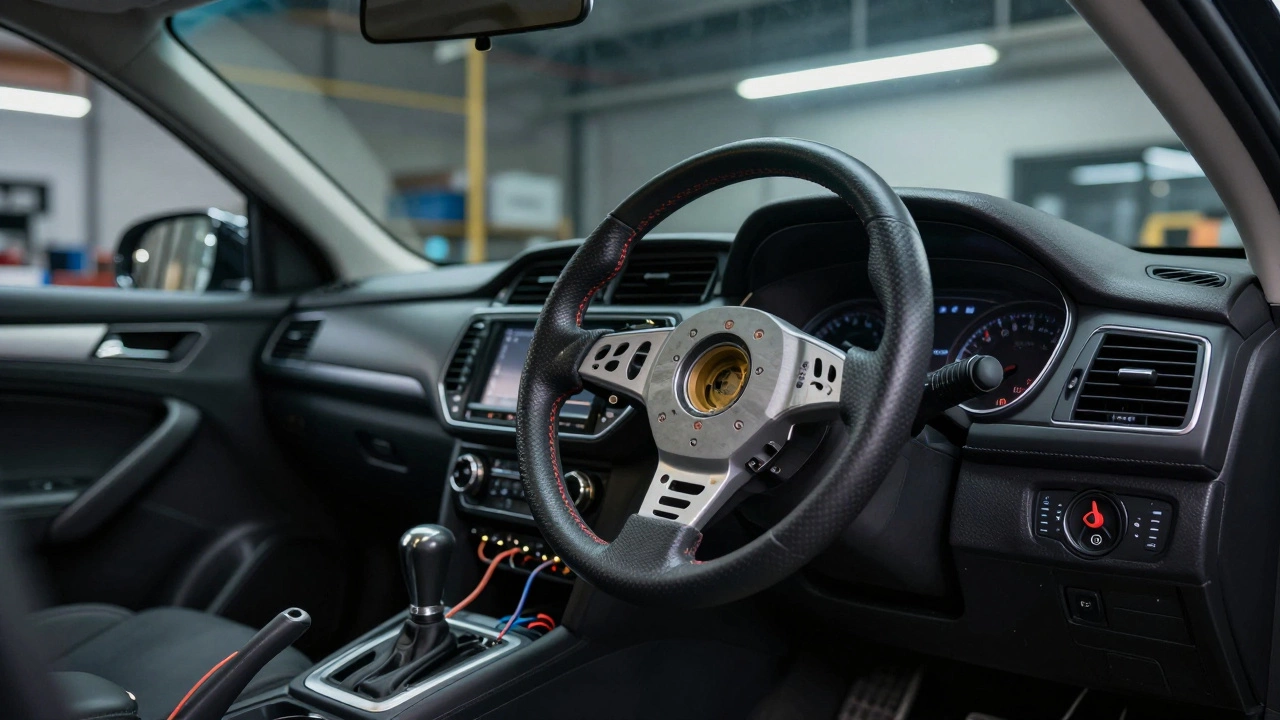
The US drives on the right, so their cars are Left-Hand Drive (LHD). India drives on the left, meaning all registered vehicles must be Right-Hand Drive (RHD). This is a non-negotiable safety rule. If you import a US car, you cannot simply drive it as is; the Regional Transport Office (or RTO) will refuse to register it.
You have two choices here. First, you can find a specialist workshop in India to perform a steering conversion. This involves moving the steering rack, pedals, and dashboard. It's an invasive and expensive process that often leads to leaks or electrical glitches. The second option is to find a rare RHD US-spec car (usually modified for export), but those are almost non-existent. Without a certified conversion certificate, your car is essentially a very expensive paperweight in your garage.

Emission Standards and Age Restrictions
You can't just bring in a rusted 1990s sedan. India has strict Bharat Stage (BS) emission norms, which are currently aligned with Euro 6 standards. If the car doesn't meet the current environmental standards for pollutants like Nitrogen Oxides (NOx) and particulate matter, it will be banned.
For newer cars, you'll need a certificate of conformity proving the car meets Indian standards. For vintage cars, there's a loophole. If the vehicle is over 30 years old, it can be registered as a "vintage car," which exempts it from some modern emission rules. This is why you see a lot of old American classics in India, but very few 2010-era SUVs. If the car is too old to be vintage but too old to meet BS-VI standards, you simply cannot import it.
The Logistics: Getting it Across the Ocean
Shipping a car involves more than just a boat. You have to choose between RoRo (Roll-on/Roll-off) and Container shipping. RoRo is cheaper and faster-it's like a giant parking garage on a ship-but the car is more exposed to the elements. Container shipping is safer and allows you to pack personal belongings inside the car, but it costs significantly more.
Once the ship arrives at a port like Nhava Sheva in Mumbai or Chennai Port, the car enters a bonded warehouse. You then have a limited window to clear all customs duties and provide the necessary documentation. If you miss the deadline, the storage fees (demurrage) will eat through your budget faster than the taxes did.
Step-by-Step Import Process
- Purchase and Title: Buy the car in the US and ensure you have a clean, original title. No liens or loans allowed.
- Shipping Documentation: Obtain the Bill of Lading from your shipping agent and a commercial invoice.
- Customs Declaration: File the Bill of Entry with Indian Customs upon arrival.
- Payment of Duty: Pay the calculated customs duty through the government portal.
- RHD Conversion: Move the car to a certified garage to flip the steering to the right side.
- RTO Registration: Take the car, the duty payment receipt, and the conversion certificate to the RTO for your number plate.
Is It Actually Worth It?
For 99% of people, the answer is no. By the time you pay the shipping, the 100% duty, the conversion costs, and the road tax, you could have bought a luxury car already available in India. However, for collectors of rare American muscle or those bringing over a sentimental family heirloom, the cost is secondary to the value of the vehicle.
If you're looking for a daily driver, stick to the local market. The lack of spare parts for US-spec cars in India means a simple sensor failure could leave your car stranded for weeks while you wait for a part to be air-freighted from Ohio. The only real reason to do this is for a unique hobby or an extremely rare model that simply doesn't exist anywhere else.
Can I import a used Tesla from the USA?
Technically yes, but it is incredibly difficult. You must ensure it meets BS-VI emission standards (though it's electric, it still needs certification) and, more importantly, you must convert it to Right-Hand Drive. Tesla does not officially support LHD to RHD conversions, making registration nearly impossible.
What happens if I don't convert the car to Right-Hand Drive?
The car will be stuck in the port or your garage. It is illegal to drive a Left-Hand Drive vehicle on Indian public roads. The RTO will not issue a registration number without a certified RHD conversion, meaning you cannot get insurance or legally drive the car.
How long does the entire process take?
From purchase in the US to registration in India, expect it to take 4 to 8 months. Shipping takes 30-60 days, customs clearance takes another 2-4 weeks, and the RHD conversion and RTO registration can take another month or more depending on the garage.
Are there any tax exemptions for NRIs?
Yes, under the Transfer of Residence (TR) rules, NRIs can get certain concessions on customs duties if they are returning to settle in India permanently. However, these rules are strict and usually require the owner to have lived abroad for at least two years.
Can I bring a car as a temporary import?
Yes, using a Carnet de Passages en Douane (CPD). This allows you to bring a car into India for a short period (usually up to 6 months) without paying full duties, provided the car is exported back out of the country within the timeframe.
Next Steps and Troubleshooting
If you've decided to move forward, your first step should be to contact a specialized customs house agent (CHA) in India. Do not try to handle the customs clearance yourself; the paperwork is a labyrinth. If you find that the duties are too high, look into the CPD Carnet if you only need the car for a few months.
If your car is stuck at the port due to a paperwork error, immediately check your Bill of Entry. Most delays happen because the CIF value was underestimated, and Customs is demanding a re-valuation. Be prepared to provide original invoices and bank transfer proofs to avoid heavy penalties.