Restaurant Equipment Decision Tool
Not sure whether your restaurant needs a commercial food processor or other prep equipment? Answer these three questions to get a personalized recommendation with cost estimates.
Why This Fits Your Operation:
Key Benefits:
Equipment Comparison Reference
| Equipment | Primary Function | Best For | Limitations |
|---|---|---|---|
| Food Processor | Mixing, chopping, slicing, shredding | Sauces, coarse chops, dough, uniform slices | Not ideal for pureeing liquids or fine pastes |
| Industrial Blender | Pureeing, liquefying | Smoothies, soup bases, cocktails, fine emulsions | Cannot slice or shred solid vegetables effectively |
| Meat Grinder | Grinding meat and fats | Burgers, sausages, pâtés | Single-purpose; difficult to clean thoroughly |
| Slicer/Dicer | Precision cutting | Uniform cubes of potatoes, carrots, apples | Expensive; requires specific attachments for each cut |
| Immersion Blender | In-pot blending | Soups, sauces blended directly in cookware | Useless for dry tasks like chopping nuts or mixing dough |
Quick Tips for Commercial Equipment Buyers
Ensure the equipment meets health inspector sanitation standards required in most jurisdictions.
Brands like Robot-Coupe hold their value well and can be resold as tangible assets.
Home units (300-600W) overheat quickly. Commercial units start at 1 HP (750W+) for continuous duty.
Schedule regular blade sharpening, motor lubrication, and seal inspections to prevent downtime.
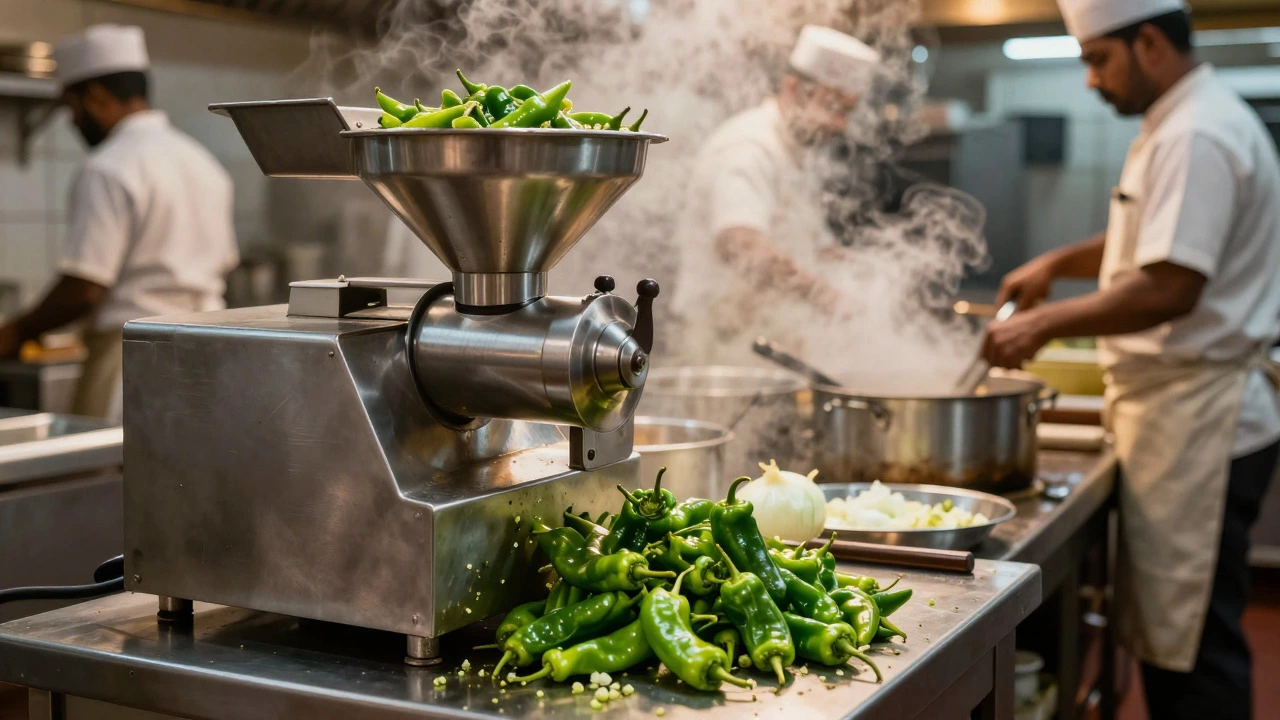
Walk into the back of a busy restaurant on a Friday night. You hear the hiss of steam, the clatter of pans, and the shout of orders. But listen closely. Underneath that chaos, there is often a distinct, rhythmic whirring sound. That is not your home appliance struggling through a batch of hummus. That is a heavy-duty machine built to process pounds of vegetables in seconds.
The short answer to whether restaurants use food processors is yes. Absolutely. But if you think they are just using the same plastic bowl and S-blade setup as you do at home, you are mistaken. The equipment in professional kitchens is different in power, durability, and purpose. Understanding this difference reveals how modern hospitality actually works.
The Difference Between Home and Commercial Units
When you buy a food processor for your kitchen counter, you are buying convenience for occasional use. When a restaurant buys one, they are buying an asset for survival. The gap between consumer-grade and commercial-grade machinery is massive.
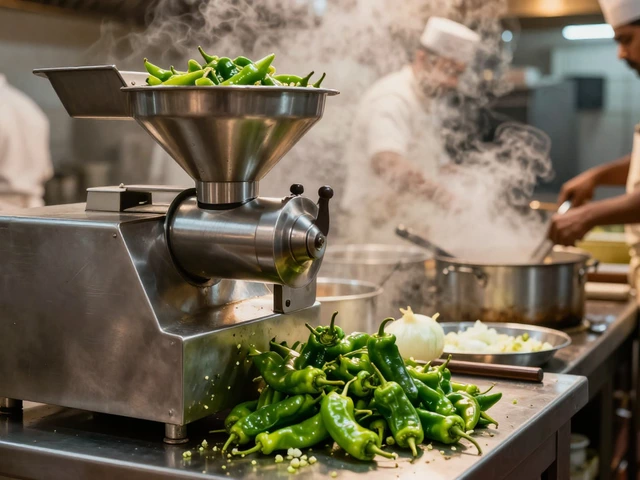
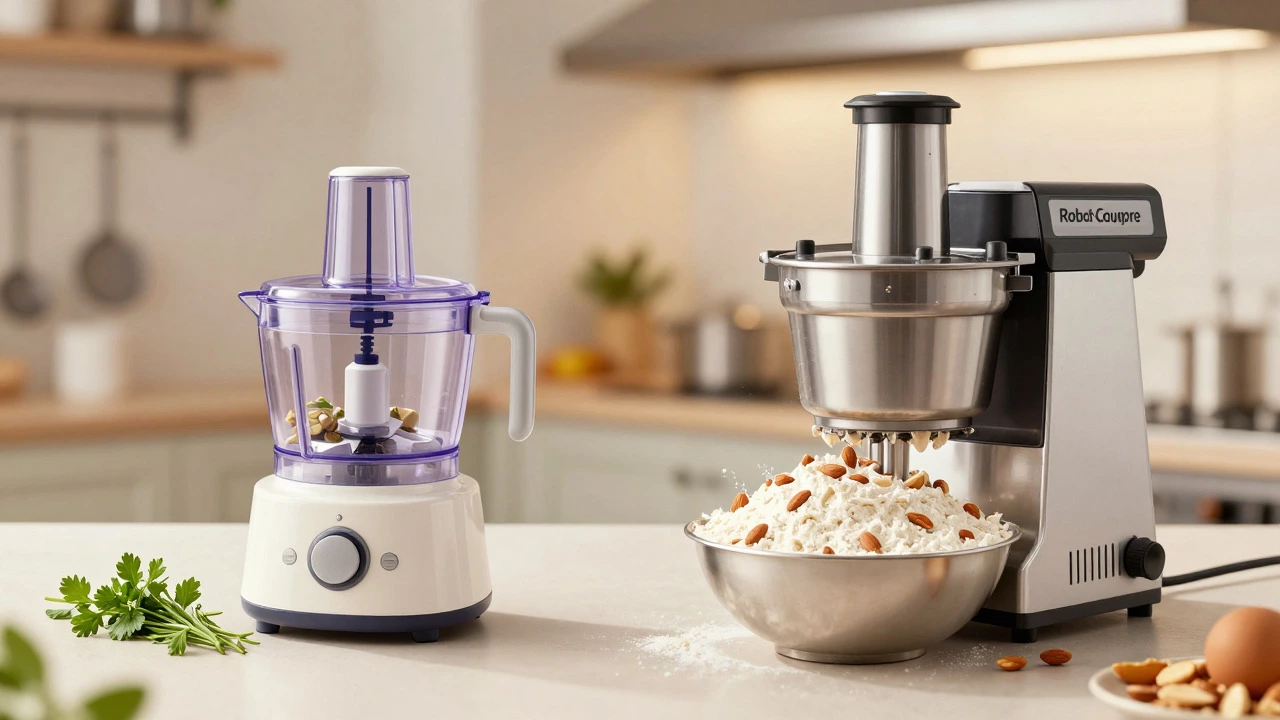
Commercial Food Processors are industrial appliances designed for continuous operation, high torque, and heavy loads. Unlike their domestic counterparts, these machines feature motors rated for hundreds of hours of daily use. A typical home unit might have a motor ranging from 300 to 600 watts. A standard commercial model, like those made by brands such as Robot-Coupe or Cuisinart’s commercial line, often starts at 1 horsepower (750 watts) and can go up to 3+ horsepower for large-capacity units.
Think about the materials. Home processors use polycarbonate bowls that can crack under thermal shock or heavy impact. Commercial units use stainless steel bowls and hardened steel blades. Why? Because in a restaurant, time is money. If a blade dulls after chopping fifty heads of lettuce, the chef has to stop and sharpen it. In a commercial setting, the blade must stay sharp through thousands of cuts per shift. The build quality ensures that the machine becomes part of the workflow, not a bottleneck.
Why Restaurants Rely on Mechanical Prep
You might wonder why chefs don’t just chop everything by hand. Traditionalists argue that hand-chopping gives better texture and respect to the ingredient. And for garnishes or delicate herbs, that is true. But for the bulk of ingredients-onions for stocks, carrots for soups, nuts for sauces-manual labor is inefficient.
Labor costs are the biggest expense for most restaurants. Paying a skilled knife block to dice two hundred pounds of onions for a weekend service is expensive and exhausting. A commercial food processor can do that job in minutes with uniform precision. Uniformity matters. When pieces of vegetable are the same size, they cook at the same rate. This consistency is critical for plating and flavor balance.
Furthermore, safety is a major factor. Knife injuries are common in kitchens. Using a mechanical processor reduces the risk of repetitive strain injuries and accidental cuts during high-volume prep. It allows staff to focus on cooking techniques rather than basic butchery.
Specific Applications in Professional Kitchens
Restaurants don't just use food processors for one thing. They are versatile workhorses. Here is how they break down by function:
- Sauce Making: Aioli, pesto, and mayonnaise require emulsification. Hand-whisking is slow and prone to breaking. A processor creates stable emulsions quickly.
- Dough Preparation: Many bakeries and pizzerias use processors to mix dough. The rapid cutting action develops gluten faster than kneading by hand, saving significant time before fermentation.
- Vegetable Bases: For stocks, bisques, and purées, ingredients need to be broken down completely. Processors handle fibrous vegetables like celery and fennel without clogging.
- Nut and Seed Grinding: Making fresh almond flour or tahini requires crushing hard oils. Home processors often overheat when doing this; commercial units manage heat dissipation better.
Food Processors vs. Other Commercial Appliances
A food processor is not the only tool in the shed. Chefs choose between several types of mechanical prep equipment based on the task. Confusing these tools can lead to poor results.
| Equipment Type | Primary Function | Best For | Limitations |
|---|---|---|---|
| Food Processor | Mixing, chopping, slicing, shredding | Sauces, coarse chops, dough, uniform slices | Not ideal for pureeing liquids or fine pastes |
| Industrial Blender | Pureeing, liquefying | Smoothies, soup bases, cocktails, fine emulsions | Cannot slice or shred solid vegetables effectively |
| Meat Grinder | Grinding meat and fats | Burgers, sausages, pâtés | Single-purpose; difficult to clean thoroughly |
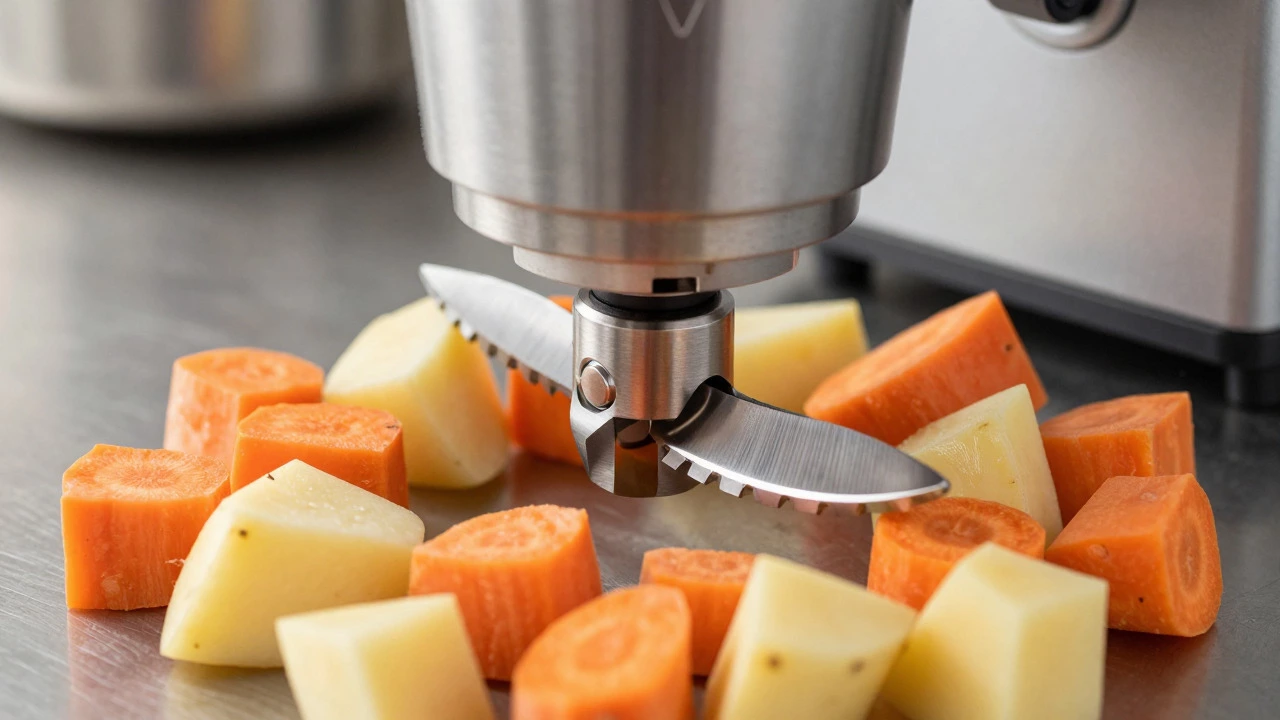
| Slicer/Dicer | Precision cutting | Uniform cubes of potatoes, carrots, apples | Expensive; requires specific attachments for each cut |
Notice the distinction. If a chef needs a smooth tomato soup, they will use an Industrial Blender like a Vitamix or Blendtec, not a food processor. The blender creates a vortex that pulls ingredients down into the blades, creating a silky texture. A food processor leaves chunks. If they need perfect julienne strips of cucumber, they might use a mandoline or a specialized dicer, because a processor’s slicing disc can sometimes crush soft produce rather than cut it cleanly.
The Rise of Alternative Technologies
While food processors remain staples, some modern kitchens are shifting toward other technologies. Immersion blenders (stick blenders) have gained popularity for their ease of cleaning and versatility. You can blend directly in the pot, reducing the number of dishes. However, for dry tasks like chopping nuts or mixing cookie dough, an immersion blender is useless.
Another trend is the use of robotic arms and automated prep stations in high-end corporate dining or ghost kitchens. These systems can peel, core, and chop with minimal waste. But for the average independent restaurant, the cost-propositional value isn't there yet. The humble food processor remains the king of cost-effective prep.
Maintenance and Safety in High-Volume Settings
Using these machines comes with responsibility. In a home, if your processor breaks, you call a repairman or buy a new one. In a restaurant, downtime means lost revenue. Maintenance is strict.
Chefs follow a rigorous cleaning protocol. Blades are razor-sharp. Accidents happen when staff rush. Standard procedure involves turning the machine off, unplugging it, and using a brush to remove debris from the blade assembly before disassembly. Never put hands near the blade while the motor is running, even if it seems stopped. Inertia keeps the blade moving for seconds after the switch is flipped.
Regular lubrication of the motor shaft and inspection of seals prevent leaks. Grease buildup under the base can attract pests and cause electrical hazards. Most commercial units are NSF certified, meaning they meet strict sanitation standards required by health inspectors.
Is It Worth the Investment?
If you are running a small café or a home-based catering business, do you need a $1,500 commercial processor? Probably not. A high-end consumer model will suffice for low volume. But if you are serving more than fifty covers a day, the investment pays for itself in labor savings within months.
Consider the resale value too. Commercial equipment holds its value well. Brands like Robot-Coupe are known for lasting decades. A well-maintained unit can be sold to another business or used as backup gear. It is a tangible asset on the balance sheet, unlike a disposable home gadget.
Conclusion: The Backbone of Efficiency
Restaurants absolutely use food processors, but they view them differently than consumers do. For a chef, it is not a gadget; it is a fundamental tool for consistency, speed, and safety. While technology evolves, the core function of mechanically breaking down ingredients remains central to culinary arts. Whether it is making a simple salsa or complex pastry dough, the commercial food processor enables the scale and precision that modern dining demands.
What brand of food processor do most professional chefs use?
Robot-Coupe is widely considered the industry standard for commercial food processors. Other respected brands include Cuisinart (commercial line), Bosch (for European markets), and Hobart. These brands are chosen for their durability, warranty support, and availability of replacement parts.
Can a home food processor handle restaurant volumes?
Generally, no. Home units are designed for intermittent use. Running a home processor continuously for more than a minute or two can overheat the motor, leading to burnout. Restaurant volumes require continuous duty cycles that only commercial motors can sustain without failure.
How much does a commercial food processor cost?
Prices vary significantly based on capacity and features. Entry-level commercial models start around $800-$1,200. Mid-range units with larger bowls and higher horsepower range from $1,500 to $3,000. Heavy-duty industrial models can exceed $5,000. This includes the base unit, bowls, and standard blades.
Are food processors safer than knives in a kitchen?
Yes, for high-volume prep. While blades are sharp, the enclosed design reduces the risk of accidental cuts compared to handling a knife repeatedly. However, proper training is essential. Rushing during loading or cleaning is the most common cause of injury with these machines.
Do all restaurants use food processors?
Most do, especially those with full menus. Small cafes, coffee shops, or places focusing entirely on grilled meats might rely more on slicers or manual prep. However, almost any establishment preparing salads, sauces, or baked goods will utilize some form of mechanical processing.