Global Electronics Leadership Explorer (2026)
Select a country to analyze its role in the 2026 electronics ecosystem.
China
The Assembly GiantStrategic Context
Description goes here...
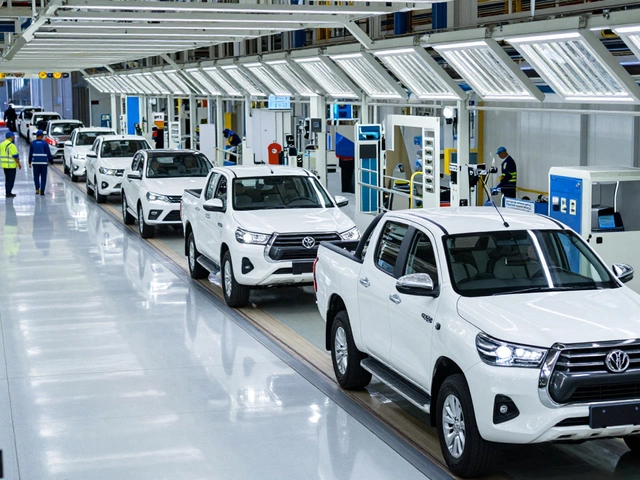
Who actually makes the gadgets you hold in your hand right now? It’s rarely a single nation. While China still dominates assembly, the global electronics landscape has shifted dramatically since 2020. The question of which country is "most advanced" isn't about who builds the most units; it's about who controls the critical components, the design IP, and the high-end fabrication.
In 2026, the answer depends entirely on what part of the value chain you look at. If you mean raw volume, China remains the giant. If you mean cutting-edge chip design, the United States leads. If you mean next-generation semiconductor manufacturing, Taiwan and South Korea are untouchable. And if you mean emerging low-cost assembly with growing domestic component production, India is rapidly closing the gap.
The Reality of "Advanced" Electronics Manufacturing
To understand who is leading, we have to define what "advanced" means in this context. It’s not just about screwing parts together. True advancement lies in three layers:
- Design & IP: Creating the architecture for processors, sensors, and connectivity chips.
- Fabrication (Fabs): Printing those designs onto silicon wafers using extreme ultraviolet (EUV) lithography.
- Assembly & Testing: Putting the finished chips into boards, casing them, and ensuring they work.
Most countries excel at only one or two of these. Very few master all three. This fragmentation is why the supply chain is so fragile and why nations are spending billions to build sovereignty.
China: The Assembly Giant Transitioning Upstream
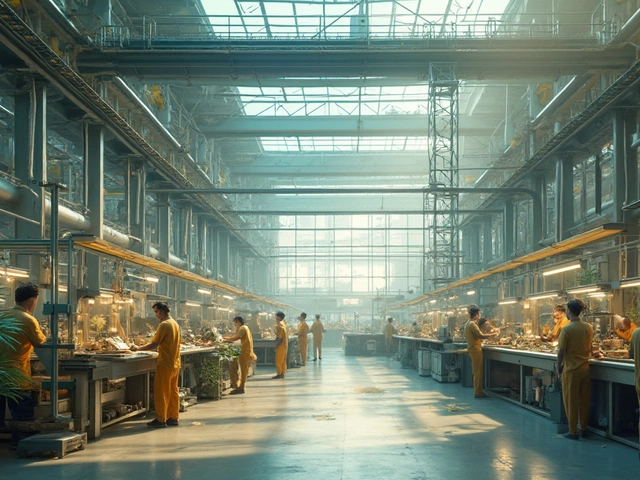
You can’t talk about electronics without talking about China. For decades, it was the world’s factory floor. Today, that role is evolving. China still accounts for roughly 30% of global electronics manufacturing output by value. However, its advantage in cheap labor has eroded. Wages in Guangdong and Jiangsu provinces have risen significantly, pushing lower-margin assembly jobs elsewhere.
So, how is China staying advanced? By moving up the ladder. Companies like Huawei and SMIC are investing heavily in mature-node semiconductors (28nm and above). These chips aren’t used in the latest AI supercomputers, but they power everything from electric vehicles to washing machines. China produces over 70% of the world’s solar panels and a massive share of EV batteries. In terms of scale and integrated supply chains for consumer goods, China remains unmatched.
However, Western export controls on advanced lithography equipment have slowed China’s progress in sub-7nm chipmaking. This bottleneck forces Chinese manufacturers to rely on older technology or seek alternative paths, such as chiplet designs, to compete with newer architectures.
Taiwan: The Unsung Hero of Silicon
If you want to know where the most complex electronics come from, look at Taiwan. Specifically, look at TSMC. This single company manufactures more than 50% of the world’s semiconductors and nearly all of the most advanced nodes (3nm and below).
Taiwan doesn’t assemble iPhones or laptops. It makes the brains inside them. Without TSMC, companies like Apple, NVIDIA, and AMD would have no products to sell. This gives Taiwan an outsized influence on global tech stability. The island’s ecosystem includes not just TSMC, but also major packaging firms like ASE Group and material suppliers like United Microelectronics Corp (UMC).
The risk here is geopolitical concentration. A disruption in Taiwan would halt global electronics production for months. That’s why the US, Japan, and Europe are building fabs elsewhere, but none have yet matched TSMC’s yield rates or cost efficiency at the leading edge.
South Korea: The Memory and Display Leader
South Korea holds a unique position. While it trails Taiwan in logic chips (CPUs/GPUs), it dominates memory chips (DRAM and NAND flash). Samsung Electronics and SK Hynix control over 60% of the global DRAM market. Every smartphone, laptop, and server needs memory, making South Korea indispensable.
Beyond chips, South Korea is a leader in display technology. OLED panels from Samsung Display are standard in premium smartphones and TVs. The country’s strength lies in vertical integration. Samsung designs, manufactures, and assembles many of its own devices, creating a closed loop that protects intellectual property and streamlines production.
Recently, South Korea has invested heavily in foundry capabilities to compete directly with TSMC. Samsung Foundry aims to capture more of the advanced logic market, though it has faced challenges with yield consistency compared to its Taiwanese rival.
The United States: Design Dominance and Reshoring
The US doesn’t manufacture much hardware anymore, but it owns the blueprints. American companies-NVIDIA, Apple, Qualcomm, Intel-generate the vast majority of the world’s semiconductor IP. They license these designs to foundries in Asia.
But the game is changing. The CHIPS and Science Act, passed in 2022, has triggered a massive reshoring effort. Intel is building gigafabs in Arizona and Ohio. TSMC is constructing plants in Arizona. Samsung has expanded in Texas. By 2026, the US is seeing a tangible increase in domestic wafer production, particularly for automotive and industrial chips.
This shift isn’t just about patriotism; it’s about security. The US wants to reduce reliance on Asian supply chains for critical infrastructure. While the US may never regain its status as the primary assembly hub, it is becoming a key player in advanced fabrication again.
India: The Emerging Alternative
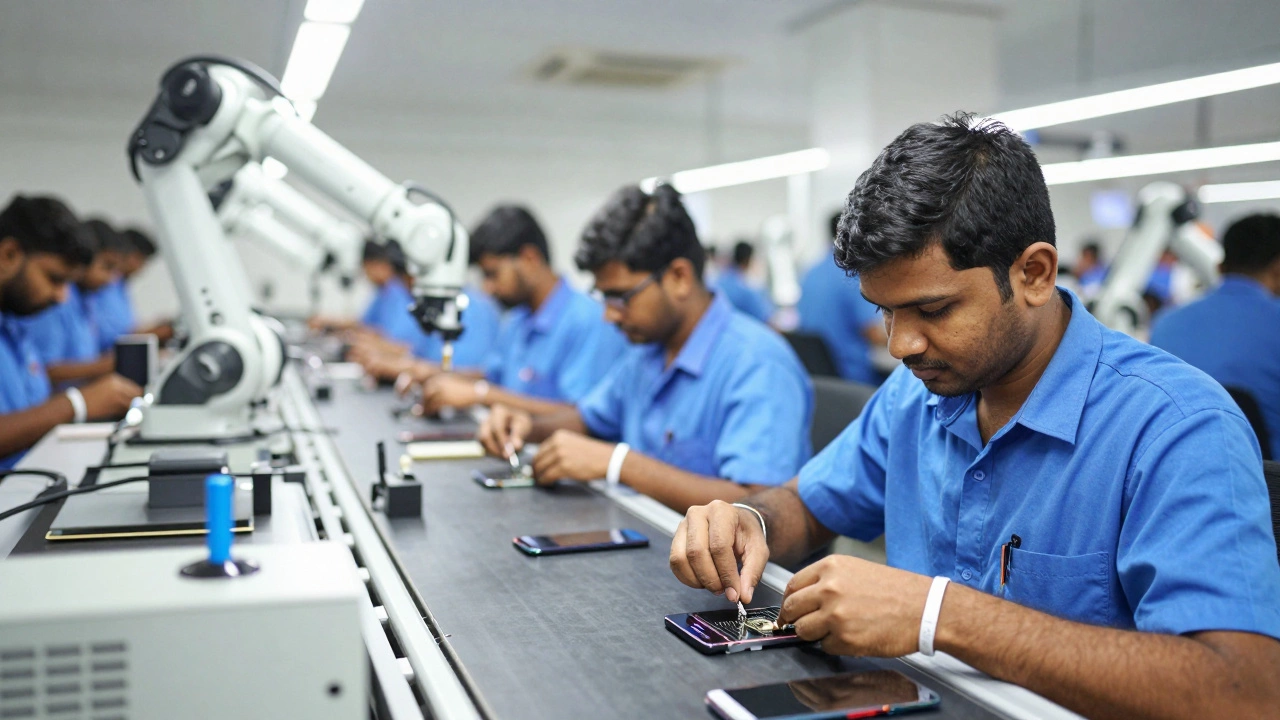
Here is where the story gets interesting for the future. India is positioning itself as the "China Plus One" destination. With a young workforce and a massive domestic market, India is attracting significant foreign direct investment (FDI) in electronics assembly.
Apple has moved a substantial portion of its iPhone production to India. Brands like Samsung already manufacture millions of phones there. But assembly is just the start. The Indian government’s Production Linked Incentive (PLI) scheme is encouraging companies to set up component manufacturing-PCBs, displays, and even some semiconductors-within the country.
Companies like Tata Electronics and Micron are setting up facilities in India. While India currently lacks the deep-tech ecosystem of Taiwan or South Korea, its growth trajectory is steep. By 2030, India could account for 10% of global electronics exports, up from less than 2% today.
Japan and Europe: Niche Specialists
Don’t overlook Japan and Europe. Japan may not assemble phones, but it controls the materials. Japanese firms like Shin-Etsu Chemical and SUMCO dominate the semiconductor silicon wafer market. Without their materials, no fab can operate.
Europe excels in specialized industrial electronics and automotive chips. Germany’s Infineon and France’s STMicroelectronics are leaders in power management and sensing technologies. The EU’s Chips Act is driving investment in local fabrication to secure supplies for the automotive and energy sectors.
| Country | Primary Strength | Key Companies | Market Share Estimate |
|---|---|---|---|
| China | Assembly, Mature Nodes, Batteries | Huawei, SMIC, BYD | ~30% of global output |
| Taiwan | Advanced Logic Fabrication | TSMC, ASE | ~50% of global foundry revenue |
| South Korea | Memory Chips, Displays | Samsung, SK Hynix | ~60% of DRAM/NAND |
| USA | Chip Design, EDA Tools | NVIDIA, Apple, Intel | ~40% of global IP revenue |
| India | Emerging Assembly, Components | Tata Electronics, Foxconn (IND) | <2% of global output (growing) |
Why Supply Chain Diversification Matters
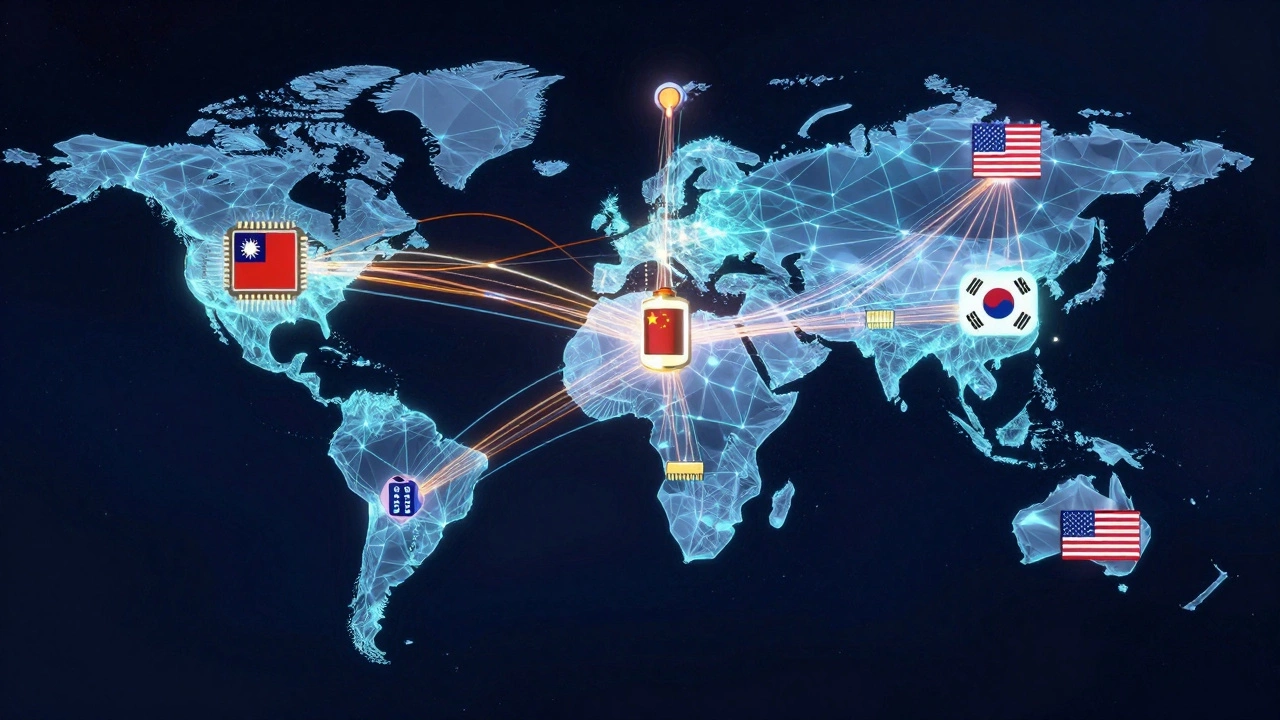
The era of relying on a single country for electronics is over. Geopolitical tensions, trade wars, and pandemic disruptions have taught the hard lesson of fragility. Companies are now adopting a "China Plus One" or "Regionalization" strategy.
This means designing in the US, fabricating in Taiwan or the US, assembling in Vietnam or India, and selling globally. No single country is "most advanced" across the board. Instead, we have a network of specialists. Understanding this network is crucial for investors, policymakers, and business leaders.
Future Trends: What Will Define the Next Decade?
Three trends will reshape the hierarchy:
- AI Hardware Demand: The explosion of AI requires specialized accelerators. This favors TSMC and NVIDIA, but also drives demand for advanced packaging techniques, where companies like Amkor and ASE play key roles.
- Automotive Electrification: Cars are becoming computers on wheels. This boosts demand for power semiconductors (SiC, GaN), benefiting Infineon, STMicroelectronics, and Onsemi.
- Geopolitical Fragmentation: Expect separate supply chains to emerge for different blocs. One optimized for the West, another for Asia. This will increase costs but improve resilience.
In summary, if you ask who is most advanced, the answer is fragmented. Taiwan wins on precision. The US wins on innovation. China wins on scale. South Korea wins on memory. And India is winning on potential. The future belongs to those who can navigate this complex web.
Is China still the biggest electronics manufacturer?
Yes, China remains the largest assembler of consumer electronics by volume. However, its share is declining as companies diversify to India, Vietnam, and Mexico. China is shifting focus toward higher-value components like batteries and mature-node semiconductors.
Why is Taiwan so important for electronics?
Taiwan is home to TSMC, which manufactures the majority of the world’s most advanced semiconductors. These chips are essential for smartphones, AI servers, and high-performance computing. Without Taiwan’s fabrication capacity, the global tech industry would face severe shortages.
How is India growing in electronics manufacturing?
India is leveraging its large workforce and government incentives (PLI scheme) to attract assembly operations from giants like Apple and Samsung. It is also beginning to produce components like PCBs and displays, aiming to move up the value chain beyond simple assembly.
Does the US make any electronics?
The US primarily designs electronics rather than assembling them. However, through the CHIPS Act, the US is rebuilding its semiconductor fabrication capacity. Intel, TSMC, and Samsung are building new factories in the US to produce chips domestically.
What is the difference between logic chips and memory chips?
Logic chips (like CPUs and GPUs) process instructions and perform calculations. Memory chips (like DRAM and NAND) store data temporarily or permanently. Taiwan leads in logic fabrication, while South Korea dominates memory production.