Indian Furniture Export Market Analyzer
Select a target market to view specific import demands, regulatory challenges, and strategic opportunities for Indian furniture exporters.
United States
Largest MarketGCC Region
High VolumeEuropean Union
Premium QualityUnited Kingdom
Post-BrexitEmerging Markets
Growth PotentialMarket Analysis
Primary Demand
Key Challenges
Strategic Opportunity
Indian furniture isn't just sitting in local showrooms anymore. It is walking through customs checkpoints in Dubai, being assembled in Los Angeles, and filling living rooms in London. If you are a manufacturer or an exporter looking to scale, knowing exactly where your products are going is the difference between guessing and growing. The question "Which country imports furniture from India?" has a very specific answer that changes depending on whether you sell solid wood classics, modern engineered pieces, or raw components.
In recent years, India has cemented its position as a major player in the global furniture supply chain. Driven by competitive labor costs, a vast availability of raw materials like teak, rosewood, and bamboo, and skilled craftsmanship, Indian exporters are capturing significant market share. But which nations are actually buying? And what do they want?
The United States: The Largest Single Market
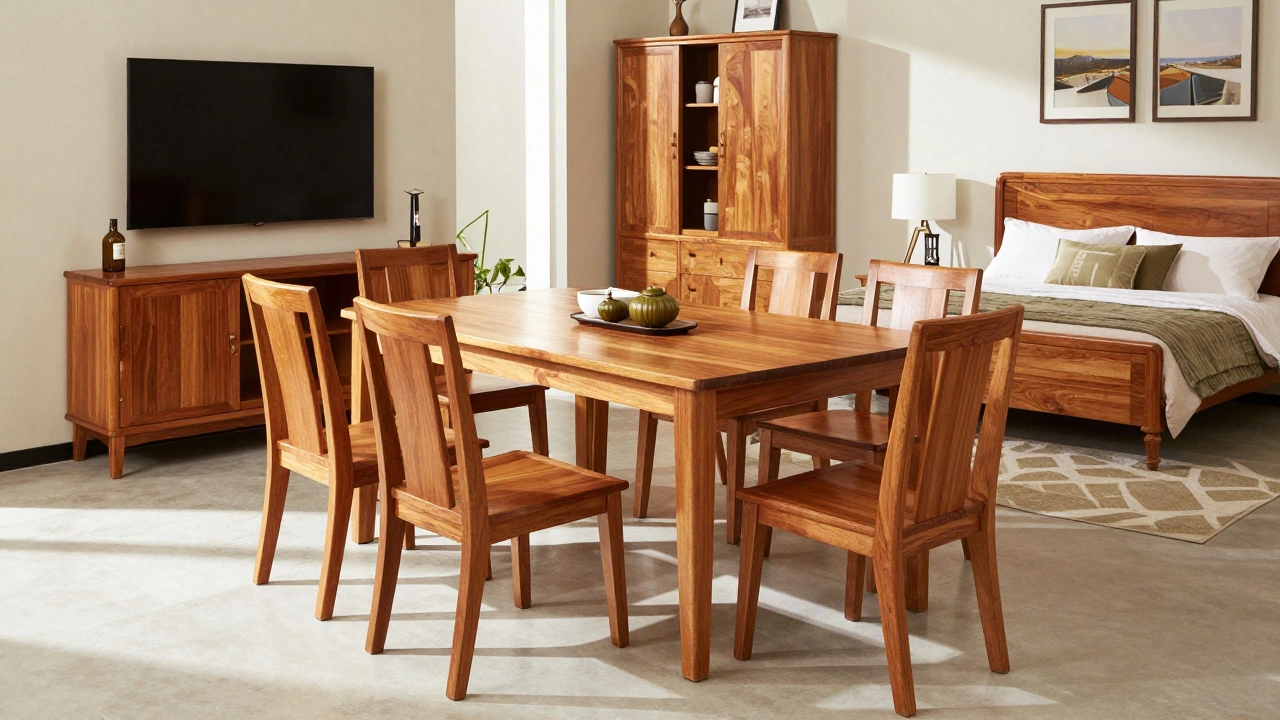
If you look at the data, the United States is the single largest importer of Indian furniture. This isn't a new trend, but it is evolving. American retailers and consumers have a deep appreciation for solid wood furniture, and India is one of the few countries that can produce high-quality hardwood pieces at a price point that allows for healthy margins in the US market.
US importers primarily look for:
- Solid wood dining sets and bedroom furniture.
- Garden and patio furniture made from teak or eucalyptus.
- Customizable modular units that fit into smaller urban apartments.
The key here is compliance. US buyers are strict about phytosanitary standards (to prevent pests) and chemical treatments. Manufacturers who invest in proper fumigation and certification processes find the US door wide open. The demand is driven by both big-box retailers sourcing for their shelves and boutique online brands looking for unique, handcrafted aesthetics that mass-produced Chinese goods often lack.
The Gulf Cooperation Council (GCC): A Cultural Fit
Geographically close and culturally connected, the Gulf Cooperation Council (GCC) countries including Saudi Arabia, UAE, Qatar, Kuwait, Oman, and Bahrain represent a massive volume of Indian furniture exports. In fact, the GCC often rivals the US in total value due to the sheer density of imports.
Why does this region buy so much from India? Two reasons: logistics and culture. Shipping from Mumbai or Chennai to Dubai takes days, not weeks, keeping inventory costs low. More importantly, there is a shared aesthetic preference. Indian designs often feature intricate carvings, rich woods, and traditional motifs that resonate with Middle Eastern tastes. Additionally, many expatriate Indians in these countries prefer familiar styles, creating a built-in customer base.
| Region | Primary Demand | Key Challenge |
|---|---|---|
| United States | Solid Wood, Garden Furniture | Strict Phytosanitary Rules |
| GCC (UAE, KSA) | Traditional Carved, Modular | Price Sensitivity |
| European Union | Bamboo, Sustainable Materials | Carbon Footprint Regulations |
| UK | Modern Minimalist, Office Furniture | Post-Brexit Customs Complexity |
The European Union: Quality Over Quantity
Exporting to Europe is different. The European Union is a market focused on sustainability and design innovation. While the volume might be lower than the US or GCC, the profit margins can be higher if you hit the right niche. Countries like Germany, France, and Italy are significant buyers.
European buyers are increasingly eco-conscious. They are not just looking for cheap wood; they are looking for certified sustainable timber. Bamboo furniture has seen a surge in popularity here because it grows fast and is renewable. Indian manufacturers who can provide FSC (Forest Stewardship Council) certification or equivalent proof of sustainable sourcing have a distinct advantage. The EU also has stringent regulations on formaldehyde emissions in particle board and MDF, so material quality control is non-negotiable.
The United Kingdom: A Post-Brexit Opportunity
The UK remains a strong destination for Indian furniture. Despite the complexities introduced by Brexit, British consumers continue to favor Indian craftsmanship. The UK market leans towards contemporary designs with a touch of heritage-think mid-century modern chairs with Indian upholstery fabrics.
Office furniture is another growing segment. As hybrid work models become permanent, UK businesses are upgrading home offices. Indian exporters offering ergonomic yet stylish desk solutions are finding traction. The proximity to continental Europe also makes the UK a potential hub for distribution, though logistics must be carefully planned to avoid double taxation or customs delays.
Emerging Markets: Australia, Canada, and Japan
Don't overlook the Anglophone and developed Asian markets. Australia is an emerging hotspot for Indian outdoor and coastal-style furniture. Australians love outdoor living, and Indian teak and rattan products hold up well against their climate. Similarly, Canada mirrors the US market but with a stronger focus on winter-ready indoor furniture and durable materials.
Japan is a unique case. Japanese consumers value precision, minimalism, and natural materials. Indian bamboo and cane products fit this aesthetic perfectly. However, the barrier to entry is high due to strict quality inspection standards. Once an Indian brand gains trust in Japan, customer loyalty is incredibly strong.
What Indian Manufacturers Are Doing Right
Success in these markets isn't accidental. Leading Indian furniture clusters in places like Moradabad (brass), Jodhpur (rosewood), and Kerala (teak) have adapted their business models. They are moving from pure manufacturing to providing end-to-end solutions, including packaging that meets international shipping standards and digital catalogs that allow foreign buyers to visualize products in 3D.
Government initiatives like the Production Linked Incentive (PLI) scheme for furniture have also helped manufacturers upgrade machinery and improve productivity. This means better consistency in size and finish, which is critical when selling to large international retailers who cannot tolerate defects.
Challenges to Watch Out For
It’s not all smooth sailing. Logistics costs remain a headache. Fuel price volatility and container shortages can eat into margins overnight. Currency fluctuations between the Indian Rupee and the Dollar or Euro can also impact profitability. Smart exporters hedge their currency risks and negotiate long-term freight contracts.
Another challenge is competition. Vietnam and China are fierce competitors, especially in engineered wood and metal furniture. To compete, Indian manufacturers must lean into their strengths: artisanal skill, customizability, and sustainable materials. Mass production is a game where others may have the edge, but bespoke quality is where India wins.
Which country is the biggest buyer of Indian furniture?
The United States is consistently the largest single-country importer of Indian furniture, followed closely by the collective Gulf Cooperation Council (GCC) nations, particularly the UAE and Saudi Arabia.
What type of furniture does the US import most from India?
The US primarily imports solid wood furniture, including dining tables, bedroom sets, and garden/patio furniture made from teak, mango wood, and eucalyptus. There is also growing demand for customizable modular units.
Is it difficult to export furniture to Europe?
Yes, it requires careful attention to detail. European markets have strict regulations regarding sustainability (such as FSC certification), chemical emissions (formaldehyde limits), and carbon footprints. Compliance is mandatory, but the higher margins often justify the effort.
Why do GCC countries import so much furniture from India?
GCC countries benefit from short shipping times, cultural aesthetic similarities, and a large Indian expatriate population. Indian carved wood and traditional designs align well with Middle Eastern preferences.
How can small Indian furniture manufacturers start exporting?
Small manufacturers should start by targeting niche markets like Australia or the UK with specialized products (e.g., bamboo or brass). Leveraging government export schemes, obtaining necessary certifications, and using digital platforms to connect with international buyers are crucial first steps.