What Manufacturing Makes the Most Money? Exploring Small Scale Goldmines
Apr 7 2025
When you think of the manufacturing process, the step-by-step method of turning raw materials into finished goods. Also known as production workflow, it's not just about machines—it's about people, timing, and control. In India, this process looks different depending on what’s being made. For brick manufacturing, the shaping, drying, and firing of clay into durable building blocks, it’s a blend of tradition and tech. Clay is dug, mixed with water, pressed into molds, dried under the sun, then fired in kilns at over 1000°C. No fancy robotics here—just precision, patience, and weather you can’t control. Yet, companies like Trang Bricks India are making this process cleaner, faster, and more consistent without losing the human touch.
The small scale manufacturing, producing goods in limited batches with localized resources and skilled labor model thrives across India. It’s not about mass production—it’s about adaptability. A small brick kiln in Rajasthan runs differently than a textile unit in Surat or a food processor in Tamil Nadu. But they all share one thing: they respond to local demand. Unlike giant factories that churn out millions of identical items, small manufacturers tweak recipes, adjust designs, and fix problems on the fly. This flexibility is why Indian Indian manufacturing, the wide range of goods produced across the country, from pharmaceuticals to electronics to handcrafted furniture is growing so fast. The government’s push for ‘Make in India’ isn’t just about big plants—it’s about empowering thousands of these smaller operations to compete globally.
What’s often missed is how the production methods, the specific techniques and tools used to create a product affect quality, cost, and sustainability. A brick fired in a traditional bull kiln emits more smoke than one made in a modern zigzag kiln. A plastic pellet made in Texas uses cheap natural gas; a brick made in Uttar Pradesh uses local soil and wood waste. These choices aren’t random—they’re shaped by resources, regulations, and local needs. That’s why the manufacturing process in India isn’t one-size-fits-all. It’s layered, regional, and deeply practical.
You’ll find posts here that break down how a $1,000 startup can make custom pet tags, how Surat dominates fabric production, why India is racing to build semiconductors, and how a single kiln can outlast a factory if it’s built right. There’s no single path to making something—but there are smart ways to do it. What you’ll see below isn’t just a list of articles. It’s a map of how things are really made in India today—by hand, by machine, by grit, and by choice.
Sep
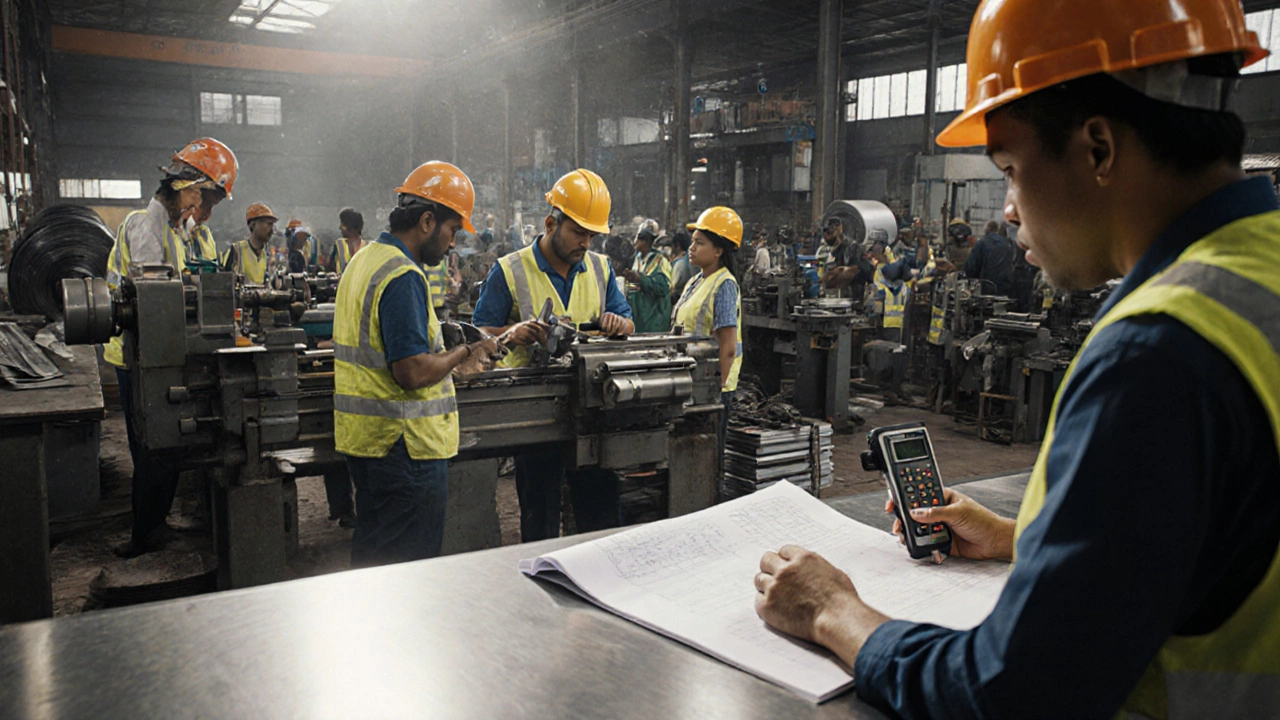
Learn the 5 M's of manufacturing-Man, Machine, Material, Method, and Measurement-plus how to apply them, avoid pitfalls, and boost plant efficiency.

Apr 7 2025
Nov 20 2025
Apr 30 2025

Apr 4 2025
Feb 10 2025