Scale Converter: Micrometer (μm) ↔ Nanometer (nm)
Precision Scale Calculator
Conversion Result
Calculating...
Nano-sized
Sub-micron/Viral
Micronized/Bacterial
Quick Takeaways
- 1 Micrometer (μm) = 1,000 Nanometers (nm).
- Micrometers are used to measure things like yeast, large bacteria, and fine powders.
- Nanometers are used for molecular structures, viruses, and nano-coatings.
- In food processing, this scale determines which filters to use and how flavors are encapsulated.
Breaking Down the Scale
To get a handle on this, we need to look at the Metric System is an international decimal system of measurement based on the meter . When we go smaller than a millimeter (which is already tiny), we enter the realm of microscopy.
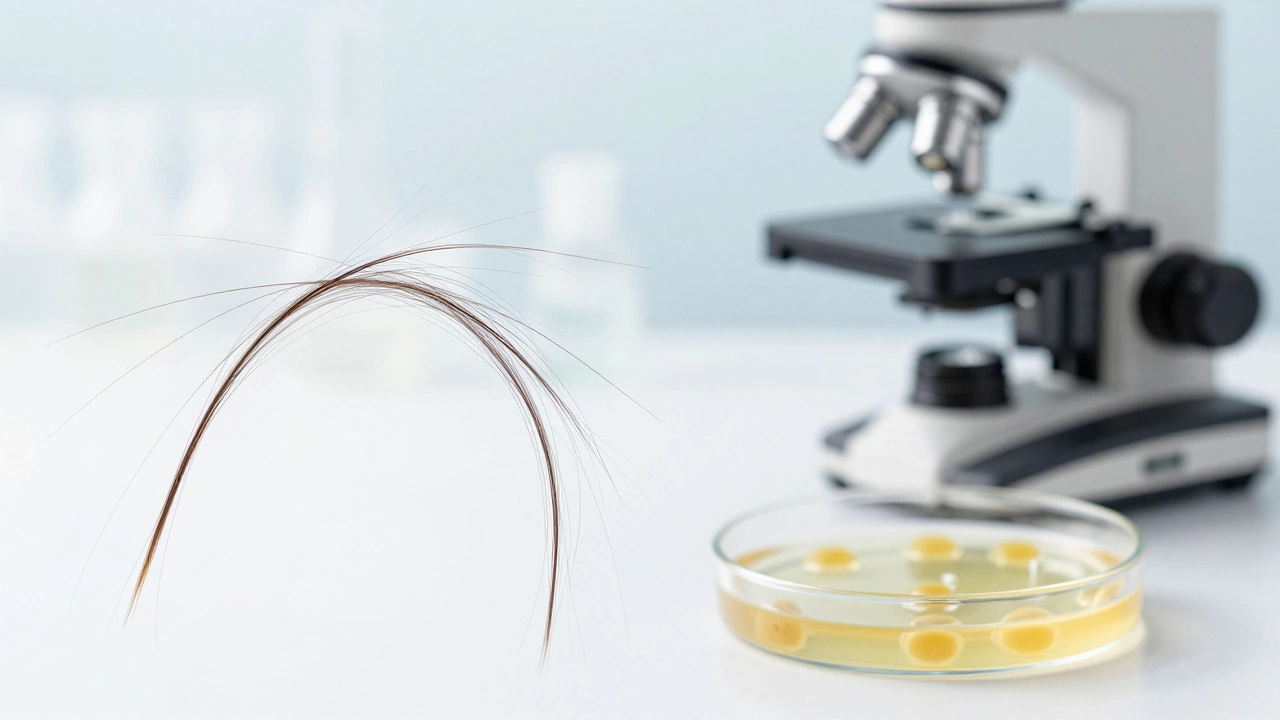
A Micrometer (also called a micron) is one-millionth of a meter (10-6 meters) . If you take a single human hair and slice it lengthwise into about 50 to 100 strips, one of those strips would be roughly one micrometer wide. In food plants, this is the scale where we worry about sediment and certain types of spoilage organisms.
Then we have the Nanometer, which is one-billionth of a meter (10-9 meters) . This is so small that you can't see it with a standard light microscope; you need an electron microscope. We are now talking about the size of individual atoms and complex molecules. While a micrometer is a tiny dot, a nanometer is like a speck of dust on that dot.
| Feature | Micrometer (μm) | Nanometer (nm) |
|---|---|---|
| Scale Factor | 10-6 meters | 10-9 meters |
| Relative Size | 1,000 times larger | 1,000 times smaller |
| Food Example | Yeast cells, Flour particles | Flavor molecules, Vitamin complexes |
| Tool Needed | Optical Microscope | Electron Microscope |
Why This Matters in Food Processing Units
You might be thinking, "Why do I care about a billionth of a meter when I'm making jam or bottling juice?" The answer lies in the physics of how food behaves. In Food Processing, the scale of your particles changes everything from the texture of the product to how long it stays on the shelf.
Consider filtration. If you use a filter with 0.22 μm pores, you are effectively stopping most bacteria. But if you want to remove viruses or specific dissolved chemicals, you have to move toward the nanometer scale. Many modern beverage companies use Ultrafiltration, which employs membranes with pore sizes in the nanometer range to concentrate proteins or remove salts without losing the desired flavor components.
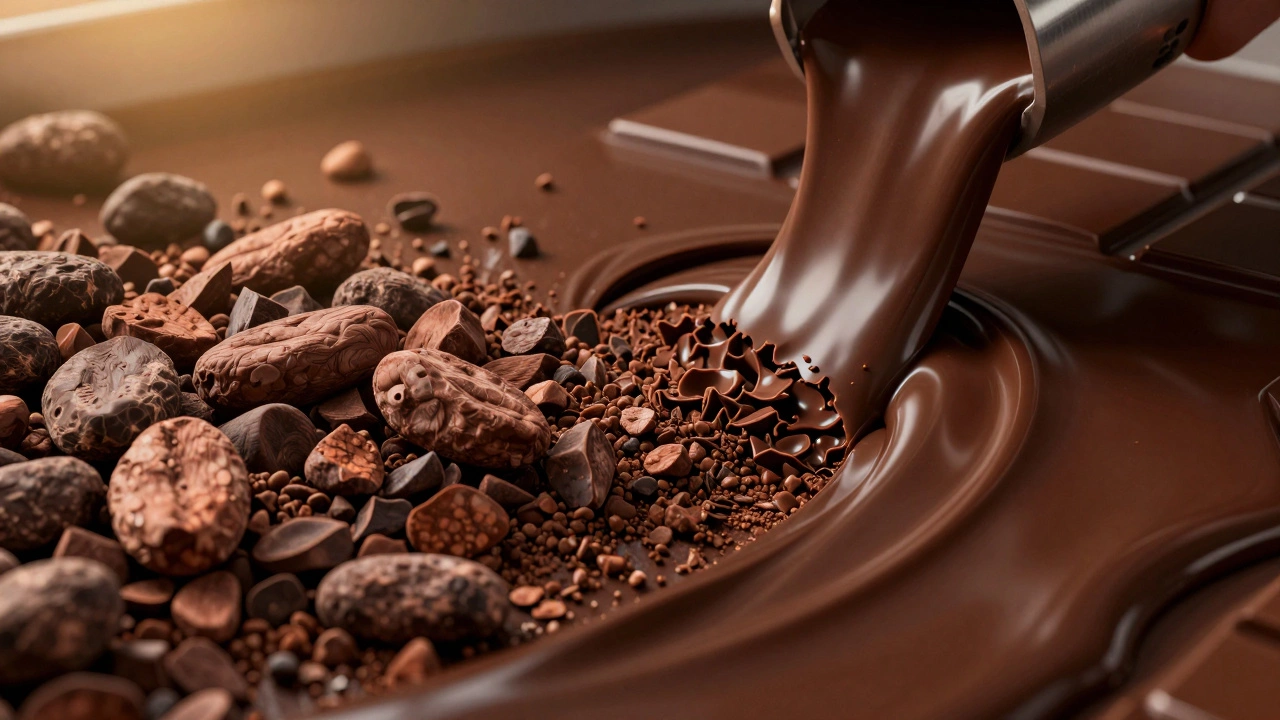
Texture is another huge factor. Think about a high-end chocolate bar. If the cocoa particles are larger than 20-30 μm, your tongue can actually feel them, and the chocolate feels "gritty." To get that professional, velvety melt-in-your-mouth feel, manufacturers use refining machines to push those particles down toward the low micrometer range. If they could push them into the nanometer range, the chocolate would feel entirely different-possibly too oily or unnatural.
The Role of Nanotechnology in Modern Food
We are seeing a shift where food scientists aren't just managing particles; they are designing them. This is where Nanotechnology enters the picture. It's the manipulation of matter on an atomic, molecular, and supramolecular scale.
One common use is nano-encapsulation. Imagine you have a vitamin that tastes terrible or breaks down when exposed to light. By wrapping that vitamin in a nano-scale shell (a lipid nanoparticle), you can protect the nutrient and control exactly when it's released in the body. This isn't just a lab trick; it's used in fortified foods and functional beverages to keep nutrients stable during the heat of pasteurization.
Another application is in packaging. Some food wraps now use nanoclays-tiny particles of clay in the nanometer range-embedded in the plastic. These particles create a "maze" that makes it harder for oxygen to penetrate the package, which keeps your snacks crisp for weeks longer than standard plastic would.
Common Pitfalls and Misunderstandings
A big mistake people make is assuming that "nano" just means "really small." In a professional setting, the distinction is mathematical. If a supplier tells you their powder is "nano-sized," they are claiming it is below 100 nm. If they say it's "micronized," it's likely in the 1 to 10 μm range. These two things behave very differently in a liquid.
For example, micron-sized particles often settle at the bottom of a tank over time due to gravity. Nanometer-sized particles, however, often stay suspended due to Brownian motion (the random movement of particles in a fluid). This is why some "nano-emulsions" in drinks stay perfectly mixed for years without needing a shaker, while a traditional fruit juice separates and needs to be shaken.
Practical Checklist for Equipment Selection
If you are choosing machinery for a food processing unit, use this logic to determine which scale you are dealing with:
- Sediment Removal: Look for filters in the 1 μm to 50 μm range. This catches sand, skin, and large organic debris.
- Microbial Control: You need "sterile grade" filters, typically around 0.22 μm.
- Protein Concentration: Look for membranes in the 1 nm to 100 nm range (Ultrafiltration).
- Texture Refinement: Target a particle size of under 20 μm for smooth fats and sugars.
Is a nanometer just a very small micrometer?
Not exactly. While both are units of length, they operate on different orders of magnitude. A nanometer is 1,000 times smaller than a micrometer. If a micrometer were the size of a football field, a nanometer would be the size of a small coin on that field.
Can I see micrometers with a regular microscope?
Yes, most high-quality optical microscopes can see objects in the micrometer range, such as plant cells or bacteria. However, nanometer-scale objects are smaller than the wavelength of visible light, meaning they are invisible to standard microscopes and require electron microscopes.
Why is the distinction important for food safety?
It determines what can pass through your filters. Most bacteria are in the micrometer range (roughly 1-10 μm), but viruses are in the nanometer range (roughly 20-300 nm). If you use a filter that only stops micrometers, viruses will slide right through.
What is a common food product that uses nano-scale tech?
Nano-emulsions are common in high-end dressings and creams. They allow oil and water to stay mixed without separating, creating a more consistent taste and a smoother texture without adding excessive stabilizers.
How do I convert μm to nm?
Simply multiply the micrometer value by 1,000. For example, 0.5 μm x 1,000 = 500 nm.
What to Do Next
If you are managing a production line, start by auditing your current filtration stages. Check the specs on your filter cartridges. If you see "μm," you are managing particles and bacteria. If you see "nm" or "Daltons" (a measure of molecular weight often used in nano-filtration), you are managing chemicals and proteins.
For those looking to improve product quality, consider a particle size analysis of your final product. Using a laser diffraction tool can tell you exactly how many microns your particles are, allowing you to tweak your grinding or mixing process to hit that perfect sensory target.