Quick Guide to Manufacturing Roles
- Direct Labor: The people physically making the product (Operators, Assemblers).
- Technical & Engineering: The brains designing the process (Industrial Engineers, PLC Programmers).
- Quality & Compliance: The gatekeepers ensuring everything is safe (QA Inspectors, Safety Officers).
- Logistics & Supply Chain: The movers and shakers (Inventory Managers, Procurement Specialists).
- Management: The coordinators keeping the line moving (Plant Managers, Floor Supervisors).
The Front Line: Direct Production Roles
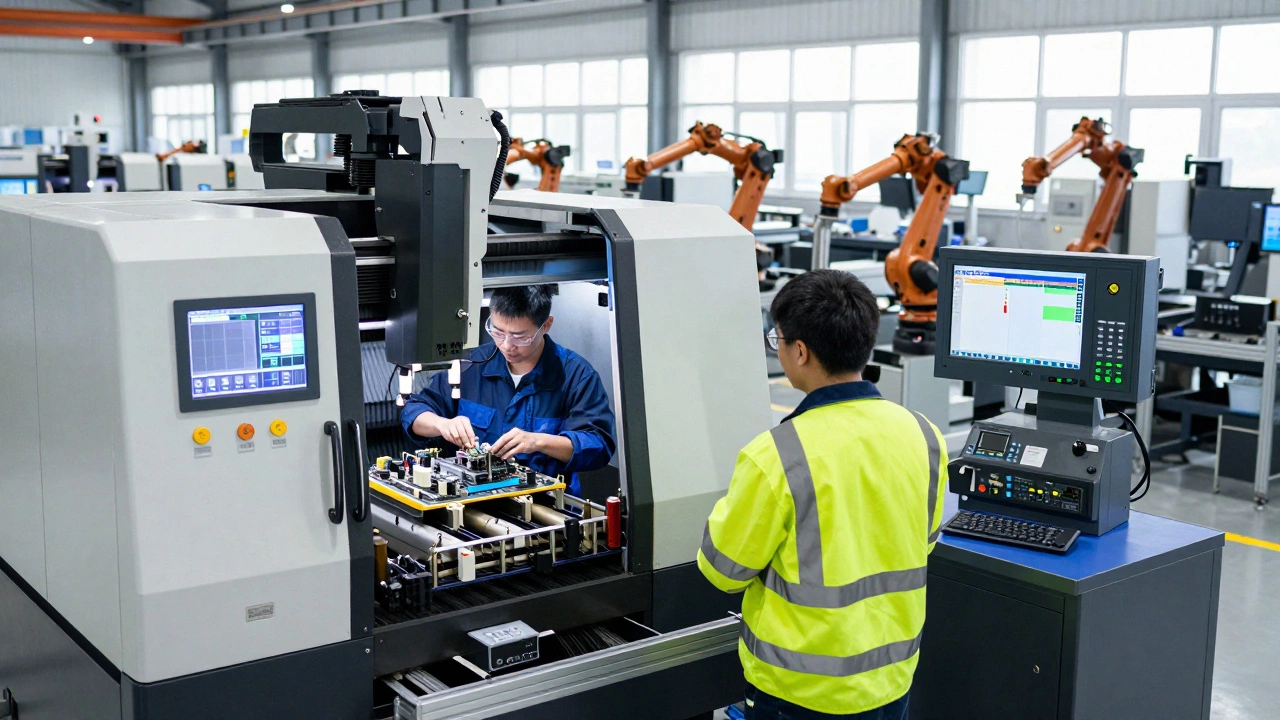
This is where the magic happens. If you like seeing a physical product go from a raw pile of metal or plastic to a finished item, these are the roles for you. Production Operators is the most common role in the sector, involving the operation of machinery to create components. Depending on the plant, an operator might be running a massive CNC machine or monitoring a chemical vat. They aren't just pushing buttons; they have to understand the "feel" of the machine and spot a problem before it ruins a whole batch of parts.
Then you have Assemblers. These folks take the pieces produced by the operators and put them together. In a car plant, this might mean installing a dashboard; in electronics, it could be soldering a circuit board. It requires a mix of manual dexterity and a sharp eye for detail. If one screw is loose in a medical device, it's not just a mistake-it's a disaster.
Don't overlook the Machine Operators. These specialists focus on a specific piece of equipment, like a CNC Machine (Computer Numerical Control), which uses pre-programmed software to carve metal with micron-level precision. These roles often pay more because they require a technical understanding of G-code and tool offsets.
The Brains: Engineering and Technical Roles
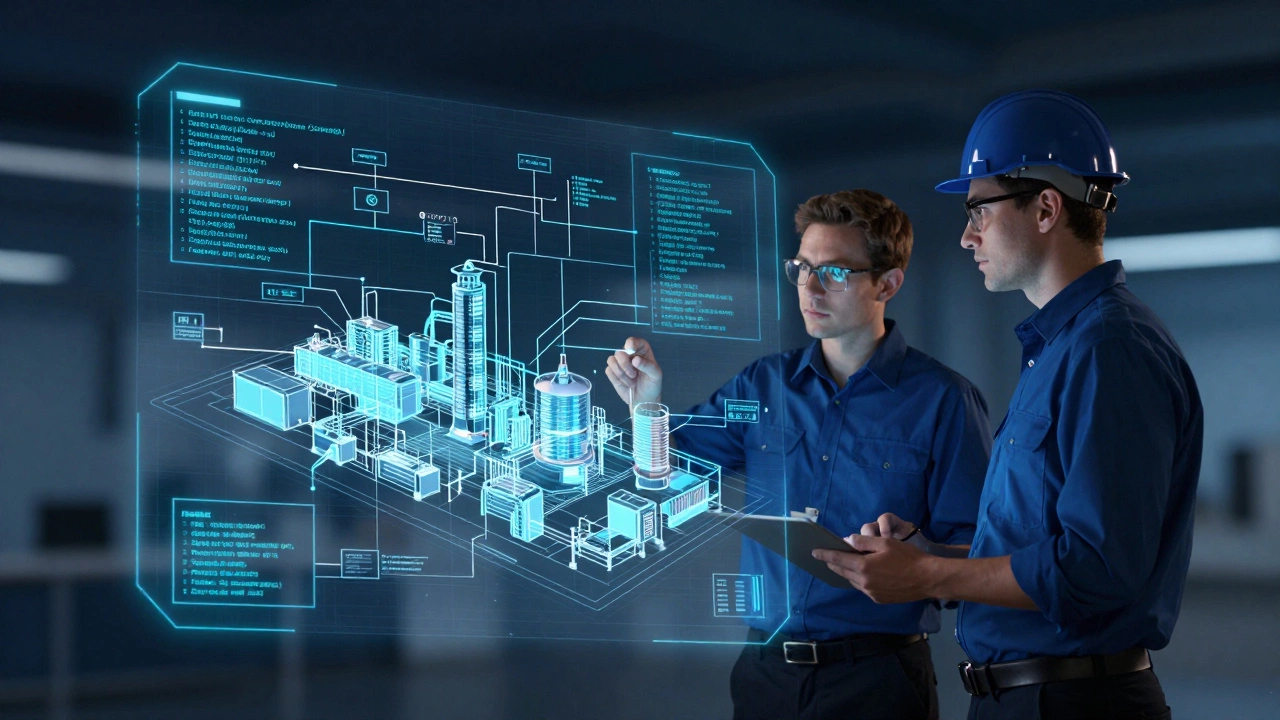
Manufacturing isn't just about doing; it's about optimizing. This is where engineers come in. Industrial Engineering is the branch of engineering that deals with the optimization of complex processes, systems, or organizations. An industrial engineer doesn't necessarily build the product; they build the *way* the product is built. They look at a floor plan and realize that moving the welding station five feet to the left saves the worker ten steps per hour, which adds up to thousands of hours of saved time per year.
In the modern era, we have PLC Programmers. A PLC (Programmable Logic Controller) is essentially the brain of a factory robot. These programmers write the logic that tells a robotic arm exactly when to grip, rotate, and release. If you enjoy coding but want to see your work move a physical object in the real world, this is the path.
Maintenance Technicians are the unsung heroes. When a million-dollar machine breaks down, the whole plant stops. These techs are the "firefighters" who diagnose mechanical failures, replace blown fuses, or fix hydraulic leaks. They often have a hybrid skill set, knowing both how to use a wrench and how to read a digital diagnostic screen.
| Role Type | Typical Education | Key Skill | Daily Focus |
|---|---|---|---|
| Production Operator | High School / Vocational | Manual Dexterity | Output & Volume |
| CNC Programmer | Associate Degree / Cert | Technical Math | Precision & Accuracy |
| Industrial Engineer | Bachelor's Degree | Systems Thinking | Efficiency & Flow |
| Quality Inspector | Certification / Experience | Attention to Detail | Compliance & Standards |
The Watchdogs: Quality, Safety, and Compliance
You can't just make a thousand items and ship them; you have to make sure they actually work. This is the domain of Quality Assurance (QA). QA specialists don't just check the final product; they monitor the entire process. They use tools like calipers and micrometers to ensure parts are exactly the right size. If a part is supposed to be 10mm and it's 10.1mm, it's scrap.
Then there's the Safety Officer. Manufacturing can be dangerous-you've got heavy machinery, high heat, and chemicals. Safety officers implement OSHA (Occupational Safety and Health Administration) standards to ensure nobody gets hurt. They conduct audits, run fire drills, and make sure everyone is wearing their steel-toed boots and safety goggles. A good safety officer is someone you love when everything is fine and someone you rely on when things go wrong.
Compliance officers take a different approach, focusing on the legal and environmental side. Are the chemicals being disposed of correctly? Is the plant meeting the emission standards set by the government? They deal with the paperwork and the inspectors to keep the factory from getting shut down by a regulatory body.
The Connectors: Logistics and Supply Chain
A factory is useless if it doesn't have raw materials or a way to ship the finished goods. This is where logistics experts step in. Procurement Specialists are the buyers. They spend their days negotiating with suppliers to get the best price on raw aluminum or plastic pellets. A 2% drop in material costs can mean millions of dollars in extra profit for a large plant.
Inventory Managers use ERP Systems (Enterprise Resource Planning), such as SAP or Oracle, to track every single nut and bolt in the warehouse. They balance the act of "Just-in-Time" (JIT) manufacturing-where materials arrive exactly when needed to avoid storage costs-against the risk of a supply chain delay that could halt production.
Shipping and Receiving coordinators handle the physical movement. They manage the loading docks, coordinate with trucking companies, and ensure that the right product gets on the right truck. It's a high-pressure environment where a single clerical error can send a shipment of 500 refrigerators to the wrong city.
The Leaders: Management and Administration
At the top, you have the Plant Manager. They are responsible for the entire facility's P&L (Profit and Loss). They don't spend much time on the line, but they spend a lot of time looking at KPIs (Key Performance Indicators). If the plant's efficiency drops by 3%, the Plant Manager is the one who has to figure out why and how to fix it.
Floor Supervisors are the bridge between the office and the line. They manage the people. If two operators are arguing or a machine is acting up, the supervisor handles it. They are the ones who schedule shifts and ensure that the production targets for the day are met. It's a role that requires a lot of "soft skills"-knowing how to motivate a tired crew at 3 AM on a Tuesday.
Don't forget the administrative side. HR specialists handle the hiring and payroll, and accountants track the cost of every single unit produced. In manufacturing, "cost accounting" is a specialized skill because you have to factor in electricity, labor, raw materials, and depreciation of the machines.
Bridging the Gap: Government Schemes and Training
If you're looking to get into these roles, you don't always need a four-year degree. Many governments offer specialized schemes to fill the "skills gap." For instance, apprenticeships are making a huge comeback. These programs allow you to earn a wage while learning a trade like precision machining or industrial maintenance.
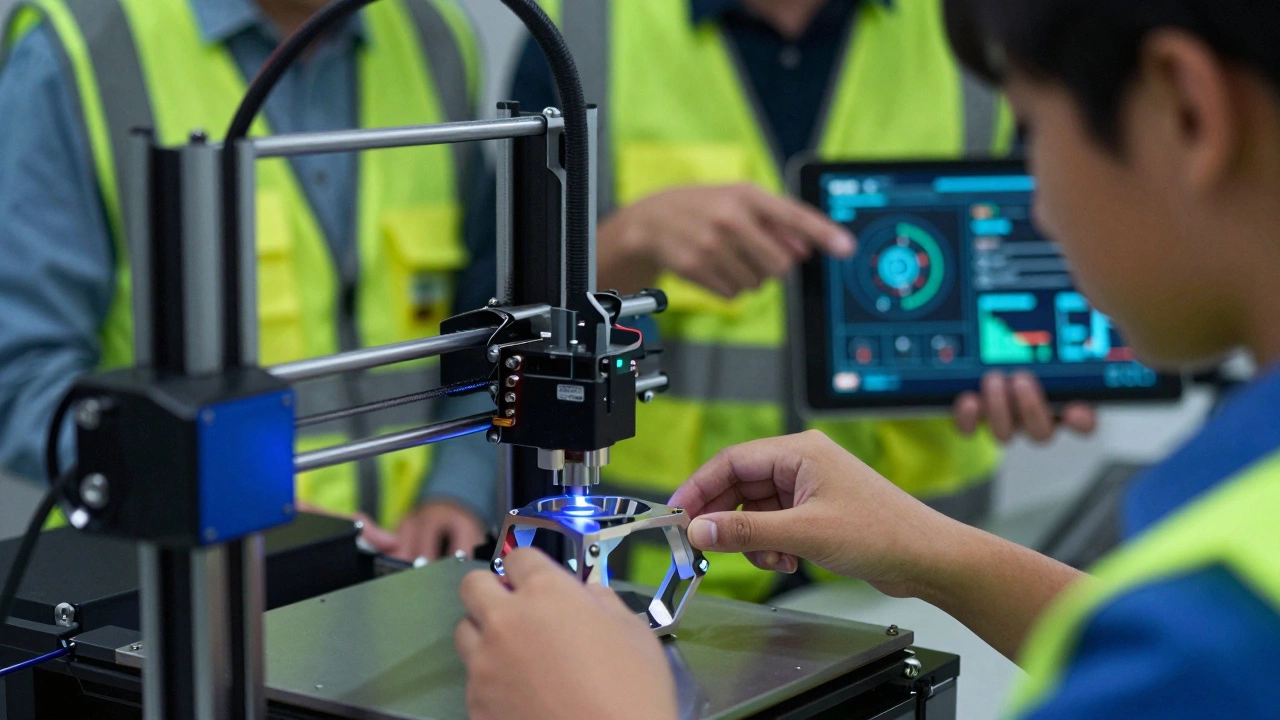
Many regions offer grants for vocational training in manufacturing jobs, focusing on "Industry 4.0" skills. This is the move toward smart factories where AI and the Internet of Things (IoT) are integrated into production. If you can show a certification in additive manufacturing (3D printing) or robotics, you're suddenly a much more attractive candidate than someone with just a general degree.
Keep an eye on local workforce development boards. They often have partnerships with community colleges to create "fast-track" certifications for CNC operating or welding. These are often subsidized by government schemes designed to bring manufacturing back to local shores, making it a great time to enter the field.
Do I need a college degree to work in manufacturing?
Not necessarily. While engineers and plant managers usually have degrees, many high-paying roles like CNC programmers, maintenance techs, and quality inspectors can be entered through vocational training, certifications, or apprenticeships. Experience on the floor often counts as much as a diploma in this industry.
What is the difference between a Production Operator and a Machine Operator?
A Production Operator generally handles the overall flow of a product or works on an assembly line. A Machine Operator is a specialist who focuses on a specific piece of equipment (like a lathe or a milling machine), often performing setups, tool changes, and precision calibrations.
What are the most in-demand skills in modern manufacturing?
Right now, there is a huge demand for "mechatronics"-the blend of mechanical, electrical, and computer engineering. Skills in PLC programming, robotic arm operation, data analysis for predictive maintenance, and 3D printing (additive manufacturing) are highly sought after.
Is manufacturing a stable career path?
Yes, especially if you specialize in technical roles. While basic assembly jobs are more susceptible to automation, the people who design, maintain, and program those robots are in higher demand than ever. Moving toward a technical specialization provides a lot of job security.
What is Industry 4.0?
Industry 4.0 refers to the current trend of automating manufacturing processes using smart technology. This includes using sensors to track machine health (IoT), using AI to predict when a part will fail, and integrating cloud computing to manage supply chains in real-time.
Next Steps for Job Seekers
If you're just starting out, don't jump straight into a four-year degree unless you want to be a design engineer. Instead, look for an entry-level operator role. Getting your foot in the door allows you to see how the floor actually works. Once you're inside, many companies will pay for your certifications in CNC machining or Quality Assurance.
For those already in the field, look toward the "technical pivot." If you're an operator, learn the basics of PLC logic. If you're in logistics, get certified in Six Sigma or Lean Manufacturing. These methodologies focus on reducing waste and increasing efficiency, and they are the gold standard for moving into management roles.
Finally, check your local government's industrial development website. There are often hidden grants for "upskilling" workers in the manufacturing sector. These schemes can pay for your training in robotics or advanced materials, giving you a competitive edge without you having to take on student debt.