India Pharma Impact Estimator
Discover India's role as the 'Pharmacy of the World' by calculating your potential impact on global generic medicine supply.
Production Scenario Calculator
Enter a hypothetical annual production volume for a common generic drug (in million units) to see its global reach.
Impact Analysis
Based on average treatment cycles per person for selected category.
Estimated savings compared to branded US equivalents.
Context: While finished formulations are made in India, ~70% of raw APIs historically came from China. Recent PLI schemes aim to reduce this reliance.
Note: This tool uses simplified averages. Actual impact varies by drug patent status, regulatory approval (FDA/EMA), and local distribution networks.
Imagine walking into a pharmacy in London, New York, or Lagos. You grab a box of painkillers or antibiotics. There is a good chance those pills were made in India. This isn't an exaggeration; it is the daily reality for millions of patients worldwide. When people ask, "What is the rank of Indian pharma in world?" they are usually looking for a simple number. But the answer is more nuanced and far more impressive than just a ranking on a spreadsheet.
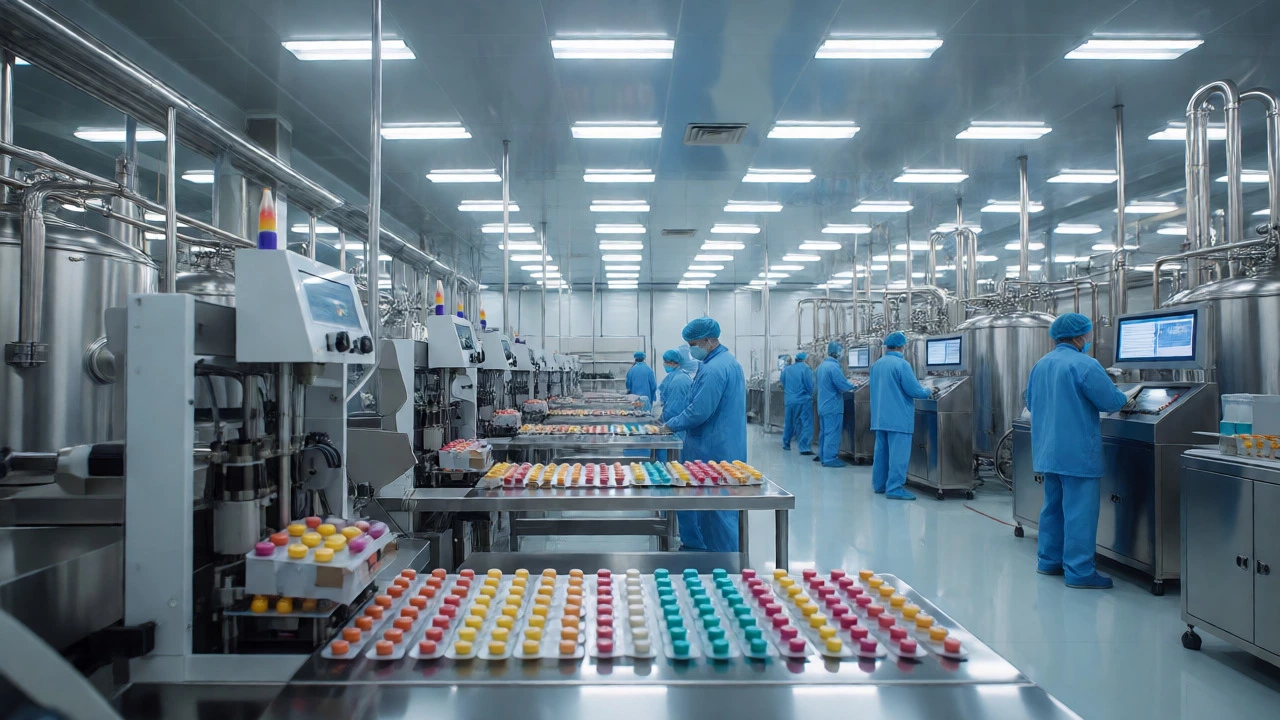
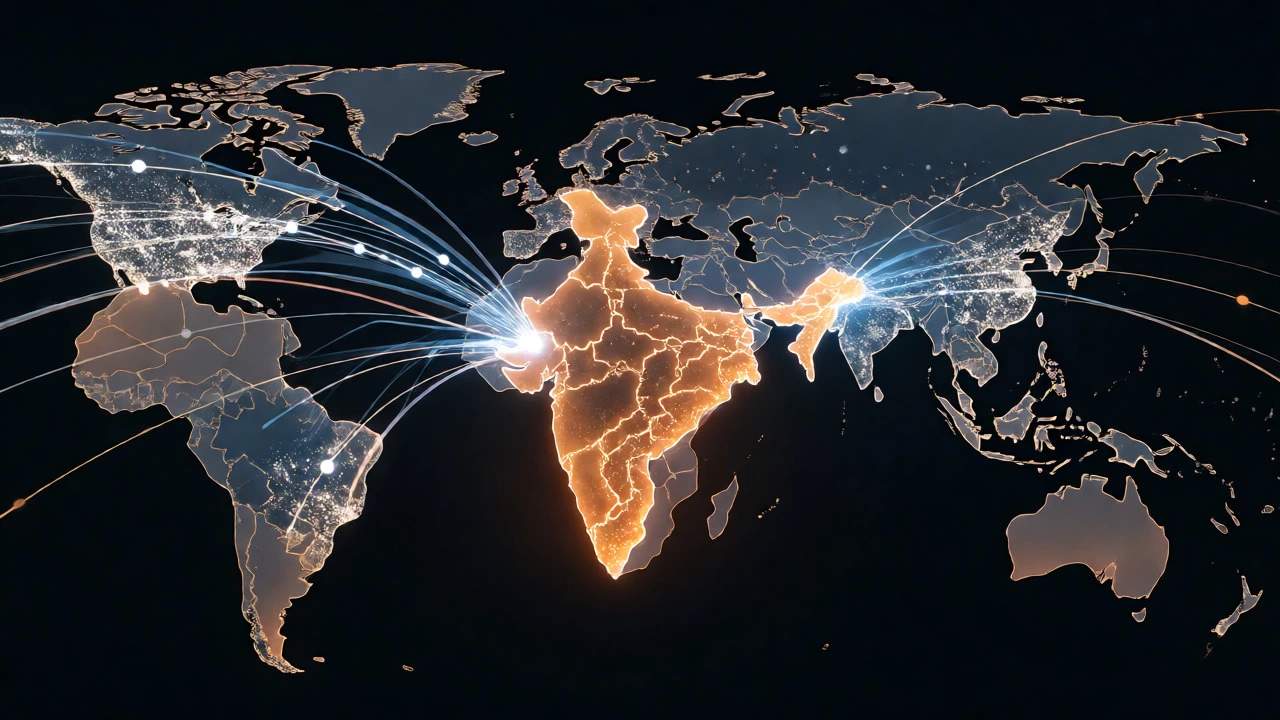
India currently holds the position of being the third-largest pharmaceutical producer by volume globally. In terms of value, it sits firmly within the top ten, typically ranked between fourth and sixth depending on the market metrics used that year. However, if you look at the supply of affordable medicines, specifically generics, India is often considered the leader. It supplies over 20% of the world's generic drug demand. That is a massive footprint for a country that started its modern pharma journey with very little capital and technology compared to Western giants.
The Numbers Behind the Ranking
To understand where India stands, you have to look at two different metrics: volume and value. The United States and China dominate the high-value branded drug market because they hold most of the patents for new, expensive cancer treatments and biologics. India, however, plays a different game. It focuses on efficiency and scale.
According to recent data from the Department of Pharmaceuticals, India’s domestic pharmaceutical market was valued at approximately USD 45 billion in 2023-2024 and is projected to reach USD 65 billion by 2025. On the global stage, this places it among the top players. But here is the kicker: while India might not always be number one in total revenue due to lower price points per unit, its influence on global health security is unmatched. During the early days of the pandemic, when the world was scrambling for hydroxychloroquine and paracetamol, who kept the shelves stocked? India did. Despite export bans to protect local needs, the sheer capacity of Indian factories meant that global shortages were mitigated faster than anyone expected.
Why Is India Called the 'Pharmacy of the World'?
This nickname isn't just marketing fluff. It stems from specific structural advantages that other countries struggle to replicate quickly.
- Generic Dominance: India is the largest provider of generic medicines globally. Generics are copies of patented drugs that become available after the patent expires. Because India has a robust system for reverse engineering and bioequivalence testing, companies like Sun Pharma and Dr. Reddy’s Laboratories can produce these drugs at a fraction of the cost of their originators.
- Vaccine Production: Before the recent diversification efforts, India produced about 60% of the world’s vaccines. Organizations like the Serum Institute of India became critical hubs for COVAX, supplying billions of doses to low-and-middle-income countries.
- Cost Efficiency: Labor costs, regulatory navigation expertise, and economies of scale allow Indian manufacturers to keep prices low without sacrificing quality standards required by strict agencies like the US FDA.
It is not just about cheap drugs. It is about accessible drugs. If a life-saving medication costs $1,000 in the US but $10 in India, the global impact of that $10 version is enormous. It allows health systems in Africa, Asia, and Latin America to treat populations that would otherwise go untreated.
The Critical Role of Active Pharmaceutical Ingredients (APIs)
Here is where things get complicated, and where the "rank" question faces some criticism. While India is a king of finished formulations (the actual tablets and capsules), it has historically been dependent on another country for the raw materials: China. Approximately 70% of India’s Active Pharmaceutical Ingredients (APIs) came from China prior to recent shifts. An API is the biologically active component in a drug-the part that actually cures you.
| Metric | USA | China | India | Europe (EU) |
|---|---|---|---|---|
| Rank by Volume | 1st | 2nd | 3rd | 4th |
| Rank by Value | 1st | 2nd | ~5th-6th | 2nd-3rd |
| Generic Supply Share | Low (Patent-heavy) | Moderate | High (>20%) | Moderate |
| API Dependency | Low | Self-sufficient | High (on China) | Moderate |
This dependency created a vulnerability. When China shut down factories during lockdowns, Indian pharma felt the pinch. Recognizing this risk, the Indian government launched the Production Linked Incentive (PLI) scheme. The goal? To make India self-reliant in API production. Today, we are seeing a surge in domestic API manufacturing plants in states like Gujarat and Andhra Pradesh. This shift is crucial for maintaining its global rank independently, rather than relying on imported ingredients.
Regulatory Strength: The FDA Factor
You might wonder, "If the drugs are so cheap, are they safe?" This is a common concern. The answer lies in regulation. India has one of the highest numbers of US FDA-approved pharmaceutical plants outside the United States. Companies like Cipla and Wockhardt undergo rigorous inspections to meet Good Manufacturing Practices (GMP).
Getting an FDA approval is tough. It involves years of clinical trials, stability studies, and facility audits. The fact that hundreds of Indian facilities are approved speaks volumes about the quality infrastructure. However, it is not perfect. Occasional warnings letters from the FDA regarding data integrity or sanitation issues remind us that vigilance is required. But generally speaking, the trust factor is high enough that major Western hospitals and insurers routinely prescribe Indian-made generics.
Future Outlook: Moving Up the Value Chain
Being the third-largest producer by volume is great, but the long-term ambition for Indian pharma is to move up the value chain. This means shifting from purely copying existing drugs (generics) to creating new ones (innovations). Currently, India spends less than 1% of its pharma revenue on Research and Development (R&D), compared to 15-20% for big US players like Pfizer or Merck.
But change is happening. We are seeing more Indian startups entering the biosimilars space-complex versions of biological drugs. These are harder to make than standard chemical pills, offering higher margins. Additionally, India is becoming a hub for Clinical Trials. Because of the diverse genetic population and lower costs, global pharma companies are increasingly running trials in India. This brings intellectual property and scientific expertise back home, potentially boosting the country's rank in innovation, not just manufacturing.
Key Takeaways
- Volume Leader: India is consistently ranked as the 3rd largest pharmaceutical producer in the world by volume.
- Generic Hub: It supplies over 20% of the world's generic medicine demand, making it essential for global healthcare affordability.
- API Shift: The country is actively reducing its dependence on Chinese APIs through government incentives, aiming for full supply chain sovereignty.
- Quality Standards: A vast network of FDA-approved plants ensures that despite low costs, safety standards remain competitive with Western markets.
Is India the largest exporter of pharmaceutical products?
No, India is not the largest exporter by monetary value; Germany, Switzerland, and the USA lead in value due to high-priced patented drugs. However, India is often the largest exporter by volume of generic medicines and vaccines, particularly to developing nations.
Which Indian company is the largest in the world?
Sun Pharmaceutical Industries Ltd is the largest Indian pharmaceutical company by revenue. Globally, it ranks among the top 20-30 pharma companies, competing closely with mid-tier European firms. Dr. Reddy's and Cipla follow closely behind.
Why does India rely on China for APIs?
Historically, China invested heavily in chemical synthesis infrastructure decades ago, achieving economies of scale that made their APIs cheaper. Building this infrastructure requires significant capital and time, which is why India is only now aggressively catching up through schemes like PLI.
Are Indian medicines safe to take?
Yes, for the most part. Major Indian exporters must comply with stringent international regulations, including US FDA and EU EMA guidelines. While isolated incidents of quality lapses occur, the overall compliance rate is high, and these drugs are widely trusted in regulated markets.
What is the future rank of Indian pharma?
Projections suggest India could move into the top 3 by value within the next decade if it succeeds in increasing R&D output and reducing API imports. The focus is shifting from just being a manufacturer to becoming an innovator.